Margaret Brown
 USA
USA- Margaret Brown: An American Philanthropist and Activist
- A Marriage of Love
- A Life of Activism
- A Tragic Divorce
- A Life of Adventure
- A Survivor and a Hero
- A Legacy of Philanthropy
Margaret Brown: An American Philanthropist and Activist
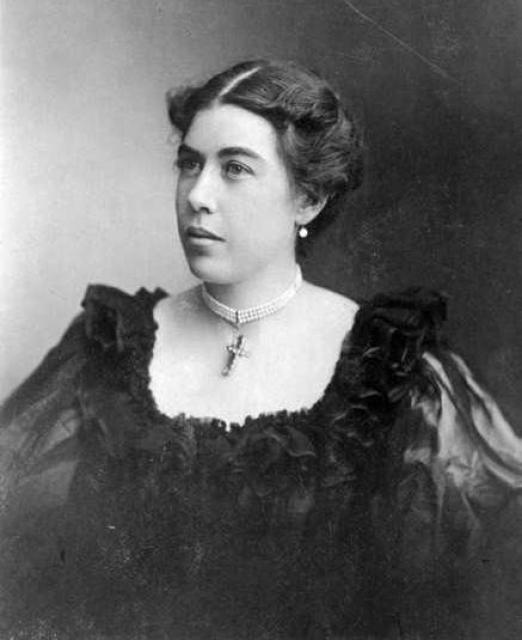
Margaret Brown, also known as "Unsinkable Molly Brown," was an American socialite, philanthropist, and activist, and one of the survivors of the Titanic disaster. She was born Margaret Tobin in Hannibal, Missouri, to Irish immigrant parents and was one of six children. In 18, she moved to Leadville, Colorado with her sister, where she found work in a department store.
A Marriage of Love
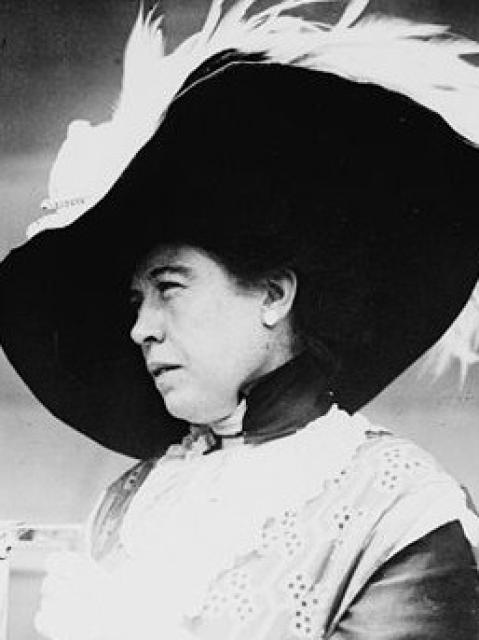
It was in Leadville that Margaret met James Joseph Brown, known as J.J., a proactive and self-educated man. In 1886, they got married. Margaret had always planned to marry a wealthy man, not for love, but to ensure financial security for her family. However, she fell in love with Jim and decided to marry him despite his modest means. Margaret once said, "I wanted a rich man, but I loved Jim Brown. I thought about how to help my father so he never needed anything in his old age. But Jim was as poor as we were and had no chance of success. I struggled with myself in those days. I loved Jim, but he was poor. Finally, I decided that I would be more secure with a poor man I loved than with a rich man whose money attracted me. So I married Jim Brown."
A Life of Activism
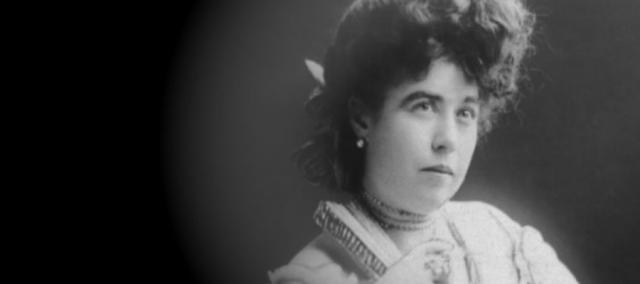
In Leadville, Margaret became involved in advocating for women's rights, helping establish the "Colorado Chapter of Women's Suffrage," and working in a soup kitchen to assist miners' families. Soon, luck smiled upon the Brown family when a gold vein was discovered on Jim's modest claim, making them millionaires. In 1894, the Browns moved to Denver, where they had more opportunities for growth. Margaret joined the "Denver Woman's Club," whose mission was to improve women's rights. She became an activist in the feminist movement and participated in the work of the "League of Political Equality." In 1901, she was one of the first students to enroll in the Carnegie Institute in New York City. Adapting to high society life, Margaret immersed herself in the study of art and foreign languages, including French, German, and Russian.
A Tragic Divorce
Over time, it became evident that the Browns had different perspectives on life. J.J. never desired to be in the limelight, while Margaret craved attention. J.J. believed a woman's name should only appear in the newspapers in connection with her birth, marriage, and death, and on occasions of great importance. During grand receptions, Margaret would often find herself alone in a distant room, smoking cigars. In 1899, J.J. suffered a stroke that left him partially paralyzed, and he decided to move to California for a better climate. Margaret, however, began to embrace a life of travel. The couple saw each other infrequently, and in 1909, after 23 years of marriage, they divorced. Margaret received a monthly alimony of $700 and ownership of their home.
A Life of Adventure
In 1911, Margaret witnessed the performance of the renowned actress Sarah Bernhardt in London and was deeply moved. She traveled to Paris to study under Bernhardt's teacher and even performed in plays such as "Cleopatra" and "The Merchant of Venice." This marked the beginning of her famous world tour, which made headlines in newspapers. Margaret and her daughter Helen were in London when they received news that Helen's son was very ill. Margaret immediately rushed back to the United States, while Helen decided to stay in London. To return to the U.S. quickly, Margaret purchased a ticket on the Titanic.
A Survivor and a Hero
On the fateful night of the Titanic's sinking, Margaret returned to her cabin early to finish reading a book. When the ship struck the iceberg, she fell to the floor due to the impact's force. Although everyone believed that nothing serious had happened, panic soon ensued. Margaret helped people into lifeboats, but refused to board one herself, believing that if the worst happened, she would be able to swim. Eventually, someone forcefully pushed her into lifeboat number 6, which made her famous.
The lifeboat had the capacity to hold 65 passengers, but only 26 were on board. As they drifted away, the boilers on the ship exploded, and Margaret described the scene as "the sea suddenly opened up, and giant hands seemed to grab the ship." Sitting in the lifeboat with 24 women and two men, Margaret fiercely argued with senior crewman Robert Hichens, demanding that they return to the sinking site to rescue those in the water. When one of the passengers became cold, Margaret gave her fur coat to keep her warm. And when the cold became too much for her, she ordered the women to take turns rowing to generate heat. They managed to reach another ship, the Carpathia, where Margaret continued to organize and assist the survivors. She used her language skills to communicate with passengers from different countries, collected blankets and supplies, compiled lists of survivors, and raised money for those who had lost their families and savings. By the time the Carpathia arrived in port, Margaret had collected $10,000 for the survivors. When asked by journalists what she owed her luck to, she replied, "Just the usual luck of the Browns. We are unsinkable!"
A Legacy of Philanthropy
Following the Titanic disaster, Margaret organized the "Titanic Survivors' Committee" and personally presented a loving cup to Captain Arthur Rostron and his crew on behalf of the surviving passengers. After the rescue, Margaret rarely stayed at her Denver estate. Despite the traumatic experience of the Titanic, she continued to travel the world with her son Lawrence, not even remembering that along with the ship, she lost 13 pairs of new shoes and a collection of jewels worth $325,000. The foundation she established, the "Margaret Brown Survivors' Fund," was named in her honor.
During World War I, Margaret worked in France as part of the American "Committee for the Relief of France," assisting wounded French and American soldiers. Shortly before her death, she was honored by the French government with the "Legion of Honor" for her aid to France during World War I, her assistance to the Titanic survivors, and her public service in her homeland.
Margaret Tobin Brown passed away on October 26, 1932, in New York City at the age of 65 due to a brain tumor. The legend of "Molly Brown," the fearless and outspoken woman who spoke five European languages and cursed like a miner, was created by Denver reporter Gene Fowler, who wrote many stories about Margaret Brown in the 1930s. Later, Carolyn Bancroft wrote a fictionalized account of Margaret's life, which was initially published as a pamphlet and later adapted into a radio play and a Broadway musical called "The Unsinkable Molly Brown." In 1964, MGM released a film titled "The Unsinkable Molly Brown," where Margaret Brown was portrayed by Debbie Reynolds.
The Brown family initially tried to downplay or correct the legend of Molly but eventually refused to speak to authors, reporters, or historians. It was only recently that the Browns agreed to cooperate with historian Kristen Iversen, granting access to Margaret's letters, scrapbooks, photographs, and other personal belongings that had previously been inaccessible. The first full biography of Margaret Tobin Brown was published in June 1999.
Margaret Brown has appeared in many Titanic films, portrayed with varying degrees of realism. Her character can be traced back to Mod Young's portrayal of Thelma Ritter in the 1953 film "Titanic." She first appeared as Molly Brown on screen in the 1958 British film "A Night to Remember." In 1979, Cloris Leachman played her in the film "S.O.S. Titanic." In James Cameron's blockbuster film "Titanic" in 1997, Kathy Bates portrayed Brown, and in the 1996 TV movie "Titanic," Meryl Henner brought Molly to life as a bold, eccentric, and simultaneously sensual woman.