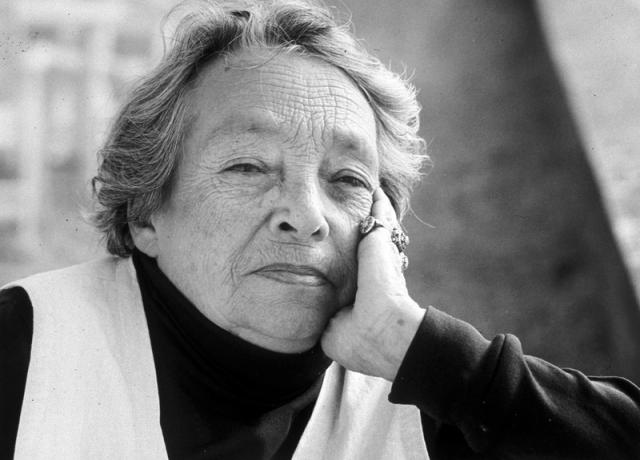
Marguerite Duras
 France
- Biography of Marguerite Duras
- Rebellion against the Mundane
- Poetic and Disjointed Stylistics
- Autobiographical Narratives
- Classic Film Script
- Marguerite Duras passed away in Paris on March 3, 1996.
Biography of Marguerite Duras
Marguerite Duras was a French writer, playwright, and film director. She was born on April 4, 1914, in Saigon (now Vietnam), where her parents were engaged in teaching activities. After obtaining two bachelor's degrees in Saigon, she moved to Paris in 1931 and studied at the Sorbonne.
Rebellion against the Mundane
The main theme of Duras' work revolved around rebellion against the dullness of everyday life. Her early novels showed a strong influence of Ernest Hemingway's concise writing style. Works such as "Un Barrage contre le Pacifique" (The Sea Wall, 1950) and "Le Marin de Gibraltar" (The Sailor from Gibraltar) exemplified this influence.
Poetic and Disjointed Stylistics
In "Moderato Cantabile" (1958), Duras portrayed the motif of impossible and artificial love through poetic and disjointed stylistics, which became characteristic of her subsequent works. These works often carried a sense of obscured meaning and sometimes included strong elements of eroticism, as seen in "La Maladie de la mort" (The Malady of Death, 1982).
Autobiographical Narratives
One of Duras' most well-known works, "L'Amant" (The Lover, 1984), which won the Goncourt Prize, served as a partly autobiographical novel depicting the final years of French occupation in Indochina and the disintegration of the protagonist's doomed family. Another memoir-like book, "La Douleur" (The War: A Memoir, 1986), primarily focused on the author's experiences during the last days of World War II.
Classic Film Script
Duras' most famous work is the screenplay for Alain Resnais' classic film "Hiroshima, Mon Amour" (Hiroshima, My Love, 1959).


