Marie Bonaparte
 France
Biography of Marie Bonaparte
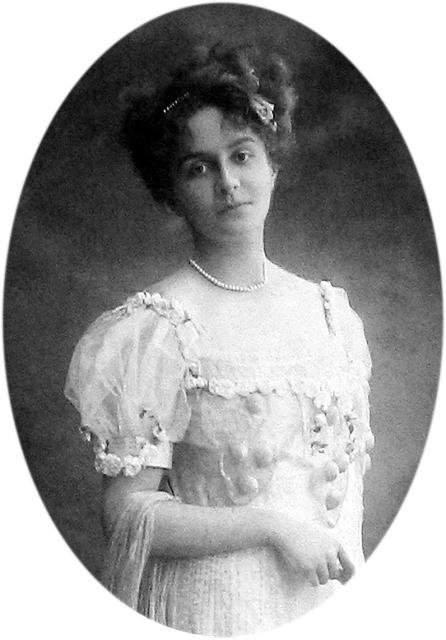
Marie Bonaparte was a French writer, translator, psychoanalyst, and student of Sigmund Freud. She was born into a wealthy family as the great-granddaughter of Lucien Bonaparte, the brother of Emperor Napoleon Bonaparte. Her maternal grandfather, Edmond Blanc, was a successful businessman and one of the developers of Monte Carlo.
Marie Bonaparte gained recognition as an intellectual and one of the first French psychoanalysts. She translated several of Freud's books into French and published them at her own expense. These books included "Leonardo da Vinci and a Memory of His Childhood," "On the History of the Psycho-Analytic Movement," "The Future of an Illusion," "Essays on Applied Psycho-Analysis," "Metapsychology," and "The Wolfman."
In 1925, she met Sigmund Freud and began her psychoanalytic analysis with him, which would continue until 1938 when Freud was forced to leave Austria. Despite living in different countries, Bonaparte established a tradition of "interrupted analysis," where she would regularly visit Freud for several weeks. This practice is now widely used by many psychoanalytic schools in France.
Marie Bonaparte also broke new ground by becoming the first practicing psychoanalyst in France without a medical background. While some associations in the United States have tended towards medicalization of psychoanalysis, it remains a separate clinical practice worldwide, and having a medical or psychological education is not a prerequisite for starting an analytical practice.
Bonaparte's relationship with Freud had its unique moments. In 1934, against Freud's wishes, she purchased his correspondence with Wilhelm Fliess, fearing that Freud might destroy it as he did with some of his other works. She kept the correspondence in her bank vault and only published it in 1950. Today, this correspondence is not only a valuable historical document shedding light on the development of psychoanalysis but also provides insights into original and previously unknown ideas of Freud.
During the Nazi occupation of Austria, Marie Bonaparte played a crucial role in saving Freud and his family. Through her personal efforts, connections with the American ambassador, and a significant financial contribution of $4,824, she managed to rescue Freud's family and part of his archive. Many of Freud's relatives, including his four sisters, who were unable to flee Austria, perished in concentration camps.
Marie Bonaparte's contributions to psychoanalysis are primarily recognized for her administrative and organizational skills rather than her theoretical research, which remains of interest to historians of psychoanalysis. The story of her analysis with Freud and their relationship served as the basis for the film "Princesse Marie" (2004), in which Catherine Deneuve portrayed the role of Marie Bonaparte.