Marie Sklodowska-Curie
 France
Biography of Marie Skłodowska-Curie
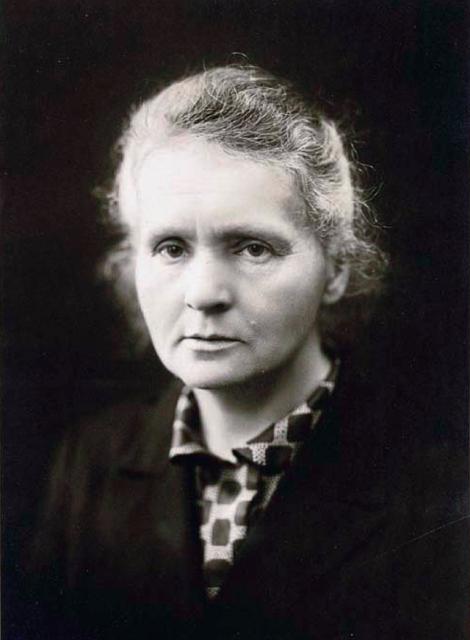
Marie Skłodowska-Curie was a French-Polish scientist and educator, known for her work in physics and chemistry. She was the first woman to win a Nobel Prize and the first person to win Nobel Prizes in two different scientific fields. Marie, along with her husband Pierre Curie, conducted groundbreaking research on radioactivity, leading to the discovery of the elements radium and polonium.

Early Life and Education
Maria Skłodowska was born in Warsaw, Poland, into a family of teachers. She had three sisters and a brother. Her childhood was marked by the early loss of her sister and her mother. Despite these hardships, Marie showed exceptional diligence and hard work from a young age. She excelled in school and maintained a rigorous work ethic, often sacrificing sleep and regular meals to complete her tasks. However, opportunities for women to pursue higher education in the Russian Empire, which included the Polish provinces at the time, were limited.

Marie and her sister Bronisława made a pact to take turns working as governesses to support each other's education. While Bronisława studied medicine in Paris, Marie worked as a governess. After Bronisława became a doctor, Marie was finally able to pursue her studies. At the age of 24, she traveled to Paris and enrolled in the Sorbonne, where she studied chemistry and physics.

Scientific Achievements
Marie quickly distinguished herself as one of the top students at the university, earning two degrees in physics and mathematics. Her dedication and abilities caught the attention of her professors, who gave her the opportunity to conduct independent research. In 1894, she met Pierre Curie, a physicist at the Municipal School of Industrial Physics and Chemistry in Paris. Pierre offered Marie the chance to work in his laboratory, and they soon fell in love and got married on July 26, 1895.

Marie began her groundbreaking research on radioactivity, focusing on the magnetic properties of steel. During this time, the Curies made significant contributions to the field, including the discovery of radium and polonium. Their achievements in radioactivity research led to Marie becoming the first female professor at the Sorbonne in 1906.
Later Years and Legacy
Marie continued her research and teaching even during World War I. She trained military doctors in the use of X-rays to detect fragments in wounded soldiers. After the war, she returned to the Radium Institute and dedicated herself to training new scientists and promoting the medical applications of radiology.
In her later years, Marie traveled to Poland to consult with Polish researchers and received donations to support her work. However, her extensive exposure to radiation throughout her career began to take a toll on her health. Marie Skłodowska-Curie passed away on July 4, 1934, from aplastic anemia.
Marie's contributions to science and her pioneering work in the field of radioactivity left a lasting impact. Her legacy is carried on by her two daughters, Irene Joliot-Curie, who also won a Nobel Prize in chemistry in 1935, and Eve Curie, a theater and music critic who authored a book about her mother. Marie Skłodowska-Curie's achievements continue to inspire scientists and women in STEM fields around the world.