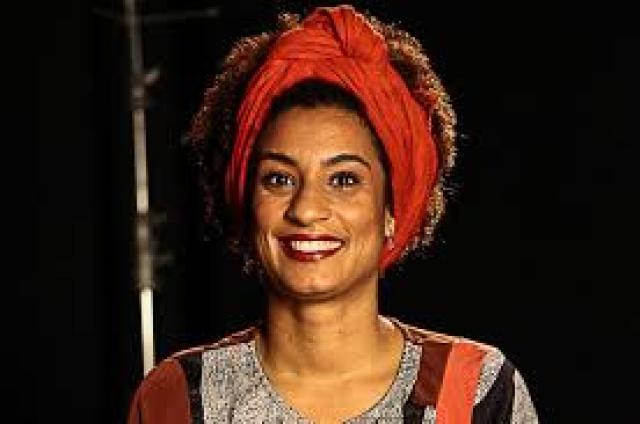
Marielle Franco
 Brazil
- Marielle Franco: A Trailblazing Sociologist, Feminist, and Activist
- Education and Advocacy
- Political Career
- Assassination and Aftermath
Marielle Franco: A Trailblazing Sociologist, Feminist, and Activist
Early Life and ActivismMarielle Franco, a Brazilian sociologist, feminist, and political activist, was born and raised in the Mare favelas of northern Rio de Janeiro. As a single mother working as a preschool teacher, she struggled financially while pursuing her political education through local church initiatives inspired by liberation theology. In her teens, she volunteered at a church shelter, sparking her passion for human rights.
Education and Advocacy
In 2000, Franco began her undergraduate studies, focusing on social sciences and later earning a master's degree in public administration. Her thesis explored police pacification programs aimed at reducing gang control in favelas. She also worked at the Museum of Maré, a community project that empowered local youth through historical narratives of the favela, fostering a generation of intellectuals.
Political Career
Before running for city council, Franco served as an advisor to local congressman Marcelo Freixo and coordinated the Human Rights and Citizenship Committee in the Rio de Janeiro Legislative Assembly. In the 2016 municipal elections, she received over 46,500 votes, becoming the fifth top-voted candidate from over 1,500 running citywide.
As a city council member, Franco championed policies against gender violence, favela rights, and reproductive rights. She chaired the Commission for the Defense of Women and served on a four-person committee overseeing the federal intervention in Rio de Janeiro by the army and police. As a bisexual LGBT activist, she collaborated with the Rio de Janeiro Lesbian Front.
Assassination and Aftermath
Franco was an outspoken critic of police brutality and extrajudicial killings. On March 13, 2018, she denounced the police shooting of a youth leaving church, demanding an end to the terror orchestrated by President Temer's deployment of the military.
The following day, as she returned from a roundtable discussion on discrimination, Franco and her driver, Anderson Pedro Gomes, were assassinated in downtown Rio; her press secretary was also injured. The bullets used in the killings were traced to the police, despite claims that they had been stolen from a post office.
In January 2019, police issued arrest warrants for two officers, Major Ronaldo Paulo Alves Pereira and former BOPE captain Adriano Magalhães da Nóbrega, linked to a criminal gang called the "Office of Crime" and suspected of Franco's murder.
Franco's funeral drew tens of thousands of mourners, and coordinated protests unfolded throughout Brazil. Amnesty International and Human Rights Watch condemned her assassination. Pope Francis called her family to express his condolences.


