Marissa Dees
 USA
USA- The Woman with the Rarest Skin Condition
- A Survivor's Journey
- Breaking the Stigma
- The 'One in a Half a Million'
- The Battle Against Melanoma
- Childhood Trauma and Resilience
- Empowering Others
- A Medical Odyssey
- Surgical Intervention
- Family and Love
- Advocacy and Awareness
- Funding and Fear
The Woman with the Rarest Skin Condition
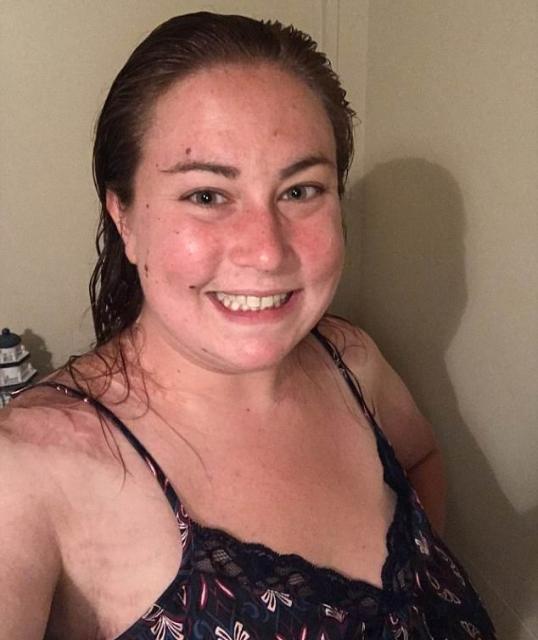
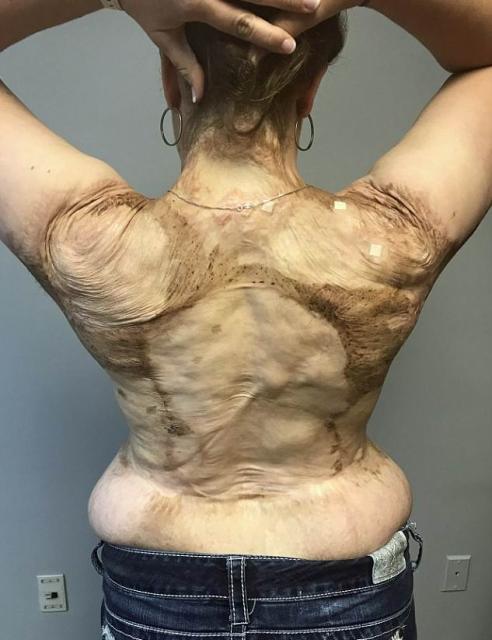
Marissa Dyess: Embracing Imperfections28-year-old Marissa Dyess from Tampa Bay, Florida, was born with an extremely rare skin condition called congenital melanocytic nevus. This condition causes abnormal, unsightly brown patches and moles to cover nearly her entire body, increasing her risk of developing melanoma.
A Survivor's Journey
Over the years, Marissa has endured over 30 surgeries to remove dangerous moles that extended from her scalp to her buttocks. As a child, she faced relentless bullying for her unusual appearance, resorting to hiding her skin underneath clothing to avoid judgment.
Breaking the Stigma
Despite the challenges she faced, Marissa decided to share her story with the world after her close friend, Jennifer Androver, passed away from stage IV melanoma that originated from her own nevus in April 2017. Marissa shared photos of her affected skin and scars, not only to raise awareness about the rare condition but to encourage others to embrace their differences.

The 'One in a Half a Million'
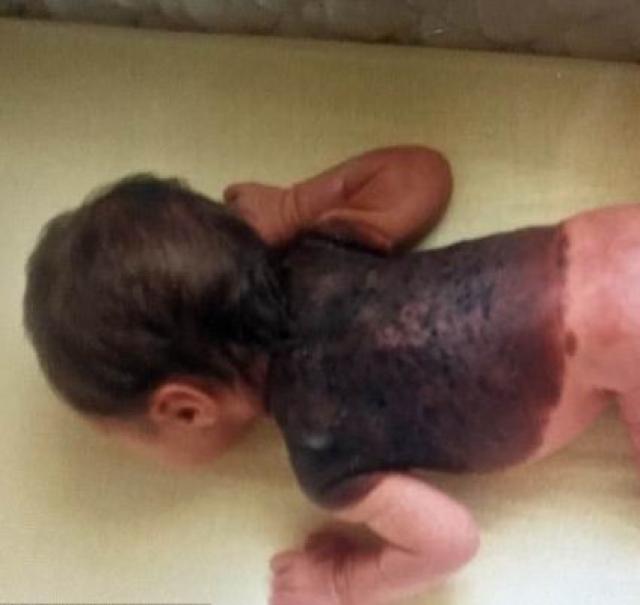
Congenital melanocytic nevus affects approximately 1 in 500,000 people, and Marissa has finally come to accept her uniqueness as "the one in a half a million." A mother of three and a dedicated homemaker, Marissa said, "My nevus goes from the top of my skull almost to my buttocks and wraps around my torso and shoulders. I also have over a hundred 'satellites.'"
The Battle Against Melanoma
"The moles go under the skin and wrap around my bones, muscles, and organs. They can be cancerous or pre-cancerous, so I've had as many removed as possible," she continued. "Since new growths develop on top of the existing ones, the cancerous cells can mutate quickly. I have a nevus on top of a nevus, so the possibility of melanoma spreading aggressively is very real."
Childhood Trauma and Resilience
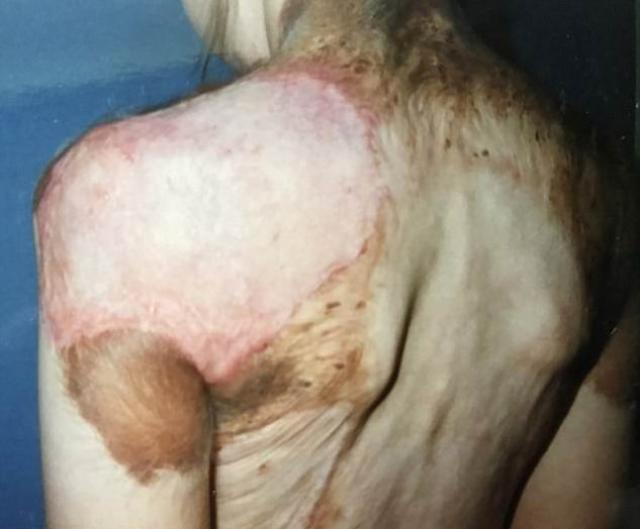
In her early years, Marissa's severe scarring from surgeries left her resembling a burn victim. Recalling her past experiences, she said, "As a kid, I was very self-conscious about the way I looked, and I always wore turtlenecks, even when playing sports and going swimming. But that's all changed now."
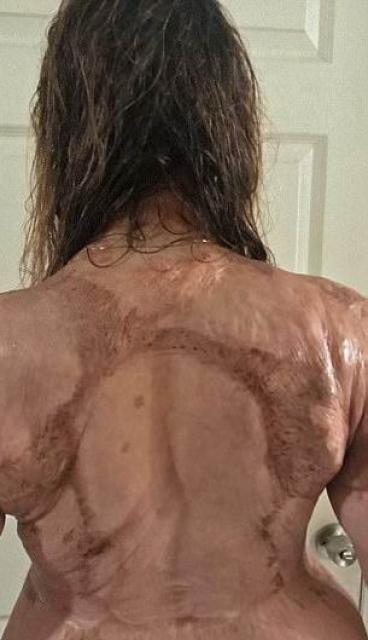
"I was constantly ridiculed. People would tell me I was 'part-dog' because of my 'Dalmatian spots' covering my skin. That's what I used to hide it at all costs."
Empowering Others
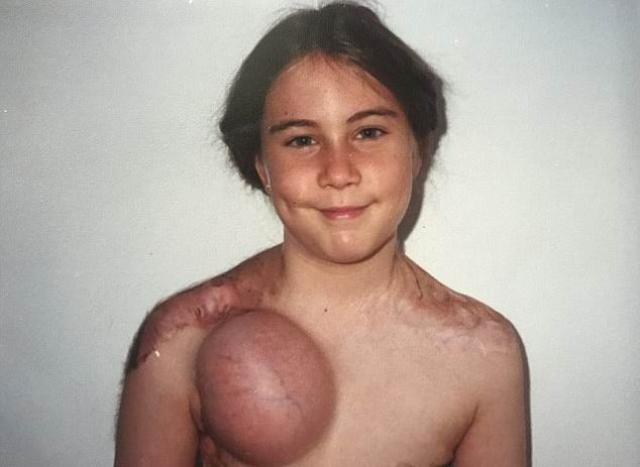
"After my close friend Jennifer died from nevus-related cancer this year, I realized I had a choice: to continue hiding from the world or to make a statement," Marissa said. "It was a call to action. I needed to accept myself and help others with the condition understand that they're not alone, that they don't have to hide their scars."
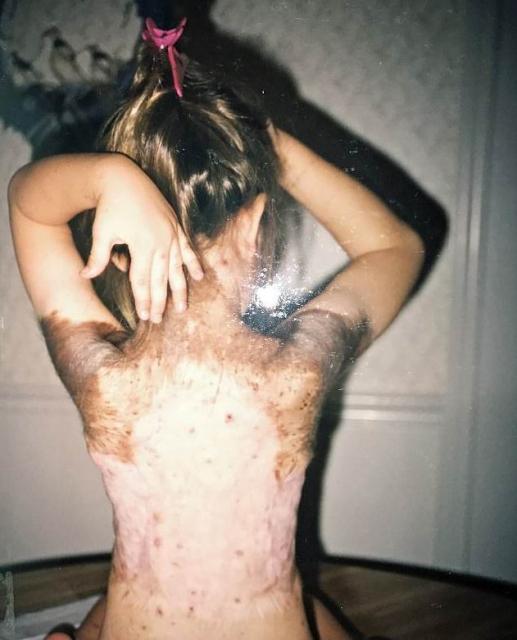
"I wear my scars with pride now and let them hang out. This is my body. This is what I was born with. So I own it. I still smile, I'm still beautiful."
A Medical Odyssey
When Marissa was born, doctors were initially baffled by her unusual symptoms until they diagnosed her with congenital melanocytic nevus. "Doctors had never seen anything like it before," Marissa said. "They told my parents I wouldn't live through the night."
"The chances of having this condition are one in 500,000, so it's like I won the lottery, but it's a cruel lottery."
"But I try to keep in mind that I'm blessed, and I learn from every experience that comes my way."
Surgical Intervention
At just six months old, Marissa underwent her first surgery to remove skin affected by the nevus. Since then, she has endured over 30 more operations, ranging from skin grafts to tissue expansion using expanders.
"At first, I was treated like a burn victim who needed to have dead skin removed. And they removed 20 clusters of the nevus from my body," Marissa explained.
"Then the doctors used expanders, which are like balloons that are inserted underneath the skin. They pumped them with saline solution, cut out the nevus, and then stretched the loose skin to cover the wound."
"Removing the nevus surgically has done a lot of damage to my nerves. The pain is there every day. But I've learned to live with it, and I'm grateful for every day I wake up."
Family and Love
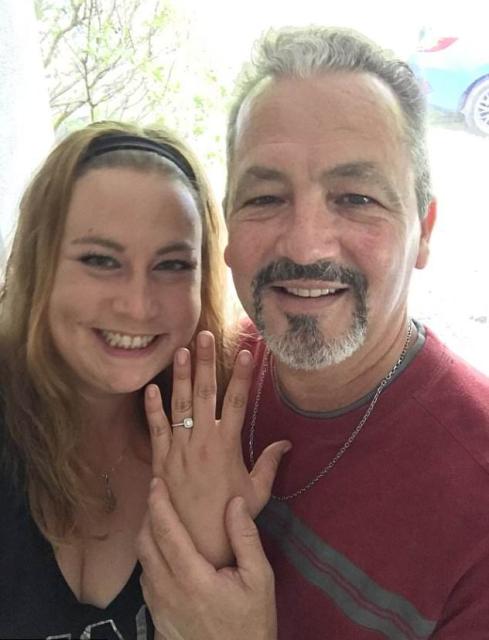
Marissa's journey to self-acceptance has been largely aided by the support of her family and her fiancé, 50-year-old Norman Greene, whom she met three years ago.
"My fiancé has made me realize that it doesn't matter how I look on the outside, that it's the people who have been there for me all my life that matter," Marissa said.
"I don't care what other people think of me or if I have friends. I have me, and I have the support of my man. My kids are provided for. I have an amazing family. I'm not alone."
"People don't understand that I'm tired of hiding from them. A lot of the nevus community hides their scars because others don't like to look at anyone who looks different."
Advocacy and Awareness
Currently, Marissa serves as an advocate for Nevus Outreach, an organization that supports families dealing with melanocytic nevi.
"I don't want to hide because of my nevus. I want to talk about it and help others understand that they shouldn't be afraid to show their skin," she said.
"You need to accept yourself, or you will regret it one day. We don't get to choose a different body."
Funding and Fear
Marissa is also actively fundraising to cover her extensive medical expenses.
"My insurance doesn't cover the treatment I need," Marissa said. "I'm done with surgeries. Thirty in a lifetime is enough. But I need to manage my condition."
"If any of my moles start changing significantly, I need to get them tested right away, go to a dermatologist, and have a biopsy done."
"I'm taking every precaution I can to reduce my chances of getting cancer. But the reality is, my condition is real, it's dangerous, and it's scary. The reality of it is pretty terrifying. I've already lost my friend, and I've seen kids die from this."