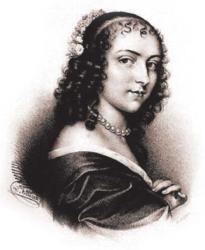
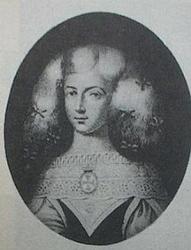
Mariya-Tereza-Luiza Lambal
 France
- The Tragic Life of Marie-Thérèse-Louise Lamballe
- The Brutal Execution
- The Reason for the Horrific Violence
- The Persecution of Lamballe
- The Legacy of Lamballe's Death
The Tragic Life of Marie-Thérèse-Louise Lamballe
Marie-Thérèse-Louise Lamballe, a French aristocrat and a close friend of Queen Marie Antoinette, lived a tragic and gruesome life during the French Revolution. The revolution of 1789 brought about a period of terror and mass killings, targeting conspirators and counter-revolutionaries, as well as anyone suspected of being involved or sympathetic to them. The death of Princess de Lamballe during the September Massacres of 1792 was particularly horrifying.
The Brutal Execution
The brutality with which the mob dealt with the unfortunate princess is difficult to comprehend. In his book "Histoire de la Révolution française," the renowned historian Jules Michelet described the events as follows: "This hapless body was dragged through all of Paris. The mutilated genitals, severed by a sword blow, were displayed as a military trophy. The decapitated head with flowing hair and the torn-out heart were carried triumphantly, impaled on pikes like military standards. The procession was heading towards the Temple Prison, where Queen Marie Antoinette, the beloved friend of the slain princess, was imprisoned."
On the eve of September 2, 1792, the impromptu Revolutionary Tribunal held its cruel trial in the Prison de la Force. Several executioners immediately dispatched the condemned prisoners with sabers, pikes, and clubs on the street, surrounded by a bloodthirsty crowd. Within four days, 1,300 people were executed in Paris. The victims were mainly aristocrats, defiant priests, and other "criminals." Princess de Lamballe, a prominent figure of the old regime, the daughter of the Prince of Savoy, the daughter-in-law of the wealthiest Duke of Penthièvre, the lady-in-waiting to Her Majesty, and the chief administrator of the royal household, was one of those executed. The tribunal, hastily reviewing the papers and letters found on her, declared her guilty of counter-revolutionary conspiracy.
The Reason for the Horrific Violence
Why did the crowd show such extreme and pathological cruelty towards the body of the unfortunate princess? To understand the motives that fueled the crowd, it is necessary to delve into the heated atmosphere of those days. The princess had fled abroad on June 21, 1791, after learning about the arrest and transfer of the royal family from Versailles to the Tuileries on November 4 of the same year. Royalists saw her return to Paris on November 4 as the highest display of courage and nobility, while republicans saw it as the preparation for a counter-revolutionary conspiracy.
The vivid descriptions of her execution, as well as the mutilation of her body, were accounts written by individuals from royalist circles. The first blow of the sword knocked off her bonnet, causing her long blond hair to fall on her shoulders. The second blow cut her forehead to the eye, and the gushing blood instantly drenched her dress and hair. Losing consciousness, she fell to the ground. However, the crowd wanted more spectacle. They forced her to get up and walk over the corpses. She fell again. She was probably still alive when a man named Charlot, eager to finish her off, struck her with a club. The frenzied and bloodthirsty mob then attacked her body, slashing it with swords and piercing it with pikes until it turned into a bloodied and shapeless lump. The violence and blood intoxicated the crowd, and their hatred seemed boundless. A butcher's assistant, a boy known as Osel, bent over the corpse and decapitated it with a massive butcher knife.
The Persecution of Lamballe
Marie-Thérèse-Louise de Savoie-Carignan, the young 19-year-old widow of Prince de Lamballe, was introduced to the royal court in June 1768. When Louis XVI, the heir to the throne, married 16-year-old Marie Antoinette of Austria in 1770, a close friendship quickly developed between the two young women. Memoirs, social chronicles, and tabloids of that time endlessly described "balls," "dinners," and "opera evenings" where the ladies always appeared together, openly displaying their friendship. When Louis XVI handed over the Petit Trianon (one of the palaces of Versailles) to Marie Antoinette, she immediately found a good place for the princess.
This friendship became even more flattering and pleasing to Madame de Lamballe when she obtained the prestigious court position of chief administrator of the royal household. This title not only gave her official power but also brought enormous wealth. At the same time, it created a repugnant reputation for her. The young woman became the target of attacks from the press, who portrayed her as "stupid and ignorant," "extravagant," "intriguing," "arrogant and contemptuous."
As the chief administrator of the royal household, Lamballe irritated the courtiers with her strict adherence to etiquette. Many believed that she abused her power and accused her of "court despotism," which even started to annoy the queen. In 1777, she fell out of favor with the court and finally escaped the intense scrutiny of the press.
However, when the court was moved from Versailles to the Tuileries in October 1789, the princess followed her deposed queen. Once again, she became the subject of sensational stories and tabloid gossip. Her charitable donations, philanthropic activities, and help for the sick and the poor, as well as her involvement in Freemasonry, were not enough to overcome the prevailing stereotype: she was still labeled as the "slave" of the queen. Those in power saw her as a dangerous conspirator. The September murderers paid her back for these fears: her execution and the mutilation of her body were acts of violence, a revenge for the supposed female conspiracy. The descriptions of her execution focused on the parts of her body that she refused to make objects of male pleasure. The mutilated breast was a kiss of malicious hatred. As for the genitals, some descriptions mention them being cut off with a sword, while others say they were carved out and impaled on a pike. One account, like that of Méhé de la Touche, claims that one of the murderers carved out the "golden fleece" from her pubic area and made mustaches out of it.
The Legacy of Lamballe's Death
The body of Princess de Lamballe had a strange ability to capture and recreate the mentality of those around it. In a period marked by political violence and assassinations, the state of public life is best illustrated by the corpses. The body of Madame de Lamballe was one of the first to experience this symbolic and phantasmagoric transformation.