Mark Blizstein
 USA
USA- Biography of Marc Blitzstein
- Early Musical Education
- Education and Influences in Europe
- Personal Life and Career
- Later Works and Legacy
Biography of Marc Blitzstein
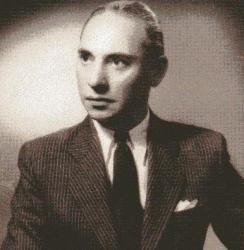
Marc Blitzstein, born Marcus Samuel Blitzstein, was an American composer and pianist. He was born in 1905 in Philadelphia, Pennsylvania, into a wealthy family. From a young age, Blitzstein demonstrated exceptional musical abilities, playing Mozart's Piano Concerto at the age of 7.

Early Musical Education
In his teenage years, Blitzstein studied under Alexander Siloti, one of the most renowned Russian conductors and a pupil of Pyotr Tchaikovsky. His first professional concert with the Philadelphia Orchestra took place when he was 21 years old.

Education and Influences in Europe
After completing his studies at the prestigious Curtis Institute of Music, Blitzstein traveled to Berlin, Germany, where he studied under Arnold Schoenberg. He later continued his education in Paris, France, under the tutelage of Nadia Boulanger.
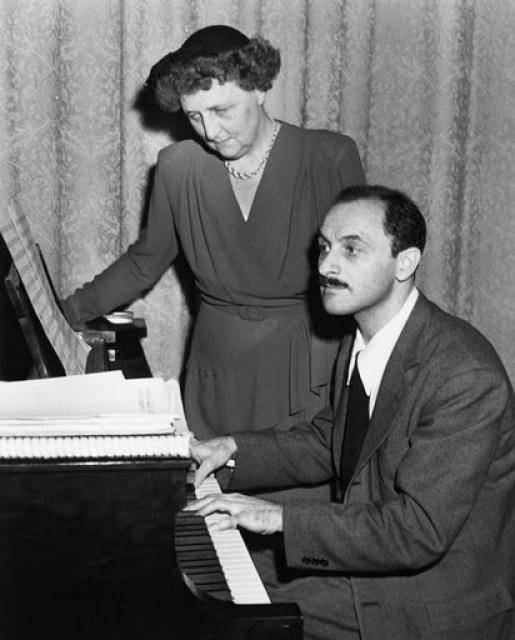
During this time, Blitzstein firmly believed that true art should only be accessible to the intellectual elite of society. He was vocal about his disagreement with colleagues, such as Kurt Weill, who aimed to bring music to a wider audience. Blitzstein's compositions from this period, such as the "Piano Sonata" and "Piano Concerto," were primarily written for the piano and reflected the influence of his teacher, Boulanger.
Personal Life and Career
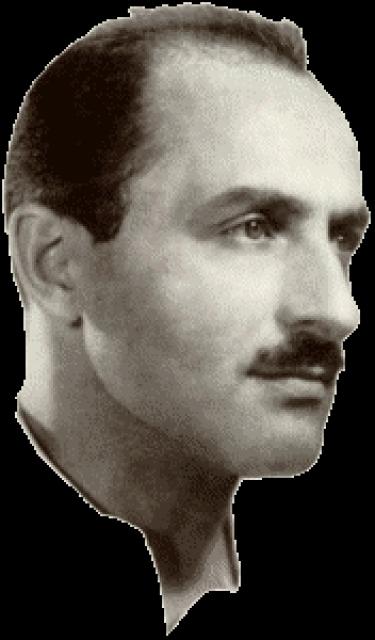
In March 1933, Blitzstein married writer Eva Goldbeck, although he never hid his homosexuality and considered the marriage to be a formality. Eva passed away three years later in 1936, and the couple did not have any children.
In the 1930s, Blitzstein became involved with the Group Theatre, which was then based at the Pine Brook Country Club in Connecticut.
On June 16, 1937, an event occurred that brought Blitzstein significant recognition. The Works Progress Administration banned the performance of his musical "The Cradle Will Rock." In response, the cast and audience simply moved to a nearby theater, where they performed the show with only a piano and without costumes or sets.
In 1958, Blitzstein became the target of the House Un-American Activities Committee. During the investigations, he admitted to being a member of the Communist Party but refused to provide names and addresses of other party members in the United States.
Later Works and Legacy
In his final years, Blitzstein composed pieces such as "I've Got the Tune," "The Airborne Symphony," and "Reuben, Reuben." He was also working on an opera based on Bernard Malamud's work at the time of his death. The completion of the opera was undertaken by composer Leonard Lehrman.
In 2005, Leonard Lehrman published the book "Marc Blitzstein: A Bio-Bibliography," which remains the most extensive biographical work on the American composer to date.