William Bennett
 Great Britain
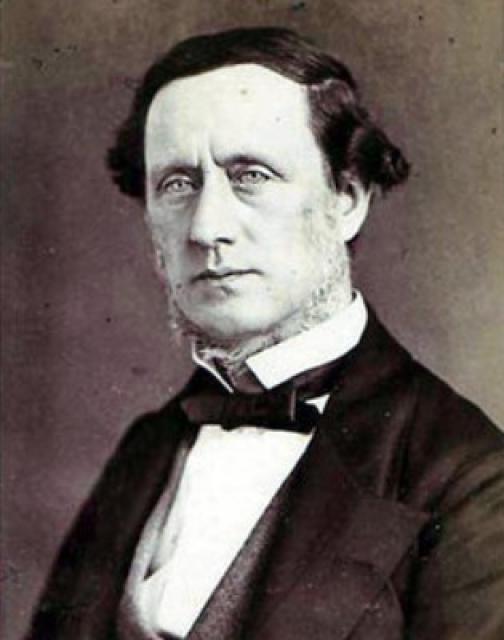
Sir William Sterndale Bennett
Early Life and EducationWilliam Sterndale Bennett was born on April 13, 1816, in Sheffield, England. His aesthetic ideal was the music of Mozart, in which he saw an embodiment of classical balance. Among Romantic composers, he preferred Mendelssohn. Bennett studied at the Royal Academy of Music (RAM) in violin, piano, and composition.
Musical Career
Bennett's first Piano Concerto (1832) was highly praised by Mendelssohn and other prominent musicians. He performed his second and third concertos at the Philharmonic Society in 1835 and 1836. During the same period, he traveled to Germany twice, performing his third concerto in Leipzig's Gewandhaus and conducting the overtures "The Naiads" and "Parisina." Robert Schumann responded to Bennett's performances with an enthusiastic review and dedicated his "Symphonic Etudes" to him.
Teaching and Conducting
Bennett began teaching at the RAM in 1837. He continued to perform as a pianist, organizing annual seasons of chamber music in 1842. In 1849, he founded the Bach Society of England and conducted the first English performance of Bach's "St. Matthew Passion" in 1854. He succeeded Wagner as conductor of the Philharmonic Society in 1855 and became Professor of Music at Cambridge University in 1856. Bennett became Principal of the RAM in 1866 and was knighted in 1871.
Compositions
Bennett's most notable works include his charming early piano concertos (five in total, 1832-1838) and concert overtures. His songs, such as the popular "The May Queen," are stylistically related to the vocal miniatures of the Leipzig Romantics. Other compositions include six symphonies (1832-1864), an oratorio, cantata, and choruses.
Legacy
Bennett exerted a strong influence on a generation of RAM students, guiding them in a conservative direction. The composer Arthur Sullivan was among his pupils. Bennett's music remains an important part of the British classical repertoire, representing the intersection of classical and Romantic styles in 19th-century England.