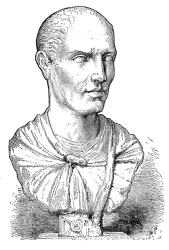
Marko Mrnjavčević
History remembers Marko Mrnjavčević as a regional ruler who lived under Ottoman supremacy; epic poetry remembers Marko Kraljević as a mighty champion of the people. The distance between these two figures is striking. The historical king held power around Prilep in a fractured Balkan landscape and died fighting on the Ottoman side at Rovine in 1395. The hero of later songs, by contrast, defies tyrants, protects the vulnerable and seems almost larger than life.
Family and a Divided Kingdom
Marko was the son of Vukašin Mrnjavčević, a powerful Serbian noble who rose to become co-ruler with Emperor Stefan Uroš V. The precise date and place of Marko’s birth are uncertain; he was probably born around 1335. He grew up as the medieval Serbian Empire was expanding and then coming under pressure from rival nobles and neighboring powers.
Vukašin’s authority was strongest in the region around Prilep, in present-day North Macedonia. Marko received the title of “young king,” from which his later popular epithet Kraljević derives. In 1371, Vukašin and his brother Jovan Uglješa were killed in the Battle of Maritsa, a catastrophic defeat for the Serbian forces against the Ottomans. Emperor Stefan Uroš V died later that year without an heir. Marko inherited his father’s title and became a claimant to the Serbian crown, but he could not command the wider allegiance once held by the empire’s rulers.
A King with Limited Power
Although Marko was formally recognized as king, his actual territory was centered on Prilep and nearby lands. Other regional lords held much of the former Serbian realm, and Marko’s position was constrained by the Ottoman advance. He became an Ottoman vassal, a political arrangement that required submission and could include tribute and military service. This was a practical means of retaining local rule in an increasingly precarious position.
His vassal status complicates the later image of him as an unyielding national defender. It also reflects the difficult choices faced by Balkan rulers as Ottoman power expanded. The surviving historical record is sparse, and it offers far less personal detail than the rich songs that would eventually make his name famous.
Death at Rovine
In 1395 Marko took part in the Battle of Rovine, where Ottoman forces fought the Wallachian ruler Mircea the Elder. Marko was killed in the battle. Accounts identify him as having fought on the Ottoman side, an outcome that sharply contrasts with the defiant hero of folklore. His death helped bring an end to the political independence of his small domain.
The Epic Hero
Over time, songs and oral traditions transformed the historical king into Marko Kraljević, one of the best-known heroes of Serbian and wider South Slavic epic poetry. In these stories he is a formidable warrior, often associated with his horse Šarac, but his strength is paired with a rough humor and a strong sense of justice. He challenges arrogant rulers, defends ordinary people and confronts supernatural opponents.
The epic figure is not a straightforward portrait of the medieval ruler. Folklorists and historians distinguish the man documented in medieval politics from the hero shaped by oral storytelling across generations. The songs preserve cultural memory and moral ideals more than they preserve a reliable chronology of Marko’s life. Different South Slavic traditions developed their own versions, and the epic character may incorporate motifs from more than one historical or legendary source.
Legacy
Marko’s unusual double identity is the heart of his legacy. The king was a pragmatic vassal whose authority shrank as the Ottoman Empire advanced; the folk hero became a symbol of courage, independence and protection. His songs traveled through the Balkans and were collected and written down centuries after his death, helping to establish him as a central figure in regional literature and cultural memory.
The contrast does not diminish either story. It shows how communities can reshape a politically constrained ruler into an enduring champion. Marko survives in history as a medieval prince caught in a dangerous transition, and in song as the hero who could still challenge injustice when political power could not.