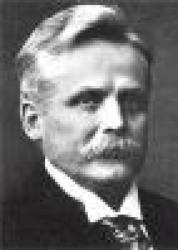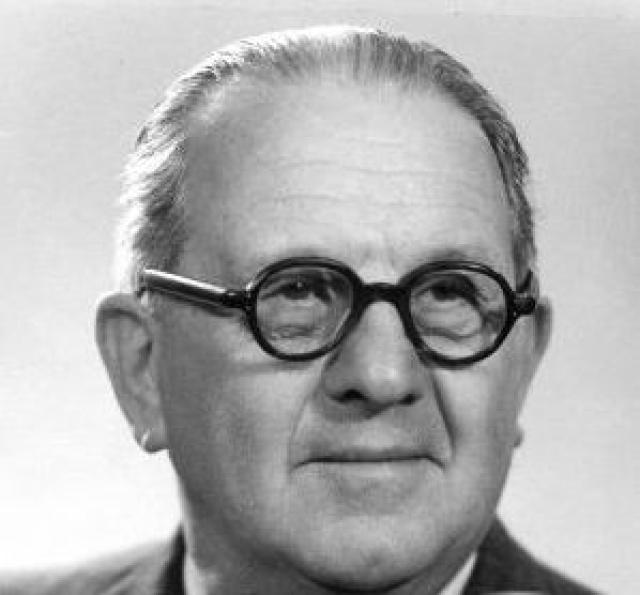
Markus Reiner
- Early Life and Education
- Engineering Career and Zionist Activism
- Immigration to Palestine
- A Pioneer in Rheology
- Groundbreaking Research and Publications
- Contributions Beyond Science
- Recognition and Honors
- Legacy
A Life Dedicated to Science and Engineering: The Story of Marcus Reiner
Early Life and Education
Marcus Reiner was born in the city of Czernowitz (now Chernivtsi, Ukraine) in the early days of 1886. His scientific journey began at the Vienna University of Technology, where he excelled in his studies and graduated as an engineer in 1909. Shortly before the outbreak of World War I, he earned his doctorate in technology.
Engineering Career and Zionist Activism
During the war, Reiner served as a lieutenant in the Austrian army. In the postwar years, he actively participated in the Zionist movement, becoming a member of the executive committee of the Zionist Organization of Bukovina and playing a key role in founding the local branch of the Keren Hayesod.
Immigration to Palestine
In 1922, Reiner immigrated to Palestine, contributing to the establishment of Kibbutz Hefziba in the Galilee region. He married twice, first to Margalit Obernik in 1923 and later to Rivka Shenfeld in 1929. He had two children from his first marriage, Ephraim and Hanna, and two daughters, Dorit and Shlomit, from the second.
A Pioneer in Rheology
Laying the Foundations of the FieldWhile working as an engineer in the Public Works Department in Jerusalem, Reiner became engrossed in the study of fluid mechanics. His 1926 publication on the flow of elastic liquids attracted international attention. In 1929, together with Eugene Bingham, he founded the Rheological Society in the United States.
Groundbreaking Research and Publications
Throughout his career, Reiner made significant contributions to rheology, particularly in the areas of solid body behavior, nonlinear fluids, and multi-phase systems. His work included the development of a theory of incompressible fluids and the application of Hamilton-Cayley's formula to this field.
Contributions Beyond Science
Scientific Terminology and EducationReiner coined the term "Deborah number" and introduced the "teapot effect" into rheological terminology. He authored several books on the subject, including "Ten Lectures on Theoretical Rheology," which became a foundational text for the field.
Recognition and Honors
Reiner's exceptional achievements were recognized by the Israeli Academy of Sciences and the Municipality of Tel Aviv, which awarded him the H. Weizmann Prize in 1956. In 1958, he was the recipient of the esteemed Israel Prize in Exact Sciences.
Legacy
Marcus Reiner passed away in 1976, leaving behind a lasting legacy in the field of rheology. His groundbreaking research, innovative terminology, and dedicated teaching continue to inspire generations of scientists and engineers.