Vilgelm Vin
 Germany
- Biography of Wilhelm Wien
- Research on Thermal Radiation and Wien's Displacement Law
- Research on Electric Discharges and Legacy
Biography of Wilhelm Wien
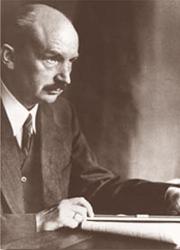
Wilhelm Carl Wien was a German physicist born in Gaffken, which was then part of East Prussia (now Primorsk, Russia). He was the only son of Karl Wien, a farmer, and Carolina Wien (née Herz). When he was two years old, his family moved to a smaller farm in Drahenstein. A reserved child, like his father, he had no friends and was particularly attached to his mother. As was customary at the time, he was taught French by a private tutor, and he began speaking it before he learned to write in German. At the age of eleven, he officially started attending the Rastenburg Gymnasium. He was not a diligent student, preferring to wander in the fields instead of doing homework, and he did poorly in his studies, especially in mathematics. His parents took him out of school in 1879 and homeschooled him, teaching him farming skills, while he continued his schoolwork with a private tutor. In the autumn of 1880, Wien enrolled in a gymnasium in Königsberg and graduated from it in early spring 1882. Later that same spring, encouraged by his mother, he entered the University of Göttingen. Unsatisfied with the mathematical courses and disliking the student life, he left Göttingen after one semester and embarked on a journey through the Rhineland region of Germany. He returned home with the intention of becoming a farmer but soon realized that this was not the right path for him. In the autumn of 1882, he resumed his studies in mathematics and physics at the University of Berlin. After two semesters of classroom studies and three years of laboratory work under the guidance of Hermann von Helmholtz, an eminent physicist, mathematician, and physiologist, as well as one summer at the University of Heidelberg, Wien received his doctorate in 1886. His dissertation was about the diffraction of light on a sharp metallic edge and the influence of metal absorption on the resulting colors. Diffraction is a phenomenon caused by the wave nature of light. If a barrier made of metal is placed behind a metallic edge, on the side opposite to the light source, under certain conditions, a diffraction pattern will appear on it. This pattern consists of alternating bright and dark stripes extending below the geometrical shadow of the barrier, as if the light were bending around the edge of the barrier. Since the arrangement of bright and dark stripes is related to the wavelength (corresponding to a specific color) and the diffraction pattern varies for different wavelengths, it is possible to separate light containing a mixture of colors into colored stripes using diffraction. Wien discovered that after diffraction, light becomes polarized and that the material of the edge affects the colors. He believed that this color effect could not be explained within the framework of existing theories, as they did not take into account the oscillations of the molecules of the diffraction plate.
Research on Thermal Radiation and Wien's Displacement Law
In the summer of 1886, Wien returned home to help his parents on the farm, which had been damaged by a fire. He stayed there for the next four years, continuing to study theoretical physics on his own. His future was determined when a drought in 1890 forced his parents to sell the land. Wien became an assistant to Helmholtz at the new Physikalisch-Technische Reichsanstalt in Charlottenburg (now part of Berlin), where he worked on solving problems assigned by industrial firms. Over a thirty-year period, Wien conducted a wide range of scientific research at various academic institutions. In 1892, he became a lecturer at the University of Berlin, and in 1896, he took up the position of professor of physics at the Technical University of Aachen, succeeding Philipp von Lenard. In 1899, he was a professor of physics at the University of Hesse, and then in 1900, he succeeded Wilhelm Röntgen as a professor of physics at the University of Würzburg.
Wien's research covered various topics, including hydrodynamics, particularly the behavior of ocean waves and cyclones. At the Physikalisch-Technische Reichsanstalt, he began his fruitful research on thermal radiation, which is the radiation emitted by heated bodies. Bodies absorb, reflect, or transmit radiation that falls on them at different temperatures. But regardless of this, they also emit energy because they have a certain temperature. The familiar example is the filament of an electric light bulb. In the 1860s, Gustav Kirchhoff, while conducting theoretical research on the relationship between radiation and energy absorption, introduced the concept of an ideal black body, which absorbs all radiation incident on it without reflecting anything. A real body, black as coal, is an excellent but not perfectly ideal absorber of radiation since it reflects a small fraction of the incident light. It appears black because it reflects very little light. The ideal black body is not only a perfect absorber, but Kirchhoff showed that it is also the best possible radiator, and therefore can serve as a standard for determining the relationship between radiation intensity and the temperature of the body, regardless of the material of the specific radiator.
Although an ordinary body cannot be an ideal black body, Kirchhoff demonstrated theoretically that a space entirely surrounded by walls at a uniform temperature (for example, a fireplace) possesses the necessary properties of an ideal black body, regardless of the material of the walls. This can be understood by considering what happens when a small opening is made in one of the walls. The radiation that enters the opening will reach the opposite wall and be partially absorbed and partially reflected. It is highly unlikely that the reflected part will return to our small opening. Instead, it will undergo a series of reflections and absorptions until it is completely absorbed (heating the walls slightly), and it will never come out again. In other words, our piece of space, bounded by the walls, will completely absorb the incident radiation, just as an ideal black body should. Kirchhoff showed that the radiation inside such a cavity, consisting of intersecting rays reflected from the walls, has a distribution of wavelengths and intensities that depend only on the temperature and not on the material of the walls. In 1893, Wien studied the radiation of an ideal black body using what he called a "thought" (as opposed to laboratory) experiment based on the laws of thermodynamics. The Austrian physicist Ludwig Boltzmann used thermodynamics in a similar way to justify the mathematical formula empirically discovered by his compatriot Josef Stefan. Stefan noticed that the total energy emitted per second by a black body, covering all wavelengths, is proportional to the fourth power of the absolute temperature (-273°C) of the body. Wien further developed this theoretical investigation by calculating how the change in temperature would affect the energy emitted at a given wavelength or color (in fact, within a narrow range of wavelengths centered on a given value).
Experimental measurements of the radiation emitted by a small opening in the cavity of a black body confirmed Wien's displacement law. This research was conducted by Otto Lummer and Ernst Pringsheim in 1899, using a sensitive device called a bolometer. However, regarding the law of radiation, it was found that it fit the experiments very well only in the region of short wavelengths and deviated significantly for long wavelengths. The English physicist J. W. Strutt (Lord Rayleigh) derived an equation that worked well for long but poorly for short wavelengths. It was precisely the attempt to reconcile theory with experiment across the entire spectrum of wavelengths that led Max Planck to develop his revolutionary quantum theory. As Wien noted, Planck solved the problem by "introducing the famous hypothesis of energy elements (quanta), according to which energy is not infinitely divisible but can be distributed only in fairly large quantities that cannot be further divided."
Research on Electric Discharges and Legacy
Wien also conducted research on other topics, most notably electric discharges in gases at very low pressure in vacuum tubes. These discharges produced three types of radiation that were then considered mysterious. One type, called cathode rays, moved from the cathode (negative electrode) to the anode (positive electrode). The second type, called canal rays, moved in the opposite direction. The third type, discovered by Wilhelm Röntgen in 1895 and called X-rays, appeared in the region of the anode and emerged from the cathode rays. Cathode rays, later known as electrons, were discovered by the English physicist J. J. Thomson in 1897. Wien confirmed that cathode rays were particles carrying a negative charge. He also showed that canal rays were positively charged atoms (ions) of residual gases in the discharge tubes and provided the first estimates of the wavelengths of X-rays (much shorter than visible light), determining the ratio of their energy to the energy of the cathode rays that produced them. His further work made significant contributions to the field of radiation physics, including refined calculations of X-ray wavelengths and the proposal to use crystals for their measurement five years before Max von Laue carried out similar work.
In 1911, Wien was awarded the Nobel Prize in Physics "for his discoveries regarding the laws governing the radiation of heat." In his Nobel lecture, he spoke about the importance of what he called "thought experiments." "In applying thermodynamics to the theory of radiation, it is useful to use those ideal processes that have proved so fruitful in other connections," he said. "I mean the imaginary experimental arrangements, which in many cases cannot be realized in practice but nevertheless lead to reliable results... From these thought experiments, we can derive an important conclusion: we can determine how the spectral composition of radiation from an ideal black body changes with temperature."
During his visit to the United States in 1913, Wien gave lectures at Columbia University and visited both Harvard and Yale Universities. In 1920, he once again succeeded Röntgen, this time as a professor of physics at the University of Munich, where he oversaw the establishment of a physical institute. From 1925 to 1926, he served as the rector of the university.
In 1898, Wien married Luise Mehler, whom he met in Aachen, and they had two sons and two daughters. In his free time, Wien enjoyed studying history, literature, and art. He died in Munich in 1928. "There are probably very few physicists who, like Willy Wien, are equally proficient in both the experimental and theoretical aspects of their practical work," wrote his colleague Max Planck.
From 1906 until his death, Wien was a co-editor (together with Max Planck) of the journal "Annalen der Physik." He was a member of the National Academy of Sciences and the scientific academies of Berlin, Göttingen, Vienna, and Stockholm.