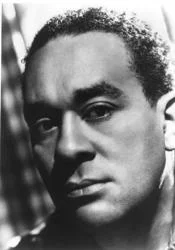
Markus Werner
- Early Life and Education
- A Late Debut and Seven Novels
- Recognition and Translation
- A Deliberate Literary Life
Markus Werner wrote slowly, precisely, and with a sharp eye for the quiet absurdities of everyday life. In seven novels published over two decades, the Swiss author followed people who felt out of place in work, family, and society—characters whose doubts and dry humor gave his fiction its distinctive pulse.
Early Life and Education
Werner was born on December 27, 1944, in Eschlikon, in the northeastern Swiss canton of Thurgau. His family moved to Thayngen in canton Schaffhausen in 1949, and the region’s towns and landscapes became the grounding place of his life and writing. After completing his secondary education in 1965, he studied German literature, philosophy, and psychology at the University of Zurich. He earned a doctorate in 1974 with a dissertation on the novelist Max Frisch.
For fifteen years Werner worked as a teacher, first as a senior teacher and later as a lecturer at the Gymnasium in Schaffhausen. In 1990 he left the classroom to write full time. The decision came at an age when many authors are already well into their careers: Werner published his first novel at forty.
A Late Debut and Seven Novels
Zündels Abgang appeared in 1984 and immediately established Werner as a singular voice in German-language literature. Its central figure, Konrad Zündel, is a teacher who leaves his familiar life behind. Werner’s later protagonists often make similar breaks with jobs, routines, or social expectations, but his fiction avoids easy heroic escapes. Instead, it watches closely as ordinary situations turn strange and the characters expose their own uncertainty as well as the rigidities around them.
The debut was followed by Froschnacht (1985), Die kalte Schulter (1989), Bis bald (1992), Festland (1996), Der ägyptische Heinrich (1999), and Am Hang (2004). The seven books form a compact but varied body of work. Werner’s prose could be laconic and satirical, then suddenly lyrical or philosophically probing. His dialogue often lets tenderness and irritation occupy the same breath, while his characters defend the human right to make mistakes, hesitate, and remain imperfect.
Recognition and Translation
Werner’s first novel won the Jürgen Ponto Foundation’s literary prize in 1984, and the Swiss Schiller Foundation recognized his work more than once. His honors also included the Prix littéraire Lipp, the Hermann Hesse Literature Prize, the Joseph Breitbach Prize, the Johann Peter Hebel Prize, and the Swiss Schiller Foundation’s lifetime achievement award. His books were translated into several languages, and some were adapted for stage, radio, and film.
Am Hang, his final novel, brought his art of intimate conversation into especially clear focus. Set during a holiday weekend in the Ticino, it turns a chance encounter between two men into an examination of love, marriage, belief, and self-deception. The novel later reached English-language readers as On the Edge and was adapted for the screen.
A Deliberate Literary Life
Werner was known for a measured, meticulous approach to writing. He did not chase a large output; instead, each book arrived after long periods of attention and revision. He lived for many years in Opfertshofen and later in Schaffhausen, maintaining a quiet life centered on reading, thought, and the work of shaping sentences.
He died in Schaffhausen on July 3, 2016. His seven novels remain a distinctive achievement in Swiss literature: compact in number, wide in philosophical reach, and alive to the comedy and loneliness hidden inside ordinary routines. Werner’s characters may want to get away from the world, but his exact, humane prose keeps bringing readers back to the people—and the small details—they might otherwise overlook.