Martin Lomes
 USA
USA- American Teenager Suffers Third-Degree Burns from Giant Hogweed
- Plant Sensitivity and Severe Burns
- Invasion and Public Warnings
- Financial and Educational Implications
- About Giant Hogweed
American Teenager Suffers Third-Degree Burns from Giant Hogweed
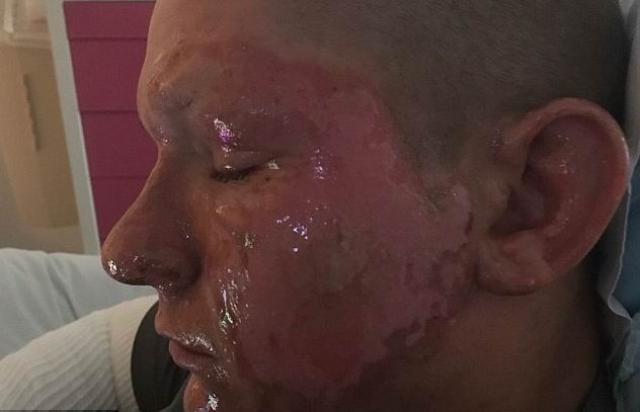
Encounter with Invasive Plant Leads to Severe InjuriesA 17-year-old American teenager, Martin Lomas, sustained severe third-degree burns on his face and body after coming into contact with giant hogweed while performing paid gardening work. The phototoxic plant's sap caused excruciating burns that covered his entire face and hands.
Lomas, who was working in Fredericksburg, Virginia, encountered the weed while weeding and unknowingly grappled with the dangerous plant. Giant hogweed poses a significant hazard, with mere skin contact capable of causing severe burns, blisters, and even blindness.
Lomas initially messaged his father, Justin, stating that he had likely suffered a severe sunburn. However, upon returning home and showering, "his skin was literally peeling off like it was melting off his face," Justin recalled. His mother, a nurse, immediately recognized the severity of his injuries and rushed him to the hospital. He became the first patient at Virginia Commonwealth University Medical Center to be diagnosed with "hogweed burns."
Plant Sensitivity and Severe Burns
"We were working behind the factory, and I ripped this bush out," Lomas recounted. "It got on my face. I didn't think anything of it because that happens all the time."
As the day progressed, Lomas's face became increasingly inflamed, which he initially attributed to prolonged sun exposure. It was only in the shower that his face began to peel, prompting his mother to identify the third-degree burns on his face and arms.
Medical professionals administered a prolonged 1.5-hour shower to remove the hogweed sap and neutralize its pH levels. This was followed by additional treatments to remove the toxic substance. Notably, traces of sap were found on Lomas's entire body, worsening the situation due to subsequent sun exposure.
Invasion and Public Warnings
Until June 2018, giant hogweed was not known to be present in Virginia, with no previous medical cases reported. However, since last month, authorities have been issuing public warnings about the plant's presence.
The plant's sap makes skin extremely sensitive to sunlight, rendering ordinary outdoor activities a potential cause of severe burns. This process is known as phytophotodermatitis.
Contact with giant hogweed can result in painful blisters, scarring, and prolonged sun sensitivity for years to come. If the sap enters the eyes, permanent blindness can occur.
On June 12, 2018, officials from the Isle of Wight County in northern Virginia posted a warning on Facebook about the invasive plant, which can grow over 13 feet tall.
Giant hogweed is confirmed to be present at around 30 sites in Clarke County, with significant infestations also reported in the Staunton and Middlesex areas. "Poison ivy doesn't hold a candle to this stuff," officials wrote.
Financial and Educational Implications
Lomas, who lives in Fredericksburg, approximately 150 miles north of the reported infestations around Washington, D.C., has launched a GoFundMe page to raise funds since he cannot continue landscaping work.
He had secured a summer job to pay for his upcoming tuition at Virginia Tech. However, his encounter with the poisonous plant has left him uncertain about his future.
"I can't work for the rest of the summer," Lomas said. "We're not even sure if [my employers'] insurance is going to cover [medical bills]."
"I have a scholarship to Virginia Tech and a four-year ROTC scholarship. I could lose all of this if I get medically disqualified," he added.
About Giant Hogweed
According to The Plant List, there are currently 52 recognized species of giant hogweed. When mature, it develops clusters of flowers that are often white in color and arranged in compound umbels.
The Virginia Department of Environmental Quality notes that heat and moisture (perspiration or dew) can exacerbate the effects of hogweed on exposed skin. Phototoxic reactions can occur within 15 minutes of exposure, with peak sensitivity between 30 minutes and two hours after contact.
Originating in the Caucasus Mountains of Western Asia, the plant was introduced to Europe in the 19th century and to the United States in the early 20th century. Currently, giant hogweed is present in New England and the Pacific Northwest.
Authorities urge residents to report any suspected infestations to the Virginia Department of Conservation and Recreation. Aggressive eradication measures are underway to prevent hogweed from becoming established in Virginia.
Individuals may encounter the plant on their own properties, but officials caution against attempting to remove giant hogweed independently due to the risk of skin exposure.
In the event of contact with the invasive plant, the Department of Environmental Quality recommends thoroughly washing the affected area with soap and cool water immediately. Exposed skin should not be subjected to sunlight for at least 48 hours. Seeking medical attention is crucial if sap enters the eyes or extensive skin areas are affected.


