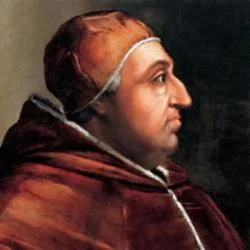
Martin V
Martin V became pope in 1417, when the Catholic Church was divided among rival claimants in the Western Schism. His election at the Council of Constance restored a single papal line, but unity did not resolve deeper questions about church reform or the balance of power between pope and council. His papacy also rebuilt Rome’s position as the center of the Western Church.
Election at Constance
Born Odo Colonna around 1368 in Genazzano, near Rome, Martin came from a powerful Roman family. He studied canon law and entered the church’s administration, eventually becoming a cardinal. The Council of Constance, called to settle the schism and address church reform, elected him pope on 11 November 1417, the feast day of Saint Martin of Tours, from whom he took his papal name.
His election ended the period in which rival popes claimed authority over the Western Church. The council also called for regular future councils, reflecting a movement that argued general councils could act as a check on papal power. Martin accepted some agreements with European rulers but defended the authority of the papacy as he worked to re-establish it.
Rome and Papal Government
Martin did not return immediately to Rome. He travelled through several Italian cities while the papal territories remained divided among local rulers and military leaders. He entered Rome in 1420 and set about restoring order, repairing the city and rebuilding the papal administration. His efforts helped make Rome once again the pope’s permanent seat.
To consolidate control, Martin relied on the Colonna family and appointed relatives to important roles. Support from his kin strengthened his position in a politically unstable region, though the concentration of offices among family members also drew criticism. His papacy spent considerable energy on restoring the Papal States and the resources needed to govern them.
Reform, Conflict and Legacy
Church reform remained unfinished. The Council of Constance had raised expectations of broad changes, but Martin’s agreements with national rulers and his defense of papal authority limited the council’s ability to impose lasting institutional reform. In Bohemia, he called for a crusade against the Hussites, whose religious movement had spread after the execution of Jan Hus. The campaigns failed to end the conflict.
Martin died in Rome on 20 February 1431. He left a church with one widely recognized pope and a stronger base in Rome, but many of the disputes over reform and authority remained unresolved. His reign helped restore the papacy after a period of division, while its reliance on dynastic networks and its limited reform record reflected the political realities of the age.