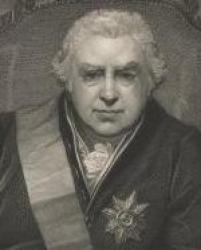
Martinus Beijerinck
 Netherlands
- Martinus Willem Beijerinck: Pioneering Microbiologist and Botanist
- Academic Career and Discoveries
- Founding Ecological Microbiology
- Contribution to Virology
- Legacy and Recognition
Martinus Willem Beijerinck: Pioneering Microbiologist and Botanist
Early Life and EducationMartinus Willem Beijerinck was born on March 17, 1851, in Amsterdam, Netherlands. He studied at the University of Leiden, where he developed a deep fascination for microorganisms and botany.
Academic Career and Discoveries
After graduating, Beijerinck taught microbiology at an agricultural school in Wageningen. He later moved to the Polytechnic Institute in Delft, where he established the renowned Delft School of Microbiologists.
Throughout his career, Beijerinck made groundbreaking discoveries in the field of microbiology. In 1888, he identified symbiotic nitrogen fixers and, in 1901, isolated free-living aerobic nitrogen fixers known as Azotobacter. He also discovered sulfate-reducing bacteria (Spirillum desulfuricans) and the process of sulfate reduction.
Founding Ecological Microbiology
Beijerinck played a pivotal role in the development of ecological microbiology alongside Russian scientist Sergei Winogradsky. He pioneered the study of soil microbiology and investigated the relationships between microorganisms and soil fertility.
Contribution to Virology
Beijerinck is considered one of the founders of virology, alongside Dmitry Ivanovsky. In 1898, he independently replicated Ivanovsky's filtration experiments on tobacco mosaic disease. Although he employed the term "contagium vivum fluidum" (infectious living fluid) for the agent, his initial hypothesis that viruses were liquid substances was later refuted.
Legacy and Recognition
Despite Beijerinck's untimely death in 1931, his legacy continues to shape the field of microbiology. He received numerous honors during his lifetime, including being elected as a foreign member of the Russian Academy of Sciences in 1924 and an honorary member of the Soviet Academy of Sciences in 1929.
Beijerinck's groundbreaking discoveries and contributions to microbiology have left an indelible mark on the understanding of the microbial world. His pioneering work continues to inspire researchers and drive advancements in the field.