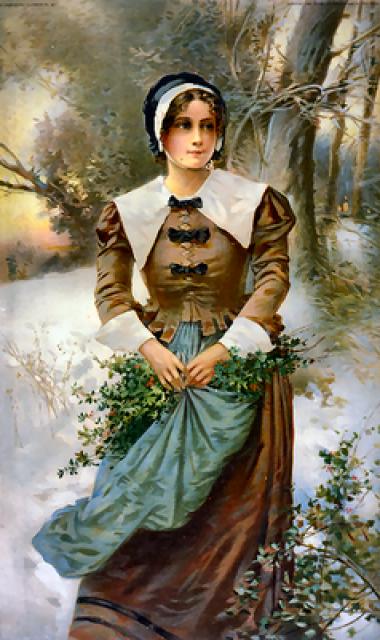
Mary Dyer
 Great Britain
Early Life
English Puritan Mary Barrett was born around 1611, possibly to Lady Arbella Stuart and Sir William Seymour. Despite her humble origin, she frequented the royal court of Charles I as a child, where she acquired elaborate gowns that she later brought to America.
Conversion to Quakerism
In 1638, Mary married William Dyer and settled in Boston. In 1637, she became an adherent of Anne Hutchinson, who challenged the authority of the clergy. Her support for Hutchinson led to the exhumation of her stillborn child, which was deemed evidence of heresy.
In 1652, Mary and her husband traveled to England and converted to Quakerism under the influence of George Fox. She returned to America in 1657, defying a law banning Quakers from Massachusetts.
Arrest and Exile
Mary continued to preach Quakerism, despite being arrested and expelled from Massachusetts multiple times. In 1658, she was sentenced to death in Connecticut but escaped execution through her son's intervention. She returned to Massachusetts in 1660 to protest anti-Quaker laws.
Death and Legacy
Despite offers of clemency, Mary refused to renounce her beliefs and was hanged on June 1, 1660. She became one of four Quakers known as the Boston Martyrs. Her execution sparked outrage and played a significant role in the eventual repeal of Massachusetts's anti-Quaker laws.
Mary Dyer's legacy as a staunch advocate for religious freedom and women's rights continues to inspire generations. Her story serves as a testament to the courage and unwavering faith of those who dared to challenge authority in the face of adversity.


