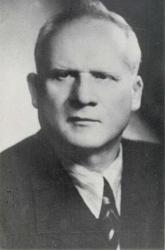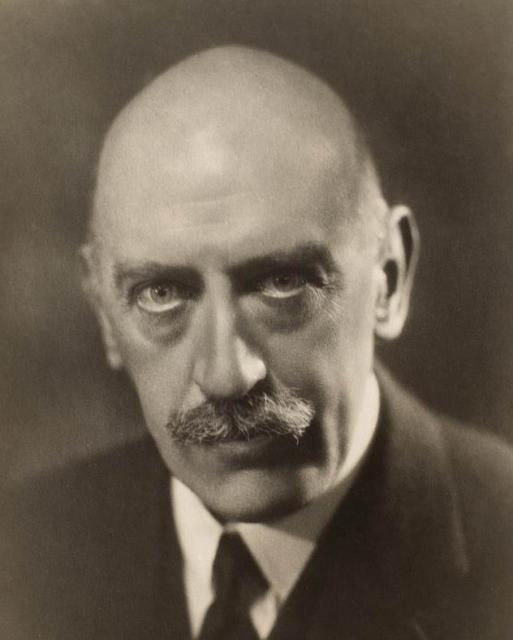
Maurice Baring
 Great Britain
Biography of Maurice Baring
Maurice Baring was an English literary figure, known for his versatility as a playwright, poet, novelist, translator, essayist, travel writer, and war correspondent. He was born on April 27, 1874, in Mayfair, London. Baring was the eighth child and fifth son of Edward Charles Baring, the first Baron Revelstoke, and his wife Louisa Emily Charlotte Bulteel, the granddaughter of Prime Minister Charles Grey, the second Earl Grey.

Baring received his education at Eton College and Trinity College, Cambridge. After a short-lived diplomatic career, he embarked on extensive travels, particularly in Russia. He was captivated by Russian spiritual music and the overall Russian soul, and in his book 'Russian People,' Baring debunked false stereotypes about Russia. He witnessed and reported on the details of the Russo-Japanese War for the London newspaper 'Morning Post.' Baring can be considered a Russophile: for nearly ten years, until 1914, he frequently visited Russia, eagerly reading the works of Russian authors. According to him, the room he lived in Sosnovka village was 'his favorite room in the whole world after the Eton College library.'
At the beginning of World War I, Maurice joined the Royal Air Force, serving as an aide to David Henderson and Hugh Trenchard in France. In 1918, he became a staff officer in the Royal Air Force and was awarded the honorary Order of the British Empire (OBE). In 1925, Baring was granted command of an aviation wing. Following his death, Trenchard wrote, 'He was the most selfless man I ever met or am ever likely to meet. The Royal Air Force owes more to this man, infinitely more than they know or suspect.'
As an eccentric bachelor, Baring had extensive social connections, including the secret intellectual club 'Cambridge Apostles,' the circle of English aristocrats and intellectuals known as 'The Coterie,' and a literary group that included G. K. Chesterton and Hilaire Belloc. Baring had a strong dislike for intellectualism when it came to art and was known for his witty humor. He enjoyed painting, played the piano, and had a talent for musical humor.
Previously an agnostic, Maurice converted to Catholicism in 1909, describing it as 'the only act of which he was entirely certain he would never regret.' After the war, Baring achieved success as a playwright and began writing novels. In the later years of his life, he suffered from a chronic illness, as Parkinson's disease significantly weakened his health over a span of 15 years.
Paul Horgan referred to Baring as 'one of the most cultured individuals of his time.'