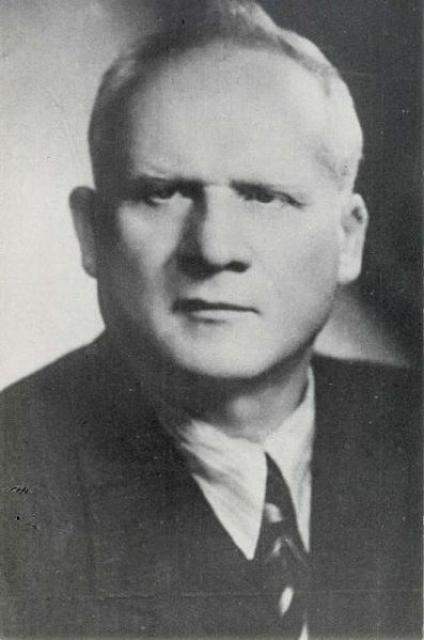
Prezihov Voranc
 Slovenia
- Lovro Kuhar: A Prolific Writer, Political Activist, and Communist
- Literary Beginnings
- World War I and Captivity
- Political Activism and Communist Party Membership
- Literary Style and Literary Recognition
- Exile and Internationalism
- Editorial and Resistance Work
- Literary and Political Legacy
- Post-War Years and Isolation
Lovro Kuhar: A Prolific Writer, Political Activist, and Communist
Early Life and EducationLovro Kuhar, also known by his literary pseudonym Prežihov Voranc, was born in 1893 in Podgora, Carinthia, Austria-Hungary. His parents were tenant farmers who eventually acquired their own land. His younger brother, Alojzij Kuhar, became a prominent liberal-conservative politician and historian. Kuhar's childhood was marked by hard agricultural labor, which instilled in him a strong work ethic and determination. After graduating from secondary school, he studied cooperative management, marking the end of his formal education. Nonetheless, he remained an avid reader throughout his life, filling in the gaps in his knowledge through self-study.
Literary Beginnings
Kuhar's literary career began in 1909 with the publication of a short story in the Slovenian magazine "Domači Prijatelj." This story was one of many that depicted the lives and struggles of peasants and laborers. From 1911 to 1912, Kuhar lived in Trieste, where he became involved in political circles and contributed to the social democratic publication "Zarja."
World War I and Captivity
With the outbreak of World War I, Kuhar was conscripted into the Austro-Hungarian army. He saw combat and was taken prisoner in 1916, spending the rest of the war in Italian prisoner-of-war camps. During his time in captivity, he continued to write, capturing the psychological toll of war on soldiers.
Political Activism and Communist Party Membership
After the war, Kuhar returned to Carinthia, which was experiencing significant political and cultural upheaval. In 1920, he joined the Communist Party. He worked at a workers' cooperative on a steel mill, becoming increasingly radical in his support for Carinthia's political integration into the newly formed Yugoslav state.
Literary Style and Literary Recognition
During this period, Kuhar continued to write, publishing his first short story collection, "Povesti," in 1925. While the collection received mixed reviews, critics recognized the raw talent of this self-taught proletarian writer. His unique style, characterized by vivid imagery and a focus on the human condition, would later become a hallmark of his literary output.
Exile and Internationalism
Kuhar's communist sympathies and political activism led to his arrest and eventual flight from Carinthia in 1930. He moved first to Vienna and then to Prague in 1931, before settling in Berlin in 1932. This period marked a time of intense political engagement and international cooperation. Kuhar traveled extensively, establishing connections with other socialists in Europe and visiting Romania, Bulgaria, Greece, Norway, and France on political missions.
Editorial and Resistance Work
From 1932 to 1934, Kuhar edited the magazine "Delo" in Vienna, but fell out of favor with the Austrian authorities and was arrested in 1937. Prior to the outbreak of World War II, he worked as a librarian in Paris, blending in with the many political émigrés who had found refuge in France.
Literary and Political Legacy
In 1933, the new socialist literary magazine "Sodobnost" was founded in Slovenia. Kuhar's work aligned perfectly with the magazine's social realist agenda, and he became a prominent contributor. His collection of short stories, "Samorastiki" ("Self-Made Men"), was published in 1939.
Kuhar's first novel, "Doberdob" ("Doberdob"), was published in 1941, followed by "Jamnica" ("Jamnica") in 1945. With the German occupation of Slovenia, Kuhar sought refuge in Zagreb and later in Bosnia. His patriotism eventually brought him back to Ljubljana, where he became one of the organizers of the National Liberation Front.
Post-War Years and Isolation
Kuhar's political activism and support for the communists led to his arrest in 1943. He was sent to the Sachsenhausen and Mauthausen-Gusen concentration camps. He returned to Ljubljana at the end of the war, broken and alone. He retreated from social and political life, becoming estranged from both friends and family.
Kuhar spent his later years living in a village, working on a historical novel, "Solzice," which he never completed. He passed away on February 18, 1950, in Maribor.





