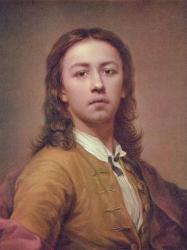
Maurice Blonde
 France
- Early Talent and Studies
- Paris and the School of Paris
- War and a Changed Life
- Painting Style and Subjects
- Legacy
Maurice Blond’s life ran from Łódź in partitioned Poland to the studios of Montparnasse and the streets of postwar Paris. A painter and lithographer associated with the School of Paris, he moved among artists who had come to the French capital from across Eastern Europe, survived the upheaval of the Second World War, and built a body of work attentive to the poetry of ordinary places: streets, rooms, landscapes and still lifes.
Early Talent and Studies
Blond was born in 1899 in Łódź, then part of the Russian Empire and now in Poland. His father was a merchant and art lover. The son showed an early gift: in 1911, a watercolor he made in a school examination attracted notice and was exhibited at the Kiev Museum. That recognition arrived before he had settled on art as a profession.
In 1922 he studied natural sciences at Warsaw University while also taking classes at the Warsaw School of Fine Arts. He supported himself by teaching mathematics. The combination of scientific study and artistic training reflected a young man still testing different directions, but his move west soon made painting the center of his life. In 1923 he left for Berlin, where he encountered other artists from Eastern Europe, including Isaac Mintchine and Kostia Terechkovitch.
Paris and the School of Paris
Blond arrived in Paris in 1924 and settled at La Cité Falguière, an artists’ colony in Montparnasse. There he joined a close-knit milieu of Russian and Eastern European artists, among them Mikhail Larionov, Natalia Goncharova, Jean Pougny, Pinchus Krémègne and Terechkovitch. The School of Paris was not a single style or formal group; it brought together artists with varied approaches who had made the city a center of modern art.
Blond began exhibiting in Paris in the 1920s, including at the Galerie Zak, and continued to show his work in later decades. In 1930 he became organizer and artistic adviser for the Russian-language literary magazine Tchisla, helping arrange exhibitions as well as contributing to the artistic life around the publication. The role connected his own practice to a broader community of writers and artists.
War and a Changed Life
In 1939, Blond volunteered for the French army. He was soon demobilized and sent to the Avignon region, where he found shelter and worked for a local farmer for two years. During the Occupation he adopted the name Blond, which he used as his signature thereafter. The experience interrupted the life he had made in Paris and reshaped the conditions under which he could work.
After the war, he settled in Grenoble and devoted himself fully to painting. He later returned to the Paris region, where he continued working until his death in Clamart in 1974. Across the decades, his path remained tied to migration and adaptation: he moved among cities and artistic circles while keeping his attention on the visual details of daily life.
Painting Style and Subjects
Blond’s work ranged across urban scenes, landscapes, interiors and still lifes. He repeatedly returned to Paris, drawing its streets and rooftops as well as the rhythms of everyday life. A 1945 pencil drawing in the Ben Uri collection, Parisian Street Scene, captures a city beginning to resume ordinary routines after liberation. Rather than treating the street as a grand panorama, he observed it as a lived environment shaped by people, buildings and the signs of a particular moment.
Art historians have described his mature paintings as post-Impressionist in their composition and luminous palette, with expressive elements becoming more visible over time. The paintings do not fit neatly into a single movement: they combine careful structure with a warm, personal response to familiar subjects. His still lifes and city views make the ordinary feel composed and quietly vivid.
Legacy
Blond exhibited in Paris throughout his career and also showed abroad, including in Los Angeles and London. His work entered public and private collections, among them the Ben Uri collection in London. He is remembered as part of the international School of Paris generation whose members brought experiences from Poland, Russia and Central Europe into the artistic life of the French capital.
His biography carries the marks of historical upheaval, but his art is not confined to biography. The recurring streets, interiors and objects suggest a painter who found lasting material in observation itself. From the watercolor that first drew attention in Kiev to the postwar Paris scenes, Blond kept transforming familiar places into carefully balanced, personal images.