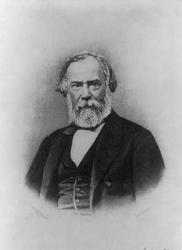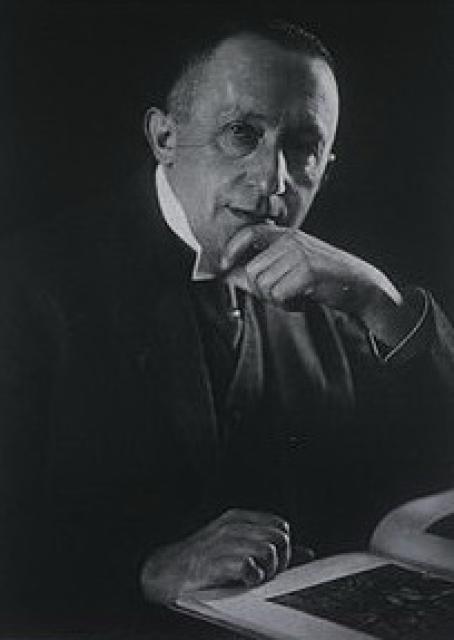
Max Bielschowsky
 Poland
Biography of Max Bilshovsky
Max Bilshovsky was a Polish neurologist who made significant contributions to the field of medical science through his research on various neurological disorders. He was born on February 19, 1869, in Breslau (now Wrocław), Poland.
Bilshovsky obtained his Doctor of Medicine degree from the University of Munich in 1893. After completing his studies, he joined the Senckenberg Pathology Institute in Frankfurt-am-Main, Germany, where he worked alongside Ludwig Edinger, a prominent German anatomist and neurologist. During his time at the institute, Bilshovsky learned histological staining techniques from Carl Weigert, a German-Jewish pathologist.
From 1896 to 1904, Bilshovsky continued his research at Emanuel Mendel's psychiatric laboratory in Berlin. In 1904, he became a part of the neurobiological laboratory led by Oscar Vogt at the University of Berlin. Vogt, along with his wife, made significant contributions to modern neurology. Bilshovsky collaborated with Vogt until 1933, and their work greatly advanced the understanding of various neurological conditions.
Later in his career, Bilshovsky worked at the psychiatric clinic of the University of Utrecht and the Cajal Institute in Madrid, which is the largest neurological research center in Spain.
Bilshovsky's research focused on tuberous sclerosis, amaurotic idiocy, Huntington's chorea, and congenital myotonia. He is particularly known for his histopathological studies related to multiple sclerosis, the use of silver staining for impregnating nerve fibers in histology, and the development of vital staining techniques in collaboration with Stanley Cobb. Bilshovsky's staining technique, named in his honor, was an improved version of the method developed by Santiago Ramón y Cajal.
Max Bilshovsky passed away on August 15, 1940, leaving behind a remarkable legacy in the field of neurology and histopathology.