Rita Levi-Montalcini
 Italy
ItalyBiography of Rita Levi-Montalcini
Rita Levi-Montalcini was an Italian neurologist. She was born into a family of twin sisters, the daughter of an electrical engineer, Adamo Levi, and an artist, Adele Montalcini. When she began her scientific career, she added her mother's maiden name to her own. Although Levi-Montalcini came from an intelligent Jewish family, her father had old-fashioned views that believed women should not strive for professional success. However, against her father's wishes, she enrolled in the medical school at the University of Turin and received a medical degree in 1936, specializing in neurology and psychiatry in 1940.
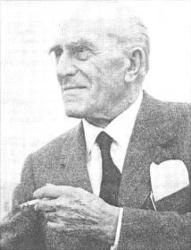
During her education, Levi-Montalcini worked as an assistant to histologist and embryologist Giuseppe Levi at the neurology and psychiatry clinic of the University of Turin. She also studied at the Brussels Neurological Institute in Belgium. It was Giuseppe Levi who sparked her interest in neuroembryological research. During World War II, the anti-Semitic laws of the Italian fascist government prevented Levi-Montalcini from working at the university. However, she continued her research in her bedroom at her home near Turin. After the Nazis occupied northern Italy, she moved to Florence, where she again managed to work in her small apartment. In 1944, as the Allies began to liberate Italy, she provided medical services to American military authorities in a camp for Italian refugees. In 1945, she was able to return to her research as an assistant at the Institute of Anatomy at the University of Turin.
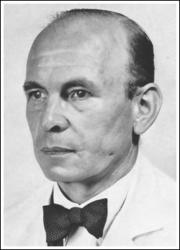
Levi-Montalcini was strongly influenced by the work conducted by Victor Hamburger, a neurobiologist and embryologist at Washington University in St. Louis. In 1947, at Hamburger's invitation, Levi-Montalcini traveled to St. Louis to work with him as a research associate in the zoology department. By modifying experiments previously performed by American anatomist Elmer Bueker, the researchers transplanted mouse tumor cells into chicken embryos and found that the embryo's nerve cells quickly grew into the tumor tissue. The same effect occurred even when the tumor was not in direct contact with the embryo. These observations led Levi-Montalcini to conclude that an unknown stimulating substance contained in the tumor affected nerve growth.
In 1952, Levi-Montalcini continued her research in Rio de Janeiro. In the Brazilian laboratory, she cut mouse tumor tissue into small pieces, cultured them in chicken blood and embryonic extracts, and then added sensory nerve cells from chicken embryos to the mixture. Within the first 12 hours, nerve fibers began to proliferate towards the tumor fragments, surrounding them and forming a characteristic "halo." Further experiments showed that tumor extracts were no less effective than the tumors themselves. The existence of the stimulating substance seemed undeniable, and Levi-Montalcini named it nerve growth factor (NGF). In 1953, American biochemist and zoologist Stanley Cohen joined Levi-Montalcini at Washington University. Through their collaboration, it was discovered that NGF is a protein and that snake venom and salivary glands of adult male mice are richer sources of NGF than tumors. Cohen purified NGF, determined its chemical structure, and produced antibodies to NGF. The two researchers found that these antibodies not only inhibited the action of NGF but could selectively and persistently destroy sympathetic nerve tissue (associated with blood vessel contraction and gland secretion).
In 1951, Levi-Montalcini became an adjunct professor, and in 1958, a professor at Washington University. In the 1960s, she began to spend more time with her family in Italy and, together with Pietro Angeletti, she established a laboratory at the Higher Institute of Health in Rome. In 1969, Levi-Montalcini organized a cell biology laboratory at the Italian National Research Council in Rome, where she served as the director until 1979 and then as a permanent research staff member. From 1969 to 1977, she was a professor in the Department of Biology at Washington University. Initially, Levi-Montalcini's laboratory focused on NGF research, but thanks to her efforts, new extensive branches of neurobiology have been discovered and explored by scientists from many countries.
Initially, the idea of a growth factor like NGF was met with skepticism by the scientific community. It was not a traditional hormone that caused a temporary metabolic reaction, but rather an unknown type of molecular substance necessary for the development and survival of specific types of cells. Subsequently, many other growth factors were discovered, including Cohen's epidermal growth factor (EGF), colony-stimulating factors (CSFs), platelet-derived growth factor (PDGF), fibroblast growth factor (FGF), and interleukins (IL-1, IL-2). In the 1980s, it was shown that oncogenes (genetic elements that cause cancer) carry the code for producing proteins similar in structure to growth factors and their receptors (chemical formations on the surface of cells that bind to specific substances). This discovery suggests that the development of cancer is caused by disruptions in the regulation of growth factors. Growth factors for different types of nerve cells have also been discovered, and methods for their therapeutic use have been developed, such as using NGF to regenerate damaged nerves or EGF to improve the effectiveness of skin grafts.
Levi-Montalcini and Cohen were awarded the Nobel Prize in Physiology or Medicine in 1986, "in recognition of their discoveries of growth factors of cells and organs." Levi-Montalcini's discovery of NGF was described as "a remarkable example of how an experienced researcher can create a concept from apparent chaos." Levi-Montalcini was a joyful, elegant woman, kind-hearted and attentive in her relationships with colleagues and friends. In addition to her work in the Roman laboratory, she helps young scientists and puts a lot of effort into advancing science in Italy. She holds dual citizenship in Italy and the United States.
Among her other awards, Levi-Montalcini received the William Thomson Wakeman Award (National Paraplegia Foundation, 1974), the Lewis S. Rosenstiel Award for Distinguished Work in Basic Medical Science from Brandeis University (1982), the Louisa Gross Horwitz Prize (Columbia University, 1983), and the Albert Lasker Award for Basic Medical Research (1986). She is a member of the Harvey Society, the American Academy of Arts and Sciences, the National Academy of Sciences, the Royal Academy of Medicine in Belgium, the Italian National Academy of Sciences, the European Academy of Sciences, Arts, and Literature, and the Florentine Academy of Arts and Sciences. She has received honorary degrees from Uppsala University, the Weizmann Institute, St. Mary's College, and the Washington University School of Medicine.