Maximilian Lamark
 France
- Biography of Maximilien Lamarque
- Early Military Career
- Great Army and Neapolitan Army
- Later Career and Opposition
Biography of Maximilien Lamarque
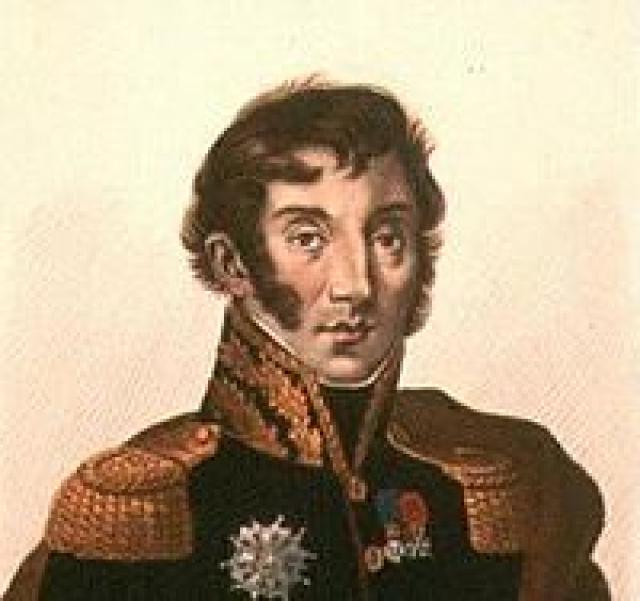
Maximilien Jean de Lamarque, a Count, Baron, and Divisional General, was born on July 22, 1770, in Saint-Sever, France. He passed away on June 1, 1832, in Paris. Lamarque was the son of a deputy of the Constitutional Assembly.
Early Military Career
On January 20, 1792, Lamarque joined the 4th Battalion of the Landes department as a grenadier. He quickly rose through the ranks during the revolutionary wars, becoming a lieutenant on April 3, 1793. He fought on the Spanish border and later served in the staff of the Pyrenean Army from April 1794. From August onwards, he served as an adjutant for a battalion and brigade. In 1797, Lamarque fought in the Rhine Army under General Suzanne. He later joined the Army of England in November 1798 and was transferred to the General Staff of the Rhine Army on December 17, 1799. He distinguished himself in battles at Engen, Messkirch, Biberach, Nördlingen, and Hohenlinden. On March 6, 1801, Lamarque was promoted to brigadier general and served in the Observational Corps in Gironde.
Great Army and Neapolitan Army
On August 24, 1805, Lamarque took command of the 2nd Brigade of Desjardins' division in the 7th Corps of the Grande Armée. He was transferred to the Neapolitan army on February 8, 1806, where he fought against the forces of Fra Diavolo and achieved a significant victory at Gaeta. From February 17, 1809, Lamarque served as the Chief of Staff for Joseph Bonaparte's corps in the Italian Army. He then commanded the 4th Division of the Italian Army under General Eugène de Beauharnais from March 1809. On April 28, 1809, he became the commander of the 2nd Division of General Macdonald's corps. During the Battle of Wagram (June 5-6, 1809), Lamarque led his division with great valor, but suffered significant losses. He later became the commander of the 2nd Division in the Army of Italy from July 15, and the Chief of Staff under General Udino from August 10. On August 24, 1809, he was appointed the commander of the 2nd Division of the National Guard in Flanders, and from September 5, he commanded the 4th Division of the Reserve Army.
Later Career and Opposition
In January to April 1810, Lamarque commanded a division of the National Guard in the Brabant Army under Udino. From April 25, 1809, he served as the Chief of Staff for the Neapolitan army. In June 1811, he was transferred to Spain and appointed as the commander of the troops in Catalonia. He gained fame for his actions in battles at Altafulla, Ametlla, Casa-Massanet, Bapola, Tarragona, and more. After the French lost Spain, Lamarque returned to France and remained inactive for a long period. During the "Hundred Days" of Napoleon's return, he sided with Napoleon and received command of the 7th Division in General Rélie's corps on March 28, 1815. From May 25, 1815, Lamarque served as the commander of the Loire Army (12th, 13th, and 22nd military districts) in Vendée. He decisively suppressed a royalist uprising. However, after Napoleon's final abdication, he was declared a traitor and included in the proscription lists on July 24, 1815. In January 1816, Lamarque fled abroad and resided in Brussels and Amsterdam. On October 20, 1818, he was allowed to return to France. In 1828, he became a member of the Chamber of Deputies and was one of the leaders of the liberal wing. After the July Revolution of 1830, he was initially appointed as the Commander-in-Chief of the 4th, 10th, 11th, 12th, and 20th military districts, and later the 4th, 11th, and 12th districts. However, he eventually joined the opposition, strongly criticizing the foreign policy of Louis Philippe's government. On April 1, 1831, he was dismissed from service. The funeral of Lamarque became the catalyst for the uprising on July 5-6, 1832.