Medgar Evers
 USA
- Growing up in segregated Mississippi
- College, marriage and organizing
- Building the Mississippi civil rights movement
- Assassination and delayed justice
- Legacy
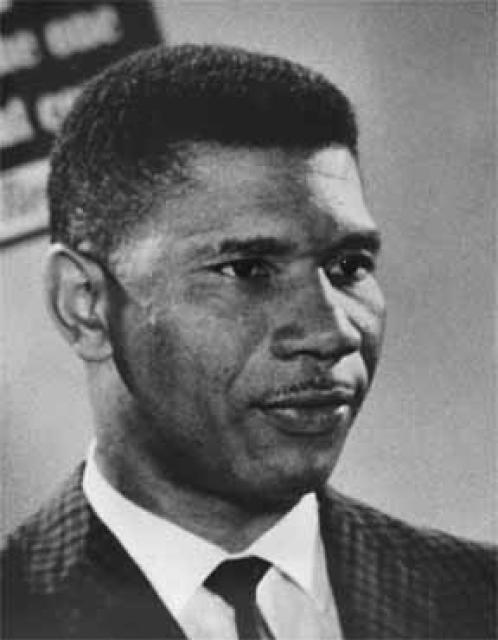
Medgar Evers spent his life confronting the racial violence and segregation that shaped Mississippi under Jim Crow. As the NAACP’s first field secretary in the state, he organized voter-registration campaigns, investigated racist violence and helped challenge the exclusion of Black students from white institutions. His work made him a target. In June 1963, white supremacist Byron De La Beckwith shot and killed him outside his home in Jackson; it took more than three decades before a jury convicted the killer.
Growing up in segregated Mississippi
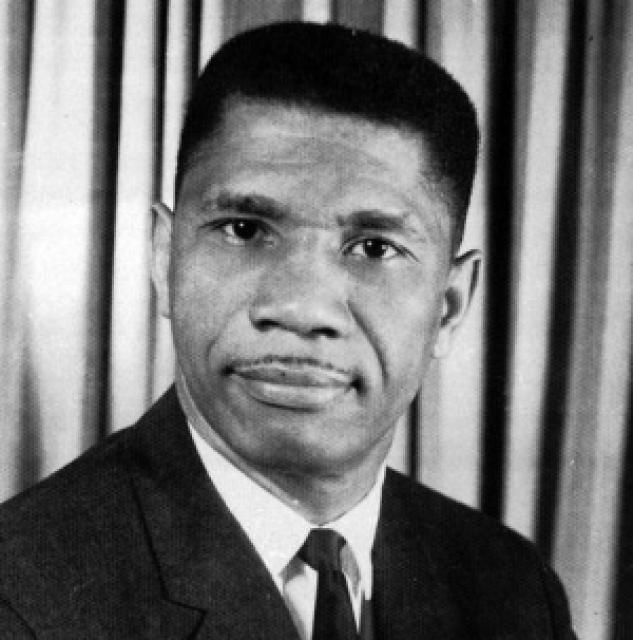
Medgar Wiley Evers was born on July 2, 1925, in Decatur, Mississippi, to James and Jesse Evers. He was one of five children in a family that valued education. As a Black child in the segregated South, he attended under-resourced schools and faced racist harassment on the long walk to school. The dangers of challenging white supremacy were part of daily life, not an abstraction.
In 1943, Evers left school and enlisted in the U.S. Army during World War II. He served in segregated units in Europe, including in France, Belgium and England, and was discharged in 1946. Returning home, he experienced the sharp contrast between the fight against fascism abroad and the denial of basic rights to Black Americans at home. When he tried to vote in Mississippi, a white mob blocked him and other Black veterans from reaching the polls.
College, marriage and organizing
Evers enrolled at Alcorn Agricultural and Mechanical College, a historically Black institution, where he studied business administration and became active in campus life. He joined the NAACP and helped organize its local chapter. At Alcorn, he met Myrlie Beasley, a fellow student. They married in 1951 and built a partnership that would become central to the civil rights work ahead. They had three children: Darrell, Reena and James.
After graduating in 1952, Evers worked for Magnolia Mutual Life Insurance Company and traveled through the Mississippi Delta. The job put him in contact with Black communities across the state, and he used those connections to organize NAACP chapters and encourage local activism.
In 1954, Evers applied to the University of Mississippi Law School, which excluded Black applicants. The rejection became part of the NAACP’s effort to challenge segregation in higher education. That same year, the organization appointed him its first salaried field secretary in Mississippi. He and Myrlie moved to Jackson to establish a state office and coordinate work across the region.
Building the Mississippi civil rights movement
Evers traveled constantly, registering voters, recruiting members and documenting attacks against Black Mississippians. He investigated the 1955 murder of Emmett Till, helping locate and protect witnesses who testified at the trial. The all-white jury acquitted Till’s killers, but the case drew national attention to the violence sustained by segregation and the courage of the Black community that pursued justice.
Evers also organized direct action. He helped lead a boycott of gas stations that denied Black customers access to restrooms, distributing bumper stickers that read, “Don’t Buy Gas Where You Can’t Use the Restroom.” In Jackson, he supported economic boycotts, library “read-ins,” beach wade-ins and voter-registration efforts. He worked behind the scenes to help James Meredith gain admission to the University of Mississippi in 1962, a breakthrough that met violent resistance.
His work brought repeated threats. In May 1963, a firebomb was thrown at the Evers family home. Myrlie and the children were inside, and the family learned to stay alert to danger. Evers continued his organizing, aware that the threats were tied directly to the campaigns he led.
Assassination and delayed justice
On the night of June 11, 1963, President John F. Kennedy delivered a televised address calling for civil rights legislation. Evers returned home after an NAACP meeting shortly after midnight. As he stepped from his car, a sniper shot him in the back. He died in a Jackson hospital in the early hours of June 12, aged 37. His wife and children were awake and nearby.
Investigators traced a rifle’s telescopic sight found near the scene to Byron De La Beckwith, a white supremacist and member of the White Citizens’ Council. Beckwith was arrested and tried twice in 1964. Both trials ended with hung juries. For years, he remained free while Myrlie Evers pressed authorities to reopen the case.
In 1994, a new prosecution brought additional evidence before a racially mixed jury, which found Beckwith guilty of murder. He received a life sentence and died in prison in 2001. The long delay between the assassination and conviction became a stark example of how the justice system had failed Black victims and their families.
Legacy
Evers’s assassination galvanized national attention and strengthened calls for federal civil rights protections. Congress passed the Civil Rights Act in 1964, the year after his death, amid a broader movement built by organizers across the country. The NAACP posthumously awarded him the 1963 Spingarn Medal. His Jackson home, where he had worked and raised his family under constant threat, is now preserved as the Medgar and Myrlie Evers Home National Monument.
Evers’s legacy is also inseparable from Myrlie’s. She continued their shared work, became a prominent civil rights leader and later served as chair of the NAACP. Together, they represented the local organizing, personal courage and family sacrifice behind the national struggle for equal rights.