Mehmed Ali Agdja
 Turkey
- Early years and first conviction
- The attack on Pope John Paul II
- Imprisonment and release
- Public image and legacy
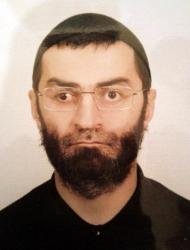
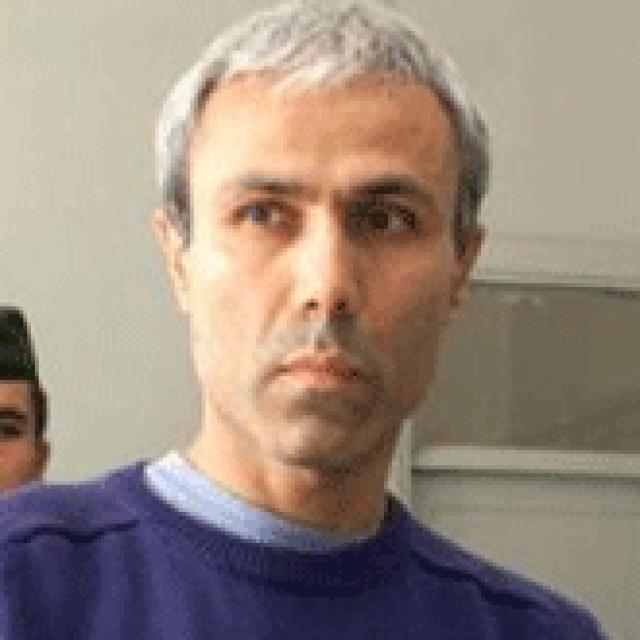
Mehmet Ali Ağca is a Turkish former militant whose name became internationally known after he shot Pope John Paul II in St. Peter’s Square in 1981. The attack left the pope seriously wounded and turned Ağca into one of the most closely scrutinized figures of the late Cold War. Before the papal shooting, he had already been convicted in connection with the murder of Turkish newspaper editor Abdi İpekçi, and his subsequent statements about his motives and possible accomplices shifted repeatedly.
Early years and first conviction
Ağca was born on 9 January 1958 in Malatya, Turkey. As a young man, he became involved in the country’s far-right militant milieu and was associated with the Grey Wolves, an ultranationalist movement. In the politically turbulent late 1970s, he was accused of involvement in armed crimes and came to public attention in connection with the killing of İpekçi, the editor of the newspaper Milliyet.
İpekçi was shot and killed in Istanbul on 1 February 1979. Ağca was arrested later that year and charged with the murder. While awaiting trial in a military prison, he escaped in November 1979. His disappearance from custody and his subsequent travel across Europe became part of the mystery surrounding the events that followed.
The attack on Pope John Paul II
On 13 May 1981, Ağca fired several shots at Pope John Paul II as the pontiff greeted crowds in St. Peter’s Square in Vatican City. The pope was seriously injured and hospitalized, while bystanders were also hurt. Security personnel seized Ağca at the scene. He was tried in Rome and sentenced to life imprisonment in July 1981 for the attempted assassination.
The case attracted intense international attention, in part because the motive remained unclear. During questioning and trial proceedings, Ağca offered conflicting accounts and named alleged accomplices. Investigators examined possible links to Bulgarian and Soviet-backed networks, but competing theories never produced a single conclusively established explanation of the attack. The uncertainty surrounding his statements made the case a lasting source of speculation during the Cold War.
Imprisonment and release
In December 1983, Pope John Paul II visited Ağca in prison and publicly forgave him. The personal meeting became one of the most striking moments in the aftermath of the shooting. The pope later asked Italian authorities to show clemency, and in June 2000 Italy’s president pardoned Ağca after he had spent nearly two decades in an Italian prison. He was transferred to Turkey to serve the remaining sentence connected with İpekçi’s murder.
Ağca was released from a Turkish prison in January 2010 after changes in the calculation of his sentence. His release renewed attention to the unsolved questions around the papal attack and the earlier journalist’s murder. He has continued to make public statements, but the contradictions in his accounts have left historians and investigators cautious about treating his claims as settled fact.
Public image and legacy
Ağca’s public identity is bound to two violent crimes and to the unresolved questions they left behind. The attempted assassination of a pope at the heart of Vatican City became a defining image of the period, while his earlier conviction connected him to Turkey’s polarized political climate. The pardon and the pope’s act of forgiveness added a deeply personal dimension to a case otherwise dominated by criminal proceedings and geopolitical conjecture.
Decades later, the attack remains one of the most consequential assaults on a modern pontiff. Ağca’s place in history rests not on any reliable account he offered of a larger plot, but on the documented events: his escape from Turkish custody, the shooting in St. Peter’s Square, his life sentence in Italy, and his eventual return to Turkey and release.