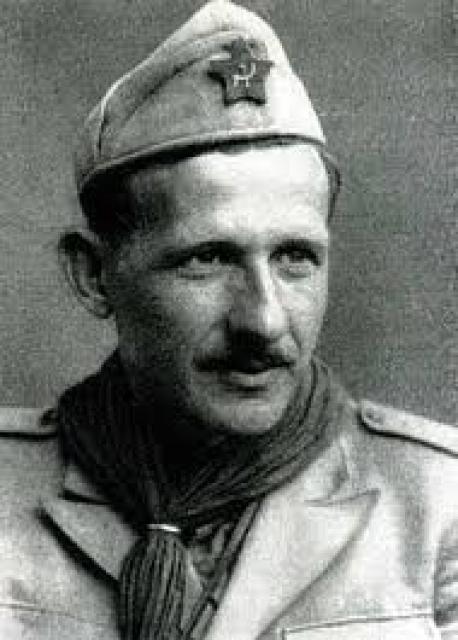
Mehmet Shehu
- Mehmet Shehu: A Life of Political Ascendance and Tragic End
- Involvement in the Spanish Civil War
- Albanian Partisan Movement
- Post-War Albania
- Political Career under Enver Hoxha
- Prime Ministership and Foreign Policy
- Controversial Death and Legacy
Mehmet Shehu: A Life of Political Ascendance and Tragic End
Early Life and EducationMehmet Shehu was born on January 10, 1913, in the town of Çorush, Albania. He pursued military education at a college in Naples, Italy, in the 1930s.
Involvement in the Spanish Civil War
During the Spanish Civil War (1936-1939), Shehu fought as a volunteer in the Garibaldi Brigade of the Spanish International Brigades. He spent time in an internment camp in France from 1939 to 1942.
Albanian Partisan Movement
Returning to Albania, Shehu became involved in the Albanian Communist Party and the resistance movement against the fascist Italian occupation. He was elected as a candidate member of the party's Central Committee in 1943 and rose through the ranks, becoming commander of the 1st Partisan Brigade and later the National-Liberation Army.
Post-War Albania
After Albania's liberation in 1945, Shehu served as Deputy Chief of the General Staff and, after training in Moscow, Chief of the General Staff. He was promoted to the rank of General of the Army.
Political Career under Enver Hoxha
In 1948, Shehu led a purge targeting "Titoists" and became the second-highest figure in the Albanian Communist Party after Enver Hoxha. He assumed numerous key positions, including Minister of Defense, Foreign Minister, Deputy Chairman of the Council of Ministers, and Minister of Internal Affairs.
Prime Ministership and Foreign Policy
From 1954 to 1981, Shehu served as Prime Minister of Albania. He played a pivotal role in the country's isolationist foreign policy, supporting a break with the Soviet Union and a rapprochement with China.
Controversial Death and Legacy
In 1981, a rift developed between Shehu and Hoxha. Shehu was accused of spying for Yugoslavia and reportedly committed suicide. However, there are allegations that he was assassinated during a Central Committee meeting.
The death of Mehmet Shehu remains a subject of speculation and controversy. His family members were imprisoned but were released after the fall of the communist regime in 1991. His son, Bashkim Shehu, dedicated his life to finding his father's grave, claiming to have discovered it in 2001.
Mehmet Shehu's life and legacy are explored in Ismail Kadare's novel "The Successor," which fictionalizes his biography.