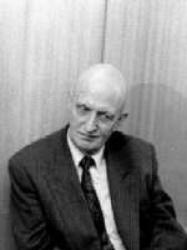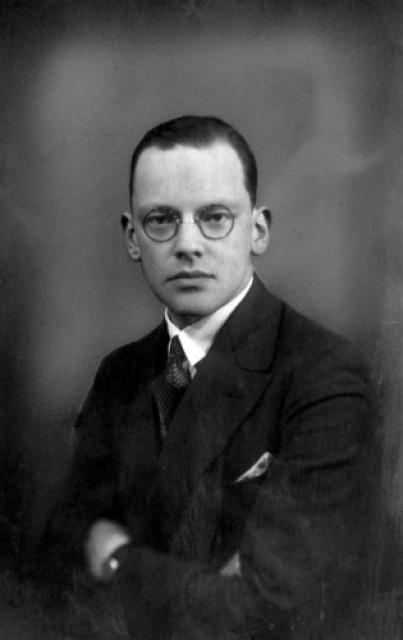
Menno ter Braak
 Netherlands
- Menno ter Braak: Dutch Modernist Writer and Literary Critic
- Filmliga and Doctorate
- Forum and Literary Criticism
- Journalism and Political Activism
- Polarization and Polemics
- Anti-Fascism and Suicide
- Legacy and Influence
Menno ter Braak: Dutch Modernist Writer and Literary Critic
Early Life and EducationBorn in Eibergen, Gelderland, Menno ter Braak grew up in the town of Tiel, where he excelled academically and displayed extraordinary intellectual capabilities. He enrolled at the University of Amsterdam, pursuing Dutch language and history. While a student, he was active in the student journal Propria Cures and independently studied film, an uncommon subject at the time.
Filmliga and Doctorate
Ter Braak founded the Filmliga (Film League), an organization dedicated to animated cinema. He earned a doctorate with a dissertation on the medieval Emperor Otto III and briefly taught in secondary schools.
Forum and Literary Criticism
In 1932, together with Edgar du Perron and Maurits Roelants, ter Braak established the literary magazine Forum. It became one of the most influential Dutch literary periodicals of the 1930s, known for its elitist stance and high cultural and critical standards. The magazine's motto was "Vent boven vorm," roughly translated as "Spirit above Form."
Journalism and Political Activism
In 1933, ter Braak, now residing in The Hague, became the literary editor of the Dutch liberal newspaper Het Vaderland. He was among the first intellectuals to recognize the threat posed by Nazism and founded the Comit? van Waakzaamheid (Committee for Vigilance). He wrote numerous essays on European culture and politics and their intertwining, influenced by Nietzschean thought.
Polarization and Polemics
Ter Braak was a prolific polemicist, engaging in sharp debates with opponents of diverse ideological backgrounds. He critiqued the "unclear collectivities" he identified, including Catholicism, liberal humanism, Marxism, and fascism.
Anti-Fascism and Suicide
Toward the end of his life, ter Braak became increasingly involved in the Dutch anti-fascist movement. The outbreak of World War II in September 1939 threw him into depression. Four days after Nazi Germany invaded the Netherlands, on May 14, 1940, he made an unsuccessful attempt to flee to England and subsequently committed suicide by ingesting sleeping pills and injecting poison. He died on the same day that the Luftwaffe carpet-bombed Rotterdam.
Legacy and Influence
Ter Braak's influence was profound and continued into the 1950s. While it diminished somewhat later, literary journals such as Libertinage and Tirade remained faithful to many of his ideas. Numerous educational institutions, including a school in his hometown of Eibergen, are named after him.