Mentor
Mentor is a figure in Homer’s Odyssey, remembered as the trusted friend of Odysseus and guardian of his household during the Trojan War. The epic identifies him as the son of Alcimus and says Odysseus entrusted him with the care of his home and young son, Telemachus. Mentor’s role in the poem is small but memorable, and the goddess Athena’s use of his appearance helped turn his name into a lasting symbol of wise guidance.
Guardian of Odysseus’ household
Before leaving for Troy, Odysseus entrusted Mentor with his household and asked that the older man be obeyed and keep everything secure. In Book 2 of the Odyssey, Mentor speaks at the assembly in Ithaca, where Telemachus challenges the suitors who have occupied his father’s palace. This moment shows Mentor exercising the authority Odysseus gave him, although the epic offers little detail about his life beyond this role.
The poem’s focus soon shifts to Telemachus. With Odysseus missing and the suitors pressing to marry Penelope, the young prince must find out whether his father is alive and learn to defend his own position in Ithaca.
Athena in Mentor’s form
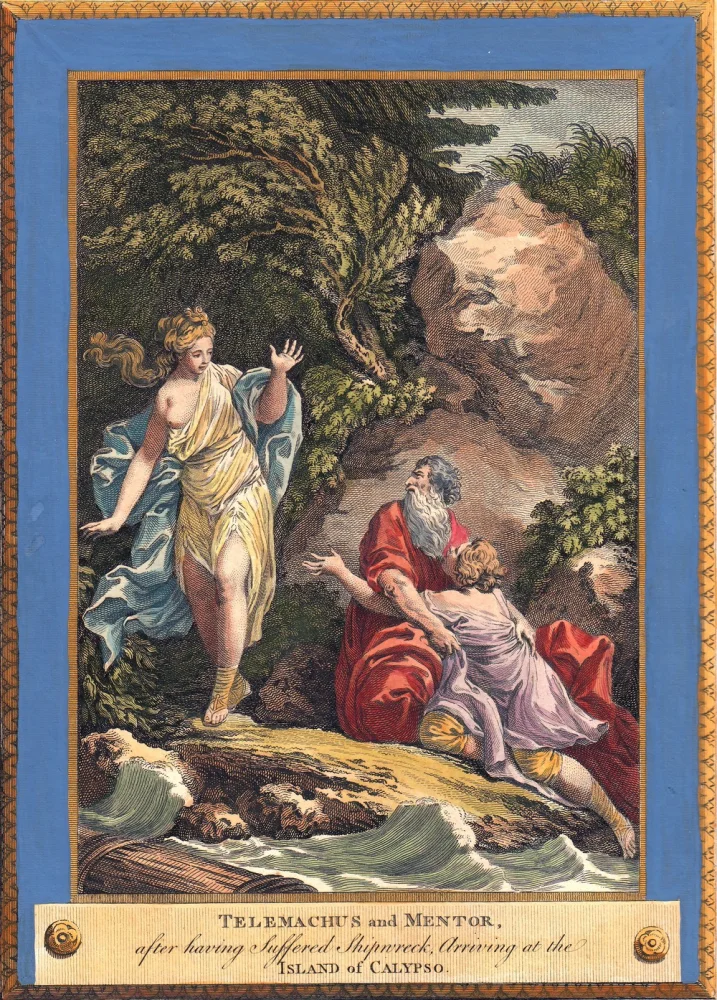
Athena guides Telemachus through much of this journey. She first visits him in the guise of Mentes, a friend of Odysseus, and later appears in the form of Mentor. Under this appearance, she encourages Telemachus, travels with him, and helps him prepare to confront the suitors. The disguise blurs the boundary between Mentor the mortal guardian and the goddess acting in his place.
Mentor is therefore both a character and an instrument of divine guidance in the epic. The contrast between the older man entrusted with a household and Athena’s supernatural intervention gives the story a layered view of mentorship: practical responsibility is joined to courage, counsel, and the awakening of a young hero’s confidence.
A lasting name
The figure’s name outlived the poem. In modern languages, “mentor” means a trusted adviser or guide, a usage that developed through later literature, particularly François Fénelon’s 1699 work The Adventures of Telemachus, which drew on Homer’s story. In that book, Mentor became an influential image of wise instruction.
The historical status of Mentor is inseparable from myth: he is known through the Odyssey rather than independent records. Yet the character has had an unusually durable cultural life. From Homer’s guardian of Telemachus to the modern teacher or adviser, Mentor’s name continues to describe the relationship between experience and guidance.