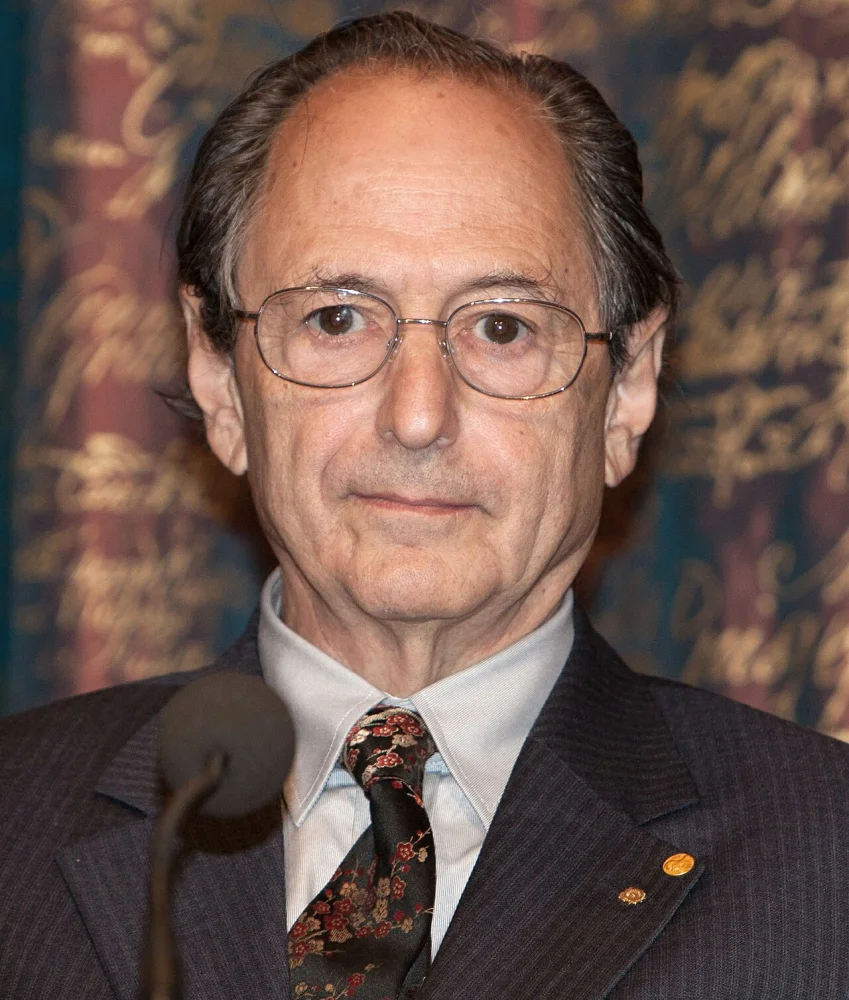
Michael Levitt
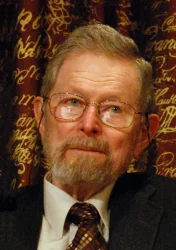
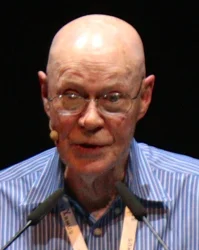
Michael Levitt helped make it possible to study the moving, reacting molecules of life with computers. A pioneer of computational structural biology, he developed ways to model how proteins and other complex molecules change over time, work that helped bring the precision of physics and chemistry into the study of biology. In 2013, he shared the Nobel Prize in Chemistry for developing multiscale models of complex chemical systems.
From Pretoria to Cambridge
Levitt was born in Pretoria, South Africa, on May 9, 1947. As a teenager, he traveled to Britain and decided to stay to continue his education. He studied physics at King’s College London, graduating in 1967. His interest in the physical workings of living systems led him toward biophysics, a field then opening new ways to connect molecular biology with mathematics and computation.
In 1968, he began doctoral research at the Medical Research Council Laboratory of Molecular Biology in Cambridge. He also spent time at the Weizmann Institute of Science in Israel, where he worked with Shneior Lifson and collaborated with fellow researcher Arieh Warshel. Levitt received his doctorate from the University of Cambridge in 1972.
Giving molecules motion
Early computer models could represent the static shapes of molecules, but living molecules are never still. Proteins fold, shift, and interact; chemical reactions involve atoms moving and bonds changing. Levitt’s work addressed how computers could model these processes, rather than simply display a molecular structure.
With Warshel and others, Levitt developed computational approaches that combined classical physics with quantum mechanics. Classical methods could efficiently describe many atoms and their movement, while quantum calculations could capture the electronic changes at the heart of a chemical reaction. Combining the two allowed researchers to study complex systems with useful detail and manageable computing demands.
This work helped establish computational structural biology as a major research field. Molecular modeling and simulation now support investigations into protein structure, enzyme action, DNA, and other biological processes. They also provide tools for asking questions that are difficult to approach through experiments alone.
Levitt continued his research at Cambridge’s MRC Laboratory of Molecular Biology, where he worked with scientists including Francis Crick and Aaron Klug. After a period at the Weizmann Institute and other research posts, he joined Stanford University in 1987. There he became a professor of structural biology and built a research program using molecular dynamics and modeling to understand biological macromolecules.
Nobel recognition
In 2013, Levitt shared the Nobel Prize in Chemistry with Martin Karplus and Arieh Warshel. The award recognized their development of multiscale models for complex chemical systems. Their work made it possible to simulate chemical reactions within large biological molecules by combining different levels of physical description.
The honor recognized a change in how scientists can study life at the molecular scale. Rather than treating molecules as fixed structures, researchers could use computation to explore their behavior and interactions over time. Levitt’s contributions helped lay the foundations for a field that now informs basic biology, medicine, and drug research.
Life beyond the laboratory
Levitt has described his work as an ongoing cycle of analyzing data, writing programs, making figures, and testing ideas. During his doctoral years, he balanced research with caring for a young family, sometimes working from home among computer punch cards and molecular models. His career has spanned South Africa, Britain, Israel, and the United States, reflecting the international character of modern scientific research.
A Fellow of the Royal Society and a member of the U.S. National Academy of Sciences, Levitt has continued to teach and conduct research at Stanford. His legacy lies in both scientific discoveries and a way of thinking: computers can reveal not only what biological molecules look like, but how they behave.