Michel Suleiman
 Lebanon
- Biography of Michel Suleiman
- Political and Military Roles
- Presidency and Political Challenges
- Presidency and Achievements
Biography of Michel Suleiman
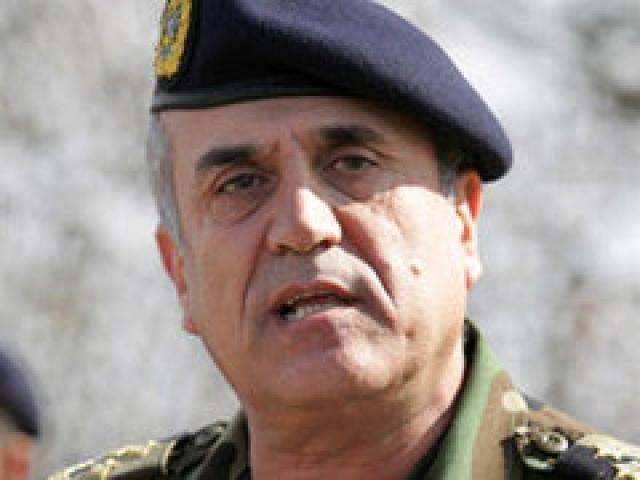
Early Life and Military CareerMichel Nuhad Suleiman, also spelled Sleiman, was born on November 21, 1948, in the coastal Christian town of Amsheet, located 40 kilometers north of the Lebanese capital, Beirut. He was born into a modest Maronite Christian family, with his father serving in the Lebanese counterintelligence and his mother named Josephine Suleiman. Despite wanting to become an engineer, Michel could not afford the expensive education, so he followed his father's advice and enrolled in a military school in Beirut in 1967. He completed his studies in 1970 as a junior lieutenant and underwent officer training in Belgium in 1971. He later became a commander of a platoon and then a company.
Political and Military Roles
It is unclear if Suleiman actively participated in the Lebanese Civil War from 1975 to 1990. During this time, the Lebanese Armed Forces had little influence as various armed factions and foreign occupation forces controlled different regions of the country. Suleiman did not hold staff positions during this period but served as a battalion commander. He received military training abroad, including in France in 1981 and the United States from June 1988 to mid-1989. In 1986, he became the chief of staff of the Lebanese 10th Infantry Brigade.
After the civil war ended, Suleiman was appointed as the head of military intelligence for Mount Lebanon on December 4, 1990. He later served as the secretary of the army command on August 25, 1991. In June 1993, he became the commander of the 11th Infantry Brigade, which participated in clashes with Israeli forces in the demarcation zone in southern Lebanon. Suleiman underwent a month-long commander course in the United States in 1995 and returned to Lebanon, where he was promoted to the rank of major general and appointed as the commander of the 6th Infantry Brigade. On December 21, 1998, Suleiman was promoted to the rank of lieutenant general and became the commander of the Lebanese Armed Forces. It is believed that his rapid career advancement was influenced by his brother-in-law, Gebran Kuriyyeh, who was the press secretary of Syrian President Hafez al-Assad.
Presidency and Political Challenges
On February 14, 2005, former Prime Minister Rafik Hariri was assassinated in Beirut, allegedly by Syrians. This event sparked the "Cedar Revolution," during which the army, led by Suleiman, maintained neutrality and ensured the security of both pro- and anti-Syrian demonstrations. Under pressure from the United States, Syria fully withdrew its troops from Lebanon by April 27, 2005, and parliamentary elections were held. Supporters of President Emile Lahoud, who was pro-Syrian, won the majority. After the Syrian withdrawal, Suleiman was accused by anti-Syrian opposition of supporting Damascus and not preventing the supply of weapons to Hezbollah, which controlled the south of Lebanon after Israel's withdrawal in 2000.
In June 2006, just before the war between Hezbollah and Israel, Suleiman's military intelligence exposed an Israeli espionage network plotting attacks on leaders of the Palestinian Islamic Jihad in Lebanon. The network's capture prevented the assassination of Mahmoud al-Majdoub, the organization's secretary-general, and his brother Nidal. The Second Lebanon War between Israel and Hezbollah began on July 12, 2006. The Lebanese Army did not intervene in the conflict, which resulted in the deaths of thousands, primarily civilians. As part of a peace plan proposed by the Lebanese government and the United Nations, Suleiman deployed 15,000 Lebanese troops to the south, which was controlled by Hezbollah, on August 17, 2006. Eventually, a ceasefire agreement was reached, and the size of the army was increased.
Presidency and Achievements
Suleiman assumed office as the President of Lebanon on May 25, 2008. In his inaugural speech, he announced the formation of a national unity government in which Hezbollah gained veto power. A new government was formed in July 2008. After his election, Suleiman called for the removal of his portraits from the streets. In July 2008, he began negotiations with Syria for the recognition of Lebanon's independence.
Throughout his presidency, Suleiman advocated for a secular political system and opposed the central role of religion in Lebanese politics. He successfully intervened in a religious conflict between Sunni and Alawite communities in the city of Tripoli. On July 18, 2008, Suleiman welcomed Samir Kuntar, a Hezbollah militant responsible for the brutal killing of three Israelis in 1980, and four other Hezbollah fighters at Beirut airport. They were exchanged for the bodies of two Israeli soldiers captured by Hezbollah in 2006, which triggered the Second Lebanon War.
Suleiman is married to Wafa Suleiman. They have three daughters: Rita, Lara, and Charbel. His native language is Arabic, and he also speaks English and French. Suleiman was awarded the highest state honors of Lebanon, including the Grand Cordon and Knight's Medal of the Order of the Cedar, as well as the Orders of Merit of the 3rd, 2nd, 1st, and "Exceptional" degrees.