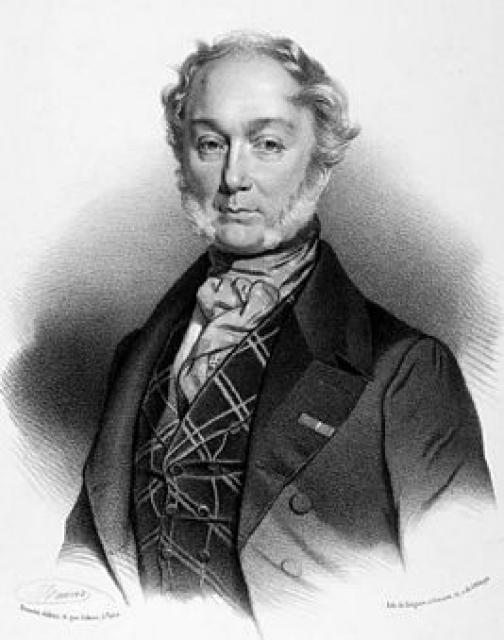
Michele Enrico Carafa di Colobran
 Italy
Italy- Micheli Carafa: A Life in Music
- Musical Education and Military Interlude
- Operatic Success in Naples and Paris
- Pedagogical Legacy
- Professorship at the Paris Conservatory
- Later Years and Legacy
Micheli Carafa: A Life in Music
Early Life and Musical BeginningsMicheli Carafa, born in Naples in 1787, hailed from an aristocratic lineage. His musical talent manifested at an early age, and by the tender age of 15, he composed his first opera, "Il Fantasma." The opera premiered in 1805 in the private theater of his uncle, Prince Caramanico.
Musical Education and Military Interlude
In 1806, Carafa embarked on a musical journey to Paris, where he studied composition under Luigi Cherubini and piano with Friedrich Kalkbrenner. However, his father's disapproval of his musical aspirations forced him to join a hussar regiment as a lieutenant. Under the command of Marshal Murat, Carafa fought in both Italy and Russia, earning recognition from Napoleon I.
With the restoration of the Bourbon monarchy in Naples, Carafa was dismissed from the military and his property confiscated. This turn of events allowed him to resume his musical pursuits.
Operatic Success in Naples and Paris
Composing and staging several operas in Naples, Carafa returned to Paris in 1821. His opera "Jeanne d'Arc" garnered instant acclaim, followed by successes with "La belle au bois dormant" (1825) and "Masaniello" (1828).
Pedagogical Legacy
Despite his early operatic triumphs, Carafa found it challenging to compete with the popularity of Rossini and Donizetti. He gradually shifted his focus towards teaching. In 1834, he became a French citizen and, in 1838, was appointed director of the École Militaire de Musique.
Professorship at the Paris Conservatory
From 1840 to 1858, Carafa held the esteemed position of Professor of Composition and Counterpoint at the prestigious Paris Conservatory, where he imparted his musical knowledge to countless students.
Later Years and Legacy
Carafa's final opera, "Thérèse," was premiered in 1838. He continued to compose, primarily choral works and religious music. Passing away in Paris in 1872, Carafa left behind a substantial legacy of musical creations and a profound impact on the musical landscape of his time.


