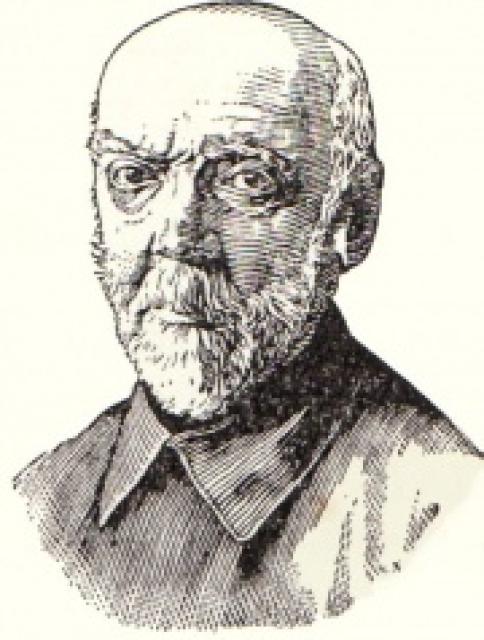
Mihail Ashenbrenner
 Russia
- Early Life and Military Career
- Formation of Military Revolutionary Organization
- Central Group and Arrest
- Trial and Sentencing
- Imprisonment and Release
- Literary Work and Legacy
Mikhail Yulyevich Aschenbrenner: A Prominent Figure in Narodnaya Volya
Early Life and Military Career
Born in Moscow, Mikhail Yulyevich Aschenbrenner graduated from the Moscow Cadet Corps in 1880. He embarked on a military career, primarily serving in Turkestan, where he distinguished himself in battle and earned several military honors.
By the 1870s, Aschenbrenner had been transferred to southern Russia. When the Narodnaya Volya party emerged, he commanded a battalion in the Lyublin Infantry Regiment as a lieutenant colonel.
Formation of Military Revolutionary Organization
In support of the revolutionary movement, Aschenbrenner established a circle within his battalion and subsequently merged it with similar groups in Nikolaev and Odessa. Lieutenant Bucevich, a leading figure in the Narodnaya Volya's naval organization, connected these circles with those in St. Petersburg. Aschenbrenner was invited to join the central military revolutionary group.
Central Group and Arrest
Aschenbrenner became an active member of the central group in St. Petersburg. He traveled to various cities to establish contacts with military circles, solicit correspondents for a planned revolutionary publication, and prepare for a convention of officers aligned with Narodnaya Volya.
However, Aschenbrenner's activities were betrayed by Degaev. During a journey, he was arrested in Smolensk. His testimony was personally reviewed by Emperor Alexander III.
Trial and Sentencing
In September 1884, Aschenbrenner was tried in the "Process of the 14." He was sentenced to death by hanging along with seven others, including two women and five officers. While two of the defendants were executed, the sentences of the remaining, including Aschenbrenner, were commuted to life imprisonment.
Imprisonment and Release
Aschenbrenner was imprisoned in the infamous Shlisselburg Fortress. Following the October 1905 amnesty, he was released and settled in Smolensk.
Literary Work and Legacy
Aschenbrenner published captivating memoirs in the journal "Byloe," detailing his experiences in Shlisselburg and his role in the military revolutionary organization. His name is frequently mentioned in the memoirs of other prominent figures in the revolutionary movement, published in journals such as "Byloe" and "Minuvshie Gody." His articles and essays also appeared in various provincial newspapers.