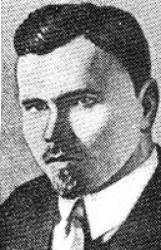
Isokrat
 Greece
- Early Life and Influences
- Teaching Career and Educational Philosophy
- Literary Accomplishments
- "Panathenaic" and "Panegyric" Orations
- Political Ambitions and Disillusionment
- Rhetorical Style and Influence
- Educational Impact
- Later Years and Legacy
Early Life and Influences
Isocrates, the renowned Athenian orator and teacher of rhetoric, was born in 436 BCE to Theodorus. Growing up, he became a disciple of Gorgias and other sophists, renowned thinkers who emphasized rhetoric and persuasion.
Teaching Career and Educational Philosophy
In 390 BCE, Isocrates established a school of rhetoric in Athens. His curriculum encompassed not only rhetoric but also aspects of history, literature, legal history, and psychology. Rejecting the sensationalism of judicial rhetoric, Isocrates emphasized the importance of eloquence, clarity, and persuasiveness.
Literary Accomplishments
Of Isocrates' 28 speeches, 21 have survived, along with nine letters to historical figures. His earlier works, the Judicial Speeches, showcase his mastery of argumentation and skillful use of commonplaces. However, it is his later "epideictic" speeches, delivered to kings and rulers, that gained him fame. These speeches combined political guidance with philosophical insights.
"Panathenaic" and "Panegyric" Orations
Isocrates' "Panathenaic" (XII) and "Panegyric" (IV) orations are considered his greatest literary achievements. The "Panathenaic" urged Athenian unity and Panhellenic cooperation. The "Panegyric," written after the end of the Peloponnesian War, advocated an alliance against Persia.
Political Ambitions and Disillusionment
Despite his literary success, Isocrates yearned for political influence. He sought to persuade rulers and nations to follow his advice, believing that his wisdom could guide them to a more just and enlightened society. However, his utopian ideals often clashed with the realities of power politics.
Rhetorical Style and Influence
Isocrates' rhetorical style was characterized by its elevated language, harmonious periods, and artful use of contrast. His non-poetic vocabulary allowed his words to resonate with a wider audience. His emphasis on precise composition and flawless execution influenced later generations of writers, including Cicero.
Educational Impact
As a teacher, Isocrates had a profound impact on Greek literature and political thought. His school produced a generation of historians, orators, and statesmen. His principles of rhetoric became the cornerstone of literary education, shaping the development of Attic prose and influencing Western literature for centuries to come.
Later Years and Legacy
Despite his political frustrations, Isocrates remained devoted to his teachings until his death in 338 BCE. He witnessed the rise of Philip II of Macedon and initially supported him as a potential unifier of Greece. However, he ultimately died disillusioned, never fully realizing his vision of a just and harmonious society.
Isocrates' legacy lies in his contributions to rhetoric, education, and Greek literature. He refined the art of persuasion, established a system of literary education, and promoted the concept of a unified Greek world. His writings continue to inspire and inform students of rhetoric, politics, and the history of ideas.