
Mihail Eisenshteyn
 Germany
- Russian Architect and Engineer
- Early Life and Education
- Career as an Architect
- Personal Life
- The Konetsky Dynasty
- Architectural Legacy
- Later Years and Legacy
Russian Architect and Engineer
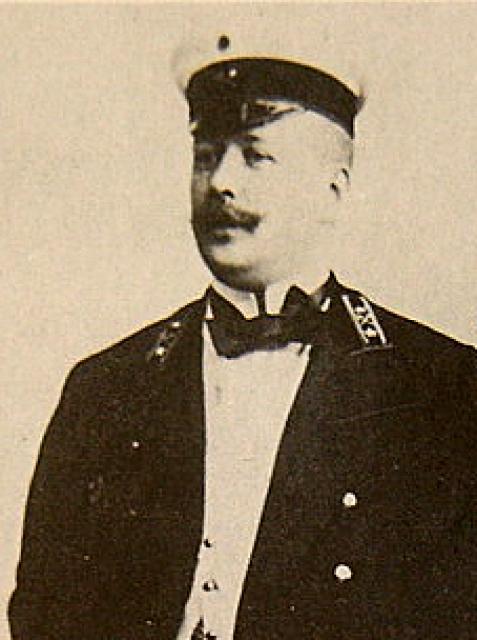
Mikhail Osipovich Eisenstein was a prominent Russian architect, professional engineer, and the father of renowned Soviet filmmaker Sergei Mikhailovich Eisenstein. Born into a merchant family, Eisenstein was the son of a Jewish father and a mother of Swedish descent.
Early Life and Education
Eisenstein pursued a degree in civil engineering at the prestigious Institute of Civil Engineers in St. Petersburg, graduating with honors. In 1893, he relocated to Riga, the capital of Latvia, to pursue professional opportunities.
Career as an Architect
In Riga, Eisenstein took up a responsible position in the administration of state property. He later became the chairman of the Department of Communications, overseeing infrastructure development throughout the region.
Eisenstein's passion for architecture remained his private hobby, and he designed and built numerous houses in Riga during the early 20th century. Most of his projects were located in the city's central district, featuring rental apartments that catered to the growing population's need for affordable housing.
Personal Life
Eisenstein married Yulia Ivanovna Konetskaya, the daughter of a wealthy St. Petersburg merchant. Their relationship eventually deteriorated, partially due to differing educational approaches for their only son, Sergei.
The Konetsky Dynasty
Yulia's family, the Konetskys, were a prominent and successful mercantile dynasty from Arkhangelsk. Ivan Ivanovich Konetsky, Eisenstein's father-in-law, founded a steamship and shipping company that bore his name.
Architectural Legacy
Eisenstein's architectural style incorporated elements of Art Nouveau, known for its elaborate ornamentation and organic lines. His buildings often featured exaggerated female mascarons, inspired by opera singers and actresses. His personal collection of over 40 pairs of polished shoes and meticulous wardrobe choices reflected his impeccable dress sense.
Later Years and Legacy
Eisenstein's opposition to the October Revolution led him to immigrate to Berlin, where he remarried and passed away at the age of 54. His grave in a Berlin cemetery features a unique monument resembling a tree stump, reminiscent of the architectural motifs he employed in his Riga buildings.
Eisenstein's most notable works in Riga include three buildings on Elizabetes Street (10a, 10b, 33), the iconic building on Elizabetes Street 10b, and the angular building on Alberta Street 13. These structures showcase his masterful use of Art Nouveau ornamentation and his innovative approach to urban architecture.
Despite the abundance of architects who built more houses during that period, Eisenstein's contributions to the development and dissemination of Art Nouveau in Riga have earned him recognition as one of the most influential figures in the city's architectural landscape. His buildings stand as a testament to his talent and the enduring legacy of Riga's Art Nouveau heritage.



