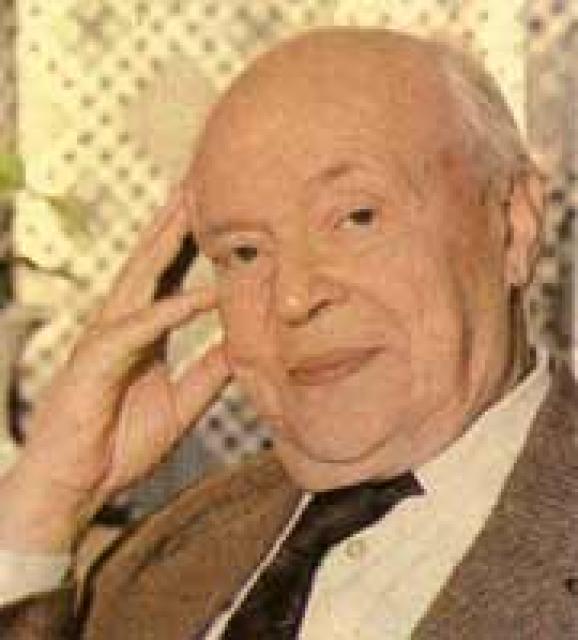
Mihail Volpin
- Early Life and the Russian Revolution
- The Bohemians and "Windows of ROSTA"
- Arrests and Imprisonment
- Rebirth and Collaboration with Erdman
- World War II and Post-War Years
- Fairy-Tale Adaptations and Legacy
Early Life and the Russian Revolution
Mikhail Volpin, a renowned Soviet playwright, poet, and screenwriter, was born in 1898 in Moscow to a Jewish family. His father, David Samuilovich Volpin, was a lawyer, while his mother, Anna Borisovna Volpin (née Zhislin), was a music teacher.
The Bohemians and "Windows of ROSTA"
Volpin's childhood was marked by his passion for the arts. He studied painting under the tutelage of renowned artist Vasily Surikov. During the October Revolution, he embraced its ideals and participated in the Civil War as a loyalist.
In the early 1920s, Volpin joined "Windows of ROSTA," a satirical art collective led by Vladimir Mayakovsky. His contributions included paintings and satirical writings, often collaborating with literary luminaries such as Victor Ardov, Ilya Ilf, and Yevgeny Petrov.
Arrests and Imprisonment
In 1933, Volpin was arrested by the OGPU (the Soviet secret police) for his alleged anti-Soviet propaganda. His satirical writings and a reckless statement about his intention to "kill Stalin" were cited as evidence against him.
Convicted under Article 58-10 for "anti-Soviet agitation and propaganda," Volpin was sentenced to five years in a labor camp. He served his time in Ukhta, enduring harsh conditions.
Rebirth and Collaboration with Erdman
Upon his release in 1937, Volpin reunited with fellow writer Nikolai Erdman. Together, they formed a prolific partnership that spanned over three decades. Their collaborations produced acclaimed film scripts, notably for beloved fairy-tale movies.
World War II and Post-War Years
With the outbreak of World War II, Volpin and Erdman enlisted in the Red Army. They served in the sapper battalion and the NKVD song and dance ensemble, where they wrote patriotic plays and staged performances.
Following the war, Volpin joined the "Soyuzmultfilm" animation studio. His first screenplay, "Fedya Zaitsev," was released in 1948. In the 1950s and early 1960s, he penned a series of successful animated works, including "The Enchanted Boy" (1955), "The Key" (1961), and "The History of a Crime" (1962).
Fairy-Tale Adaptations and Legacy
From the early 1960s onward, Volpin collaborated with Erdman and others on a string of fairy-tale adaptations, including "Frost" (1964), considered a cinematic masterpiece. His last screenplay, "The Tale of the Painter in Love," was released in 1986.
Mikhail Volpin died in a car accident in 1989. His legacy as a master of satire, a fearless collaborator, and a purveyor of beloved fairy-tale films endures to this day.



