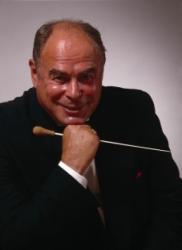
Mikhail Klimov
- Early Life and Education
- Career at St. Petersburg Chapel
- Leadership in Musical Institutions
- Artistic Legacy
- Pedagogical Contributions
- Legacy and Death
Early Life and Education
Nikolai Klimov was born in 1881 and began his musical journey at the Moscow Synodal School, where he studied from 1893 to 1900. In 1908, he graduated from the St. Petersburg Conservatory, where he studied theory composition under Nikolai Rimsky-Korsakov and conducting under Nikolai Tcherepnin.
Career at St. Petersburg Chapel
Klimov's career at the St. Petersburg Chapel began in 1904, where he served as a senior singing teacher and conductor. In 1917, he became the chapel's principal conductor and held that position until 1935. During this time, he also served as director from 1922 to 1930. Klimov played a pivotal role in the chapel's artistic development, initiating the transfer of an organ from the Dutch Church in 1927.
Leadership in Musical Institutions
Beyond his work at the St. Petersburg Chapel, Klimov also contributed to other musical institutions. In 1921, he participated in the establishment of the St. Petersburg Conservatory's Opera Studio and subsequently became its director. He was a member of the Conservatory's board from 1922 to 1923 and served as the director and artistic director of the Leningrad Philharmonic from 1925 to 1927.
Artistic Legacy
Klimov was an exceptional musician known for his keen ear, musical memory, and artistic taste. He developed a choir that mastered diverse musical forms, ranging from folk songs to monumental classical and modern works. Klimov's commitment to expanding the choir's repertoire led him to create numerous choral arrangements, including works by Bach, Mozart, Beethoven, Schumann, Tchaikovsky, and Mussorgsky. Some of these arrangements continue to be performed today.
Pedagogical Contributions
Klimov's influence extended beyond his conducting work. He taught theoretical subjects, opera ensemble, and choir at the St. Petersburg Conservatory, becoming a professor in 1916. He also taught at the chapel's choral technical college and authored a textbook on solfège and other educational materials. Klimov actively participated in the establishment of the People's Conservatory in Leningrad.
Legacy and Death
Nikolai Klimov passed away on February 20, 1937, in Leningrad. He was laid to rest at the Necropolis of Masters of Arts in the Alexander Nevsky Lavra in St. Petersburg. Klimov's contributions to Russian music continue to be remembered and celebrated, leaving a lasting legacy in the artistic landscape of St. Petersburg and beyond.