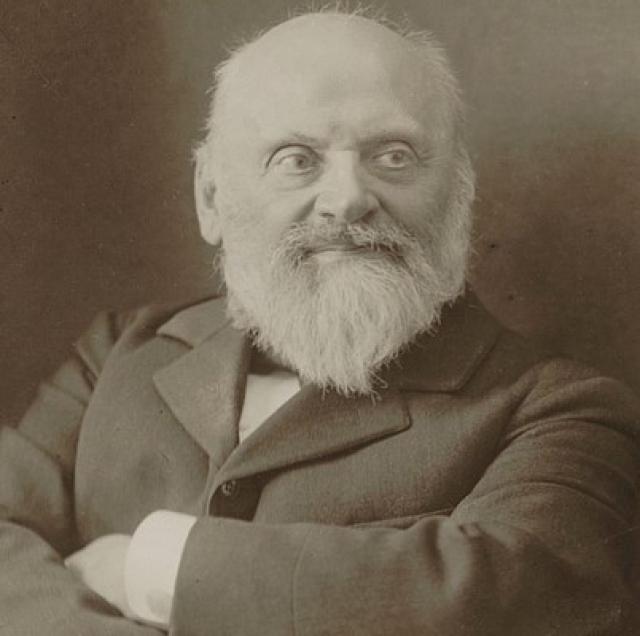
Miliy Balakirev
 Russia
- Miliy Alekseyevich Balakirev: A Pioneering Russian Composer
- Collaboration and Influence
- Contributions to Russian Music
- Later Years and Legacy
Miliy Alekseyevich Balakirev: A Pioneering Russian Composer
Early Life and Musical EducationMiliy Alekseyevich Balakirev was born on December 21, 1836, in Nizhny Novgorod, Russia. His remarkable musical talent manifested itself at an early age. His mother initiated his piano lessons, and at age 10, he was taken to Moscow to study under A.N. Dyubyuk. Karl Eisrich, a pianist and conductor, became Balakirev's second mentor, guiding him through musical performances at the home of the local landowner, A.D. Ulybyshev.
Balakirev's formal education remained incomplete. However, he absorbed significant musical influences through his experiences, including Chopin's Piano Concerto in E minor and Glinka's trio "Ne tomi rodimý" from "A Life for the Tsar."
Collaboration and Influence
Balakirev attended Kazan University but departed within two years due to financial constraints. During this period, he composed several works, including a piano fantasy based on themes from "A Life for the Tsar."
In 1855, Balakirev arrived in St. Petersburg with Ulybyshev. He made crucial connections with fellow musicians, including Glinka and A.S. Dargomyzhsky. Glinka recognized Balakirev's exceptional talent and provided him with support and mentorship.
Balakirev's association with other young musicians, including César Cui, Modest Mussorgsky, Nikolai Rimsky-Korsakov, and Alexander Borodin, formed the nucleus of the "Balakirev Circle," also known as the "Mighty Handful." Balakirev's influence on their creative development was profound. Drawing inspiration from Glinka and examining the works of Beethoven, Schumann, Berlioz, Liszt, and Wagner, they collectively explored the fundamentals of music composition.
Contributions to Russian Music
Balakirev's own compositions demonstrated a remarkable fusion of technical brilliance and musical depth. His piano works, such as the highly virtuoso "Islamey" and the poetic "Tamara," enriched both Russian and international piano literature.
As a conductor, Balakirev played a vital role in promoting Russian music. He conducted the St. Petersburg Philharmonic Orchestra and introduced the works of his contemporaries to audiences.
Balakirev's commitment to the "Mighty Handful" extended beyond music. He established the Free Music School in 1862, providing accessible music education and nurturing future generations of Russian musicians.
Later Years and Legacy
Balakirev's career was marked by both triumphs and setbacks. He experienced personal and financial challenges that impacted his compositional output. However, he remained dedicated to music and continued to create during his later years.
Balakirev's contributions to Russian music are immense. His innovative style, unwavering artistic vision, and mentorship of countless musicians significantly shaped the trajectory of Russian music. He passed away on May 16, 1910, leaving behind a lasting legacy as one of the most influential Russian composers and a pioneer of the nationalist movement in music.


