Miloš Obilić
Miloš Obilić is celebrated in Serbian tradition as the knight who killed Ottoman Sultan Murad I during the Battle of Kosovo in 1389. His story became one of the central episodes in Serbian epic poetry and cultural memory. The historical record is less certain: early reports say that Murad was killed by a Christian attacker, but they do not identify the killer by the familiar name “Miloš Obilić.”
The Battle of Kosovo
The Battle of Kosovo was fought on June 15, 1389, between the forces of Ottoman Sultan Murad I and a coalition led by Serbian Prince Lazar. Both rulers died during or immediately after the battle, and the conflict became a turning point in the expansion of Ottoman power in the Balkans.
News reports from the period mention Murad’s death and describe a Christian assailant who reached the sultan, but the earliest accounts do not offer a stable biography of that person. Serbian sources written later identify the attacker as Miloš, while the surname Obilić appears in still later tradition. Historians therefore distinguish the well-attested death of Murad from the uncertain identity and personal history of his killer.
The Hero of Serbian Tradition
In the best-known version of the story, Miloš had been accused of disloyalty by Prince Lazar. To prove his honor, he entered the Ottoman camp and killed Murad before being captured and executed. The story transforms the battle into a test of loyalty, courage, and sacrifice, and it made Miloš a model of the heroic warrior.
The details vary across chronicles and oral accounts. Some versions portray him as a nobleman or knight; others emphasize his willingness to die for his prince and faith. These stories became part of the Kosovo cycle, a body of Serbian epic poetry that remembered the battle through themes of martyrdom, betrayal, and collective loss.
Cultural Memory and Later Influence
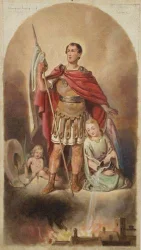
The Kosovo legends grew over centuries and took on new significance at different moments in Serbian history. In the nineteenth century, Miloš became a powerful emblem of resistance and national identity. His name appeared in poems, plays, paintings, and public commemorations, often alongside Prince Lazar as a symbol of courage in the face of Ottoman rule.
This cultural legacy is real even where the biographical details are not. Miloš Obilić is best understood both as a figure in the tradition and as a reflection of how communities remembered the battle. The narrative has also been used in modern political contexts, making careful distinction between medieval evidence and later interpretation especially important.
Legacy
There is no secure birth date, family history, or independent account of Miloš’s life before the battle. What survives is a powerful tradition built around the reported killing of Murad and the later identification of the attacker with a Serbian hero.
Miloš Obilić endures as one of the most recognizable figures in Serbian folklore. His story gives a human face to the uncertain events of 1389 and shows how historical memory can become a lasting source of poetry, identity, and debate.