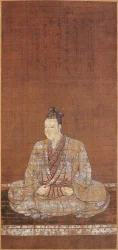
Minamoto no Yoshitsune
Minamoto no Yoshitsune became one of Japan’s most celebrated warriors through a striking combination of battlefield success and personal misfortune. His victories helped his half-brother Minamoto no Yoritomo defeat the Taira clan in the Genpei War, yet the brothers’ relationship collapsed once the war was won. Yoshitsune’s flight and death turned him into a tragic hero whose story grew far beyond the surviving historical record.
A childhood shaped by defeat
Yoshitsune was born in 1159, the son of the Minamoto leader Minamoto no Yoshitomo and Tokiwa Gozen. His father was killed after the Minamoto lost the Heiji Rebellion in 1160. The young Yoshitsune survived the purge of his family and spent part of his childhood at the Kurama temple near Kyoto. Later he lived in the northern domain of Hiraizumi under the protection of Fujiwara no Hidehira.
When the Genpei War broke out in 1180 between the Minamoto and Taira, Yoshitsune joined his older half-brother Yoritomo, who was building a base of power in eastern Japan. The brothers had grown up apart, and Yoshitsune’s arrival gave Yoritomo a capable commander at a crucial moment.
The Genpei War
Yoshitsune’s military career rose quickly. In 1184, he helped defeat the Minamoto rival Kiso Yoshinaka and took part in the attack on the Taira stronghold at Ichi-no-Tani. The campaign was followed by a daring assault on the Taira base at Yashima in 1185. Yoshitsune’s forces crossed difficult waters and surprised the enemy, adding to his reputation for bold strategy.
The decisive battle came at Dan-no-ura in April 1185. Commanding the Minamoto fleet, Yoshitsune helped secure a victory that ended Taira power. The battle became a defining episode in Japanese history: the child emperor Antoku and members of the Taira leadership were lost at sea, while the Minamoto emerged as the dominant warrior clan.
Rivalry with Yoritomo
Yoshitsune’s success did not bring lasting security. Yoritomo was establishing a new military government centered at Kamakura and became wary of his brother’s independent standing and connections at the imperial court. The exact causes of their falling out remain debated, but by 1185 Yoritomo had declared Yoshitsune an enemy and pursued him.
Yoshitsune fled north and again sought shelter with Fujiwara no Hidehira. After Hidehira died in 1187, his son Yasuhira came under pressure from Yoritomo. In 1189, Yasuhira’s forces attacked Yoshitsune at Koromogawa. Yoshitsune died during the assault, traditionally said to have taken his own life rather than be captured.
Legend and legacy
Stories of Yoshitsune continued to grow after his death. The loyal warrior monk Benkei, the young Yoshitsune’s supposed training with supernatural tengu, and tales of his escapes belong chiefly to later literature and performance traditions rather than firm contemporary evidence. These stories helped shape his image as a gifted fighter betrayed by political power.
His historical career was brief, but its consequences were lasting. Yoshitsune’s victories helped clear the way for Yoritomo’s shogunate, while his tragic end made him a symbol of loyalty, talent, and political vulnerability. Japanese drama, literature, and popular culture have returned to his story for centuries, keeping the warrior’s name alive long after the Genpei battlefields fell silent.