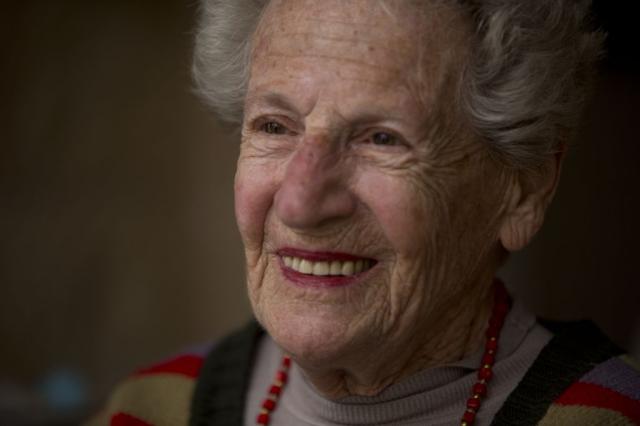
Mirjam Israel
 Sweden
For Mirjam Israel, the question of whether a child was “bad” could lead to a different question: what had happened to make that child unhappy or insecure? That change in perspective became the heart of her work. A Swedish child psychologist and public advocate for nonviolent upbringing, she helped challenge the harsh, authoritarian assumptions that still shaped child-rearing debates in the mid-20th century.
Early Life and Family
Born Mirjam Valentin in Uppsala in 1920, she was the daughter of historian Hugo Valentin, a prominent scholar of Jewish history in Sweden. She later became known professionally as Mirjam Israel and, in some publications, Mirjam Valentin-Israel. She married sociologist Joachim Israel, with whom she would share both family life and a major writing project. Public sources provide few details about her childhood or private life, but her later work placed her within a circle of Swedish psychologists and social reformers concerned with how children were treated at home and in institutions.
A Different Way to Understand Children
In 1946, Mirjam and Joachim Israel published “Det finns inga elaka barn,” usually translated as “There Are No Evil Children.” Its title set out a striking proposition: instead of labeling a child as bad, adults should look for the circumstances and unmet needs behind the behavior. The book argued for understanding children’s feelings and experiences, and against punishment as a way to impose obedience.
The Israels’ position was part of a wider postwar debate about child-rearing, authority and violence. They opposed corporal punishment at a time when it remained accepted by many adults, and argued that striking a child was still an act of violence, whatever educational purpose was claimed for it. The book’s force came from turning that argument into a direct challenge to everyday assumptions about discipline.
Work at Barnbyn Skå
Israel and her husband were among the child psychologists active at Barnbyn Skå, an experimental residential community near Stockholm for children facing serious difficulties. The project, associated with psychiatrist Gustav Jonsson, brought together people interested in understanding children through their emotional and social circumstances. Its approach offered an alternative to simply condemning disruptive behavior: the adults around a child had to ask what lay beneath it.
That practical setting gave Israel’s ideas a wider context than a book alone could provide. Her advocacy belonged to a movement toward more humane and less authoritarian upbringing, one that treated a child’s feelings as meaningful rather than as defiance to be crushed. Swedish educational and social debates continued to contest the place of physical punishment for decades; Israel was an early and outspoken voice in that discussion.
Public Legacy
Israel’s public reputation rests especially on her work against both physical and psychological violence in child-rearing. Swedish public broadcaster UR later revisited her life and ideas in a program describing her as a pioneer of more humanistic, less authoritarian upbringing. Her book’s memorable title continues to summarize the humane principle at the center of her work: a child’s behavior should be met with curiosity and understanding, not reduced to a verdict on character.
She died in 1996. Though she left a comparatively modest public record, her contribution endures in the clarity of the question she pressed on parents and professionals alike: what does a child’s behavior tell us about the child’s experience?


