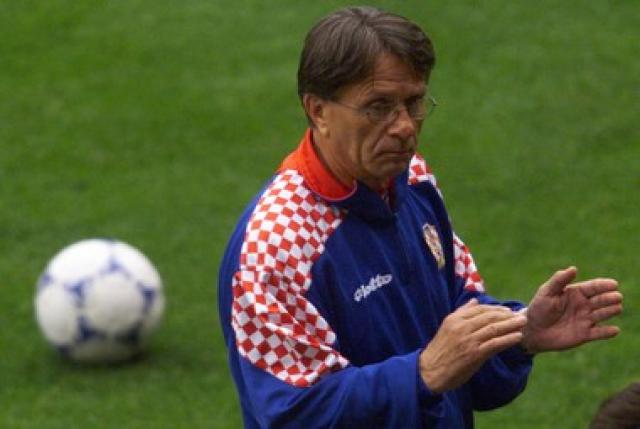
Miroslav Blazevic
 Croatia
- Miroslav Blažević: A Croatian Coaching Legend
- Early Life and Career as a Player
- Coaching Career in Switzerland and Yugoslavia
- Triumphs and Controversies with Dinamo Zagreb
- Success in Switzerland and Greece
- Involvement in Match-Fixing Scandal
- National Hero with Croatia
- Historic Third Place at the 1998 World Cup
- Post-1998 Career and Controversies
- Later Years and Political Ambitions
- Honours
- As a Coach:
Miroslav Blažević: A Croatian Coaching Legend
Miroslav "Čiro" Blažević is a renowned Croatian football manager who has achieved significant success throughout his coaching career. He is best known for his accomplishments with the Croatian national team, leading them to a historic third-place finish at the 1998 FIFA World Cup. Since 2008, he has been the head coach of the Bosnia and Herzegovina national team.
Early Life and Career as a Player
Blažević was born in Travnik, Yugoslavia, now part of Bosnia and Herzegovina, to a family of Bosnian Croats. He began his playing career with FK Sarajevo, showcasing his abilities as a midfielder. He went on to represent NK Rijeka and Dinamo Zagreb in Yugoslavia, before moving to Switzerland, where he played for several local clubs. By his own admission, Blažević's playing career was relatively modest, prompting him to transition to coaching at a relatively young age.
Coaching Career in Switzerland and Yugoslavia
Blažević launched his coaching career in Switzerland in 1963 with modest club Vevey. He subsequently took over at Sion, where he worked until 1972. After a brief stint at Lausanne, he became the coach of the Swiss national team from 1975 to 1976. In 1979, Blažević returned to Yugoslavia to lead Rijeka. His success in guiding the club to a respectable 10th place finish in the competitive Yugoslav First League paved the way for him to move to Dinamo Zagreb in 1980.
Triumphs and Controversies with Dinamo Zagreb
At Dinamo Zagreb, Blažević made history by leading the team to the Yugoslav Championship title in 1982, their first in 24 years. The following season, they won the Yugoslav Cup and narrowly missed out on another league title. However, Blažević's first tenure at Dinamo came to an abrupt end amidst allegations that he had been forced to flee the country due to threats of arrest for his perceived support of Croatian nationalism. His claims were met with skepticism by some, who accused him of escalating the situation for self-promotion.
Success in Switzerland and Greece
Undeterred by the controversy surrounding his departure, Blažević returned to Switzerland and guided Grasshoppers to the Swiss Championship in 1984. He briefly coached PAOK Salonika in Greece before returning to Yugoslavia in 1986 to take charge of FK Priština. His achievements with Priština, including promotion to the top flight, made him a hero among ethnic Albanians in Kosovo. He then returned to Dinamo Zagreb in 1986 for a second time, but without any significant success.
Involvement in Match-Fixing Scandal
Blažević's next coaching role was with French club Nantes. His tenure there coincided with allegations of match-fixing within the club, resulting in the imprisonment of high-profile football officials, including Bernard Tapie of Olympique de Marseille. The scandal cast a shadow over Blažević's reputation.
National Hero with Croatia
After Croatian independence in 1990, Blažević joined the Croatian Democratic Union (HDZ) and became a staunch supporter of President Franjo Tuđman. During his third spell at Dinamo, which was now called HAŠK Građanski, Blažević served as both the coach and president. Under his guidance, the club won the Croatian First League in 1993 and the Croatian Cup in 1994. Blažević left his beloved club to focus on coaching the Croatian national team.
Historic Third Place at the 1998 World Cup
Blažević shared coaching responsibilities with Tomislav Ivić from 1994, but took full control of the national team a year later. He guided Croatia through their first European Championship qualifying campaign, where they sensationally defeated Italy in their qualifying group and advanced to Euro 1996 in England. Croatia progressed through the group stage, defeating Turkey and defending champions Denmark, but lost to Portugal in the quarterfinals.
The team's greatest triumph came at the 1998 FIFA World Cup in France. Croatia finished second in their qualifying group behind Denmark and overcame Ukraine in the playoffs to qualify. The team boasted exceptional players such as Zvonimir Boban, Davor Šuker, and Slaven Bilić. In France, Croatia pulled off one of the tournament's biggest upsets, securing a third-place finish and bronze medals. They defeated Japan and Jamaica in the group stage and advanced through the knockout rounds by beating Romania on penalties.
In the quarterfinals, Croatia avenged their Euro 1996 defeat by demolishing defending European champions Germany 3-0. Their run was halted by the host nation, France, in the semifinals despite a controversial refereeing decision. Blažević was criticized for his decision not to bring on Robert Prosinečki when the match was 1-1. Prosinečki started in the third-place match and made a significant contribution with a goal and an assist, helping Croatia defeat the Netherlands 2-1. The team's success, led by the charismatic Blažević, transformed him into a national hero.
Post-1998 Career and Controversies
Blažević's subsequent tenure with the Croatian national team was less successful. The team failed to qualify for Euro 2000, finishing third in their qualifying group behind Yugoslavia and Ireland. Blažević rebuilt the team, introducing younger players, but resigned in 2000 after two draws at the start of the 2002 World Cup qualifying campaign.
Seeking a new challenge, Blažević accepted the position of head coach of the Iran national team. He gained popularity among Iranian fans, implementing a 3-5-2 tactic and bringing new players into the side. However, Iran failed to qualify for the 2002 World Cup, losing a playoff to Ireland.
Blažević returned to Croatia and led Osijek to avoid relegation from the top flight. He then returned to Dinamo Zagreb for a third time and won the Croatian Championship in 2003. However, he once again departed the club due to conflicts with vice-president Zdravko Mamić. He coached Slovenian club Mura and Croatian club Varaždin before briefly managing Hajduk Split in 2005.
Later Years and Political Ambitions
Blažević's appointment at Hajduk, Dinamo's arch-rivals, was met with skepticism by some fans. His tenure proved unsuccessful, and he resigned after a 0-5 home defeat in European competition. He then worked in Switzerland with Neuchâtel Xamax before returning to Zagreb in 2006 to coach NK Zagreb. In 2008, he took over as coach of the Bosnia and Herzegovina national team.
Blažević has been an outspoken supporter of the HDZ. After the party's leadership passed to Ivo Sanader, an advocate for European Union integration, Blažević distanced himself from the party. In 2005, he ran for President of Croatia as an independent candidate, but failed to make it past the first round.
Honours
Blažević has achieved numerous honours throughout his coaching career, including:
As a Coach:
Swiss Champion: 1984 (Grasshoppers)Swiss Cup Winner: 1974 (Sion)
Yugoslav Champion: 1982 (Dinamo Zagreb)
Yugoslav Cup Winner: 1983 (Dinamo Zagreb)
Croatian Champion (2): 1993, 2003 (HAŠK Građanski, Dinamo Zagreb)
Croatian Cup Winner: 1994 (HAŠK Građanski)
As a National Team Coach:
Bronze Medalist, FIFA World Cup 1998 (Croatia)


