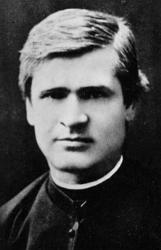
Mirza Shafi Vazeh
 Azerbaijan
- Mirza Shafi Vazeh: A Luminary of Azerbaijani and Persian Literature
- Tragic Loss and Russian Conquest
- Education and Career
- Literary Contributions
- "Songs of Mirza Shafi"
- Influence and Legacy
- Heralding Azerbaijani Literature
- Assessment and Recognition
Mirza Shafi Vazeh: A Luminary of Azerbaijani and Persian Literature
Early Life and FamilyBorn on January 15, 1804, in Ganja, present-day Azerbaijan, Mirza Shafi Vazeh was the son of Kerbalai Sadiq, an architect for the last Khan of Ganja, and a mother of Armenian descent.

Tragic Loss and Russian Conquest
In 1804, Ganja was conquered by the Russian Empire, depriving Sadiq of his livelihood and leading to his untimely death shortly after. This devastating event left a profound impact on Vazeh's family.
Education and Career
Despite adversity, Vazeh pursued education, becoming proficient in both Azerbaijani and Persian. He began teaching these languages in Tiflis (present-day Tbilisi, Georgia) in 1840, where he established connections with intellectuals such as Khachatur Abovian and Mirza Fatali Akhundov.
Literary Contributions
Vazeh's literary prowess manifested itself in intimate and satirical poetry, written in various traditional forms. He established the "Circle of Wisdom," a literary salon where poets gathered to share and critique their works.
"Songs of Mirza Shafi"
Vazeh's most notable work, "Songs of Mirza Shafi," was originally translated into German by Friedrich Bodenstedt, who initially presented them as his own. Later revealed as Vazeh's creation, these poems became renowned throughout Europe and were translated into numerous languages.
Influence and Legacy
Vazeh's writings celebrated romantic love, the joys of life, and denounced the evils of feudal society, suppression of individuals, and religious extremism. His poetry inspired generations of Azerbaijani and other poets.
Heralding Azerbaijani Literature
Vazeh is credited with compiling the first anthology of Azerbaijani poetry and co-authoring a Tatar-Russian dictionary, both significant contributions to the development of Azerbaijani literature and scholarship.
Assessment and Recognition
Mikhail Semevskiy praised Vazeh's "kindness and simplicity," while historian Adolph Bergé described his father's tragic fate in the aftermath of the Russian conquest. Today, Vazeh's enduring legacy is celebrated in Azerbaijan, where he is recognized as one of the nation's greatest poets and a pioneer of its literary tradition.