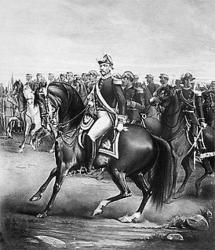
Mishel Ney
- The Early Years
- A Rising Star in Revolutionary Warfare
- Napoleon's Indispensable Marshal
- Triumphs and Trials in the Napoleonic Wars
- The Russian Campaign and Ney's Transformation
- The Retreat from Moscow: Ney's Legendary Courage
- Betrayal and Redemption
- Waterloo: A Defeat that Ended a Career
- Aftermath and Legacy
The Early Years
Michel Ney, born on January 10, 1769, in Sarrelouis, France, defied his father's wishes for him to become a craftsman and enlisted in the cavalry at the tender age of eighteen.
A Rising Star in Revolutionary Warfare
Ney's prowess as a cavalryman quickly earned him rapid promotions. By 1796, he had become a brigadier general, and by 1800, he had risen to divisional general. Despite his military success, Ney remained more at home on the battlefield than in positions of command.
Napoleon's Indispensable Marshal
Napoleon Bonaparte recognized Ney's military brilliance and made him one of the eighteen generals promoted to marshal of the empire in 1804. Despite their eventual fame as a formidable duo, Napoleon and Ney had yet to command forces together. Nonetheless, Napoleon and Empress Josephine held Ney in high esteem and arranged his marriage.
Triumphs and Trials in the Napoleonic Wars
In 1805, Ney led a daring assault that encircled the Austrian army at Ulm, capturing 32,000 troops. He played a crucial role in the victories at Eylau and Friedland. However, Ney's temperament and clashes with other marshals led to his dismissal from command in Spain and Portugal in 1811.
The Russian Campaign and Ney's Transformation
Despite his past difficulties, Ney's service in Napoleon's Russian campaign transformed him into a true commander. Guided by Napoleon's leadership, Ney learned to cooperate with others and exercise more strategic restraint.
The Retreat from Moscow: Ney's Legendary Courage
Ney's bravery in the retreat from Moscow was legendary. Commanding the French rearguard, he defended against relentless Russian attacks, preserving the army's remnants.
Betrayal and Redemption
In 1814, Ney advised Napoleon to abdicate, earning the favor of the restored Bourbon monarchy. However, Napoleon's return from Elba in 1815 swayed Ney's loyalties, and he rejoined the emperor's campaign.
Waterloo: A Defeat that Ended a Career
Ney's command on the flank of Napoleon's army at the Battle of Waterloo resulted in heavy cavalry losses, contributing to the French defeat. Despite the battle's outcome, Ney's determination and personal courage left an enduring impression.
Aftermath and Legacy
After Napoleon's defeat, Ney was tried and executed on December 7, 1815, for treason. However, legends persist that Ney escaped and lived a different life in America.
Michel Ney remains a symbol of a fearless general who fought with unwavering devotion, embodying the unyielding spirit of a military commander.