Moisey Krol
 France
- Biography of Moisei Krol
- Early Life and Education
- Research in Eastern Siberia
- Return to European Russia and Contributions
- Notable Works and Publications
- Later Years and Emigration
Biography of Moisei Krol
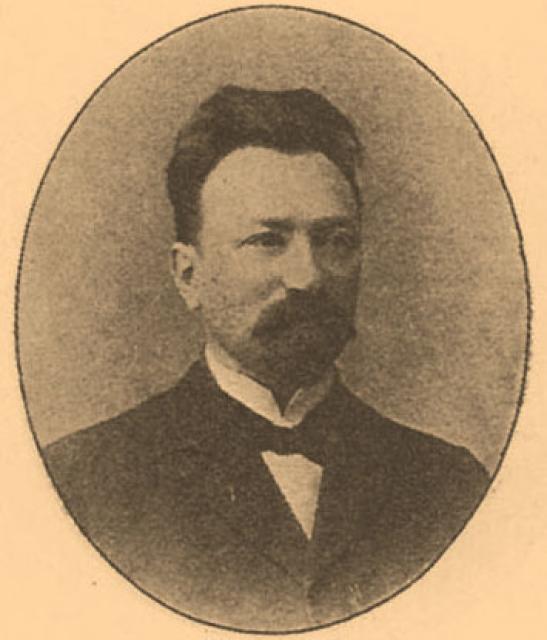
Moisei Krol was a prominent Siberian statistician, ethnographer, and lawyer. He was actively involved in political movements, starting as a member of the Narodnaya Volya (People's Will) and later joining the Socialist Revolutionary Party. He served as a member of the Constituent Assembly and became an influential emigrant figure after 1918.
Early Life and Education
Moisei Krol completed his law degree at Novorossiysk University. He joined the Narodnaya Volya, a revolutionary organization aimed at overthrowing the Russian monarchy, and participated in political activities advocating for social and political change.
Research in Eastern Siberia
In February 1887, Krol was arrested on charges of state crimes and later exiled to Eastern Siberia by administrative order. During his time in the Zabaykalsky Krai, he conducted research on the legal and economic life of the Buryats, an indigenous group in the region. He wrote several articles on ethnography, which were published in the "Reports of the Eastern Siberian Section of the Imperial Russian Geographical Society" and the works of the Troitskosavsk and Chita branches of the Society.
Return to European Russia and Contributions
Krol returned to European Russia in 1895. In 1897, he participated in an expedition to study land ownership and land use in the Zabaykalsky Krai, led by A.N. Kulomzin. As a result, he compiled the 10th volume of the expedition's published materials, titled "Forms of Land Use in the Zabaykalsky Krai." This work provided insights into the evolution of land use practices and established a statistical correlation between land use forms and other economic elements of that time.
Notable Works and Publications
Among Krol's other statistical works, the most significant were "The Role of Railways and Waterways in Freight Transport in the Volga Region" (St. Petersburg, 1902) and "Craft Labor among Jews in Western Russia" (from the collection of materials on the economic situation of Jews in Russia, vol. I). He also published articles in various periodicals, including "Vostochnoe Obozrenie," "Sibiri," "Novoe Slovo," "Sankt-Peterburgskie Vedomosti," "Severny Kurier," "Mire Bozhem," "Zhizni," "Nauchnoe Obozrenie," "Voskhod," "Syne Otechestva," and others.
Later Years and Emigration
In the early 20th century, Moisei Krol joined the Socialist Revolutionary Party and became an active participant in the Jewish national movement. He worked as a lawyer, defending cases related to anti-Jewish pogroms. In 1917, he became a member of the Peasant Union and a deputy of the Constituent Assembly.
In 1918, Krol went into exile and settled in Paris, where he participated in the unification of Russian-Jewish intellectuals in France. He joined the editorial team of the journal "Sovremennye Zapiski" (Contemporary Notes). Later, he moved to the United States, where he published the first volume of his memoirs.