Mordecai Cooke
 Great Britain
- Early life and teaching
- Museum work and mycology
- Editor and popular science writer
- Later years and legacy
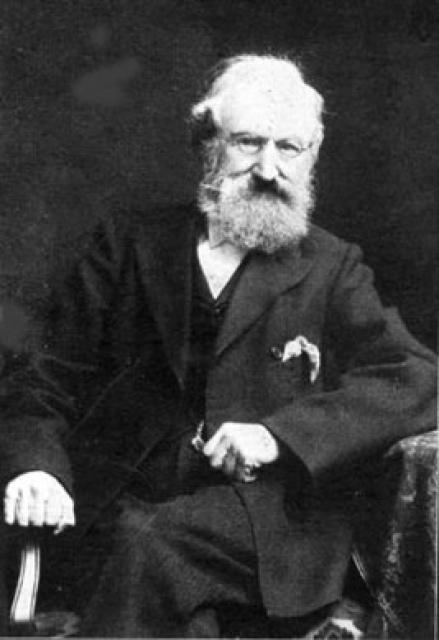
Mordecai Cubitt Cooke was an English botanist and mycologist whose books, teaching and popular science writing helped bring the study of fungi and other small forms of plant life to a broad audience. He worked as a schoolteacher, museum curator and scientific editor, combining careful observation with a lively interest in public education.
Early life and teaching
Cooke was born on July 12, 1825, in Horning, Norfolk. His father ran a village shop and post office, while his mother, Mary, was the local postmistress and herbalist. She introduced him to plants, and he later recalled childhood walks in search of mushrooms.
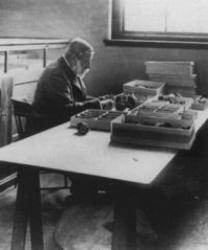
Before entering natural history as a profession, Cooke worked in several jobs, including as a schoolteacher in Lambeth, London. At Holy Trinity School, he built a teaching museum that grew from a small collection into more than a thousand specimens. He used objects from the natural world to make botany tangible for young pupils and continued to attend lectures and pursue botanical study.
Museum work and mycology
In 1862, Cooke began work at the India Museum, where he catalogued collections of economic botany. He became assistant curator in 1874. When the museum’s botanical collections were transferred to the Royal Botanic Gardens at Kew in 1879–1880, Cooke moved with them and served as a cryptogamic botanist, specializing in fungi and other plants that reproduce by spores.
Cooke wrote extensively about British fungi, making identification and general knowledge more accessible to amateur naturalists. His publications included the Handbook of British Fungi, prepared with Miles Joseph Berkeley, and the illustrated eight-volume series Illustrations of British Fungi. His books also treated algae, plant pests and useful plants. He wrote for children under the name “Uncle Matt,” using familiar subjects such as food and household materials to introduce botanical ideas.
Editor and popular science writer
Cooke was a leading figure in Victorian popular natural history. He edited the periodical Hardwicke’s Science-Gossip, which encouraged readers to exchange observations across different fields of science. He also edited Grevillea, a specialist journal devoted to cryptogamic botany and its literature.
He was among the founding members of the Quekett Microscopical Club, an organization for people interested in microscopy. Cooke saw the microscope as a way to bring otherwise invisible life into public view, and his writing helped non-specialists appreciate the organisms that could be studied through it. He also contributed to early networks of amateur botanists and helped strengthen the culture of collecting, publishing and exchanging scientific knowledge.
Later years and legacy
Cooke retired from Kew in 1892 but remained an active author. In that year he published the Handbook of Australian Fungi, an early attempt to gather descriptions of the continent’s known species from collections sent to Britain. The work reflected the reach of his scholarship beyond British flora, although its reliance on dried specimens and sparse field notes limited its usefulness for identifying some fungi.
His contributions received recognition from botanical and horticultural institutions, including the Royal Horticultural Society’s Victoria Medal of Honour in 1902 and the Linnean Medal in 1903. Cooke died in Southsea, Hampshire, on November 12, 1914.
Cooke’s legacy rests on both his mycological work and his commitment to public learning. Through illustrated guides, classroom collections and popular journals, he helped make natural history an activity in which teachers, amateur observers and young readers could all take part.