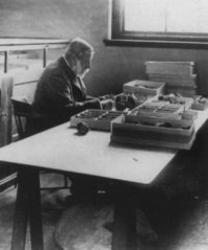
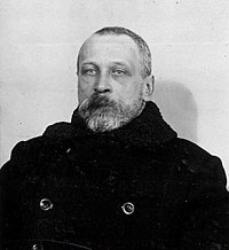
Charles Sarzhent
 USA
USA- Biography of Charles Sargent
- Director of the Arnold Arboretum
- Contributions to Dendrology and Conservation
Biography of Charles Sargent
Charles Sprague Sargent was an American botanist and the first director of the Arnold Arboretum, the botanical garden at Harvard University. He studied at Harvard College and graduated in 1862 with a Bachelor of Arts degree. From 1863 to 1865, he served in the American Civil War. From 1865 to 1868, he traveled through Europe.
Director of the Arnold Arboretum
Despite not having a formal botanical education, Sargent was known for his excellent botanical instincts. After returning to his family estate, Holm Lea, in Brooklyn, Sargent took on the management of the estate's garden. He was supported by Horatio Hollis Hunnewell, a railroad magnate, banker, and avid botanist and gardener. Sargent's strong will, diligent work, and extensive knowledge of dendrology allowed him to create a beautiful garden and park that attracted the attention of both specialists and the public. Sargent became a member of the Massachusetts Horticultural Society and served on the board of the Massachusetts Society for Promoting Agriculture.
When Harvard University announced the creation of the arboretum in 1872, Francis Parkman, a former professor of horticulture at the Bussi Institute at Harvard, proposed Sargent as the director and professor of botany. By the end of 1872, Sargent became the first director of the Arnold Arboretum, a position he held for 54 years until his death. Together with landscape architect Frederick Law Olmsted, Sargent created a plan for the botanical garden in 1879, which became a model for many other scientific institutions worldwide. Sargent made significant efforts to unleash the creative scientific potential of the arboretum's staff. Under his leadership, the university established a library of books on botany, horticulture, and dendrology, which contained around 40,000 books by 1929. The arboretum also had an herbarium that housed specimens of woody plants from around the world. Sargent developed a plan for the publication of botanical books, including university and school textbooks, as well as popular scientific brochures. Expeditions led by Sargent's assistants, especially in Southeast Asia and the Far East, brought back many new plants, expanding knowledge of their development and systematics. The Arnold Arboretum gained prominence in the scientific world.
Contributions to Dendrology and Conservation
Sargent's expertise primarily lay in dendrology and the systematics of woody plants, particularly his contributions to the study of hawthorns. However, he was also known as an organizer of nature conservation efforts. He wrote extensively, and his scientific influence prompted Americans to conserve forests, especially in the Catskill and Adirondack Mountains. In 1885, he led the commission on the preservation of the Adirondack forests, and in 1896-1897, he headed the commission of the American National Academy of Sciences on forest studies, which provided recommendations to the US government. From 1887 to 1897, Sargent edited and published the weekly journal "Garden and Forest: A Journal of Horticulture, Landscape Art, and Forestry" – the first American journal dedicated to gardening, botany, landscaping, scientific forestry, and forest conservation.
Sargent organized the transfer of the Jesup collection of American woody plants to the National Museum of Natural History. He received numerous awards and honorary titles throughout his career, including the Medal of the French Society of Agriculture in 1893, membership in the American National Academy of Sciences in 1895, the Vico Memorial Medal in 1896, an honorary doctorate from Harvard University in 1901, the Medal of the Massachusetts Horticultural Society in 1910, the Medal of the American Garden Club in 1920, the Medal of the American Association of Geneticists in 1923, and the Loder Rhododendron Trophy from the Royal Horticultural Society in 1924. Several plants and a botanical journal were named in his honor.
Sargent's published works include "A Catalogue of the Forest Trees of North America" (1880), "The Silva of North America: A Description of the Trees which Grow Naturally in North America" (1891-1902), "Forest Flora of Japan" (1894), "Plantae Wilsonianae" (1913-1917), and "Manual of the Trees of North America" (1922), among others.