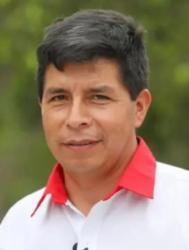
Moris Bishop
 Grenada
- Biography of Maurice Bishop
- Early Career and Education
- Return to Grenada and Political Involvement
- Founding of New Jewel
- Execution and Legacy
Biography of Maurice Bishop
Maurice Rupert Bishop (May 29, 1944 – October 19, 1983) was a political figure from Grenada who served as the country's head of state from 1979 to 1983. Born on the island of Aruba to Grenadian parents, Bishop completed his education at a school and college under the guidance of the Catholic Church, where he was awarded a medal for outstanding achievements.
Early Career and Education
After graduating in 1962, Bishop engaged in educational activities to raise political awareness among the local population. However, his efforts were cut short when he left for London in 1963 to study law. He successfully obtained a law degree in 1966 and worked as a private legal consultant in Notting Hill, assisting West Indian immigrants with legal issues and campaigning against their discrimination. During this time, he traveled to the German Democratic Republic and Czechoslovakia and studied the works of Mao Zedong, Marx, Engels, and Stalin, which greatly influenced him.
Return to Grenada and Political Involvement
Bishop returned to Grenada in 1970, where he became a practicing lawyer and eventually a prominent political figure. He emerged during a period when left-wing movements in the Caribbean were gradually uniting. Alongside his childhood friend Bernard Coard, Bishop faced several incidents of violence from semi-military groups associated with the ruling party.
Founding of New Jewel
Bishop founded the political group Joint Endeavour for Welfare, Education, and Liberation (New Jewel), which played a crucial role in the events of 1979 in Grenada. Known for his charisma, Bishop was both admired and criticized by friends and foes alike. He was a skilled orator who effectively used humor in his speeches.
Execution and Legacy
Tragically, Bishop was executed as a result of a factional conflict that led to a coup in 1983, followed by the intervention of the United States and the overthrow of the island's government. Bishop's leadership and vision left a lasting impact on Grenada's political landscape, and his charisma continues to be remembered by those who knew him.