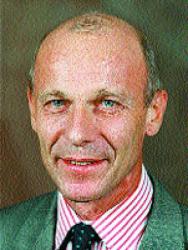
Moris Paleolog
 France
Biography of Maurice Paleologue
Maurice Paleologue was a French diplomat and the ambassador of France to Russia during the October Revolution. He played a key role in European politics on the eve of the First World War and can be considered one of the architects of both peace and the ensuing world carnage. His significance in Russian history lies in the fact that he left behind a valuable historical source - the Ambassador's Diary, which was published in Russian in 2003 in its entirety. This extensive text clearly conceals the author's most important thoughts and hides the secret threads that connected him, but it also contains many interesting observations and generalizations.
Paleologue served in the French Ministry of Foreign Affairs from 1880 and was the director of the political department from 1912 to 1914. He was close to the President of France, R. Poincare, and held anti-German positions. From January 1914, he served as the French ambassador to St. Petersburg and contributed to the involvement of Russia in the First World War. During the war, while defending the interests of France, he tried to exert pressure on the Russian government to encourage more active participation of the Russian Empire's troops in military operations. He acquired extensive contacts in the aristocratic, governmental, and social circles of Petrograd.
In the conditions of 1917, Paleologue's activities became a real factor in the political life of Russia. In January, he had constant contacts with the Minister of Foreign Affairs, N.N. Pokrovsky. During a conversation with him on February 27, after receiving information about the plans of the Council of Ministers to form a new cabinet headed by General N.V. Ruzsky, Paleologue recommended "the immediate appointment of a ministry that would inspire confidence in the Duma" (Paleologue, M., "Tsarist Russia on the Eve of the Revolution", translation from French, 2nd edition, Moscow, 1991, p. 459). On February 28, together with the British ambassador, J. Buchanan, he visited Pokrovsky and expressed the need for the emperor to immediately bow to the fait accompli and appoint members of the Temporary Committee of the State Duma as ministers, as well as grant amnesty to the rebels. He suggested that if the emperor personally appeared before the army and the people and announced that a new era was beginning for Russia, he would be welcomed. But tomorrow it would be too late... " (ibid., p. 462). On his way back to the embassy after the conversation, Paleologue was stopped by a crowd at the Summer Garden and, when offered to greet the Russian revolution, he replied, "I cannot honor the Russian revolution better than by suggesting that you shout with me, 'Long live the war!'" (ibid., p. 463). In the evening, after meeting with a representative of the chairman of the Temporary Committee of the State Duma, he emphasized the main goals of French diplomacy in Russia: "...to limit the influence of the revolution as much as possible and to restore order as soon as possible...the French army is preparing for a major offensive and...the honor of the Russian army obliges it to play its role in it"(ibid., p. 464). When speaking about the future political structure of Russia, he advocated the preservation of the monarchy in the event of the possible abdication of Emperor Nicholas II.
On March 2, in a telegram to the French Minister of Foreign Affairs, A. Briand, Paleologue recommended that he immediately send an appeal by French socialists, through A.F. Kerensky (considered a central figure in the events taking place), addressed to the patriotic feelings of Russian socialists (with the aim of preserving the Entente). He considered the abdication of Nicholas II inevitable: "...for months now, the unfortunate monarch has felt condemned" (ibid., p. 472). At the request of the Minister of Foreign Affairs of the Provisional Government, P.N. Milyukov, on March 3, he visited him and expressed his active and sympathetic support for the Provisional Government: "I do not yet have the opportunity to inform you that the government of the Republic recognizes the regime you have established, but ... I assure you of my most active and sympathetic support" (ibid., p. 476). At the same time, Paleologue demanded "that the government immediately declare its decision to continue the war...until the end" (Ignatiev, A.V., "Foreign Policy of the Provisional Government", Moscow, 1974, p. 125). Assessing the initial activities of the Provisional Government, he noted that "...none of the people currently in power possess the political breadth of mind, decisiveness, fearlessness, and courage required by such a terrible situation" ("Tsarist Russia..." p. 478). Predicting the prospects for the development of events, he gave a decisive role to the Petrograd Soviet of the RSD: "I will mention only Chkheidze, Tsereteli, Zinoviev, and Axelrod. These are the true heroes of the emerging drama" (ibid.).
Not limited to information received from the Russian Ministry of Foreign Affairs, Paleologue made a point of being on the streets of Petrograd and attending public meetings. On March 5, he telegraphed the French Ministry of Foreign Affairs: "...is the new government capable of quickly implementing the necessary reforms? It sincerely claims to be, but I do not believe it at all. Disorder has already spread throughout the military and civil administration, turning it into chaos and anarchy" (ibid., p. 479). After the publication of the government's appeal to the citizens of Russia on March 6, in which it briefly mentioned the commitment to "observe all alliances," Paleologue visited Milyukov on March 7: "I am not surprised by the expressions used in the manifesto...but I am nevertheless outraged by them. Not even a determination to continue the war until the end is declared..." (ibid., p. 484). Paleologue increasingly gloomily assessed the emerging situation: "I see the tyranny of the Council, the despotism of extreme parties, the dominance of utopians and anarchists" (ibid., p. 489). On the evening of March 11, he attended an official ceremony acknowledging the Provisional Government at the Mariinsky Palace. He announced the recognition of the government by the French Republic and emphasized the need to continue the war. On March 17, he noted that "Russia is doomed to federalism...the current movement is much more separatist than regional...it strives for nothing less than national disintegration" (ibid., p. 500). He defended the idea that the results of the revolution were unpredictable: "...take into account that the Russian revolution has only just begun and that certain forces, which are destined to play a huge role in it, such as agrarian aspirations, racial antagonisms, social disintegration, economic ruin, Jewish passion, are still acting covertly" (ibid., p. 503). During these days, opinions began to appear in the press about the need to replace Paleologue due to his strongly expressed anti-socialist position and extremely distrustful attitude towards the Petrograd Soviet and the Provisional Government. On March 23, Paleologue telegraphed the new French Minister of Foreign Affairs, A. Ribot, about his readiness to leave his post as ambassador. In his memoirs, he explained his statement by saying that he "enjoyed the confidence of the old regime and had no confidence in the new regime" (ibid., p. 507). On March 25, he attended a concert in support of the victims of the revolution. Upon learning that N.S. Chkheidze, the chairman of the Petrograd Soviet, would speak with a demand for Russia to withdraw from the war, Paleologue left the hall. On April 1, he received French socialist deputies of the National Assembly at the embassy; despite disagreements over the assessment of the situation in Russia, Paleologue and the socialists agreed that their main goal would be to keep Russia in the war. On April 7, during a meeting with French socialists, he sharply criticized their activities in Petrograd; in characterizing the events, he declared: "The Russian revolution...can only lead to terrible demagoguery by the mob and the soldiers, to the rupture of all national ties, to the complete collapse of Russia. With the unbridledness inherent in the Russian character, it will soon reach extremes: it is inevitably doomed to perish amidst devastation and barbarism, horror and chaos...Is it possible to prevent the catastrophe with such means as convening assemblies or staging a military coup? I doubt it...The support you are giving to the extreme elements will only hasten the final catastrophe" (ibid., p. 519).
Arriving in Petrograd with a special mission, the French Minister of Armaments and Industry, A. Thomas, conveyed a letter from Ribot to Paleologue on April 10, recalling him "on leave." On April 13, Paleologue telegraphed Ribot: "The resolute tone that I allow myself to recommend to you, of course, risks leading, as an extreme consequence, to a rupture of the alliance..." (ibid., p. 527); he recommended sharply reducing the amount of French loans provided to Russia. Thomas sent a telegram with the opposite point of view (positively assessing the situation in Russia). In response to a request for an update on the situation in Russia, Paleologue sent the following theses: "1. Anarchy is spreading throughout Russia and paralyzing it for a long time... 2. ...even under the most favorable conditions, it will not be able to fully repay its alliance debt for months... 4. ...we have to, without further delay, very secretly seek ways to persuade Turkey to offer peace" (ibid., p. 540). The French government took a more optimistic view, agreeing with Thomas. Paleologue left for France on May 3. In 1917-1918, he played an active role in preparing the French military intervention in Soviet Russia. From 1920-1921, he served as the Secretary General of the French Ministry of Foreign Affairs. Since 1921, he has been retired and engaged in literary activities. In 1928, he was elected a member of the French Academy.