
Mother Teresa
 Italy
Italy- Roman Catholic Priestess and Missionary
- Early Life and Religious Calling
- Joining the Missionaries of Charity
- Founding the Missionaries of Charity
- Expansion and Recognition
- International Recognition and Legacy
- Health Issues and Retirement
- Death and Legacy
Roman Catholic Priestess and Missionary
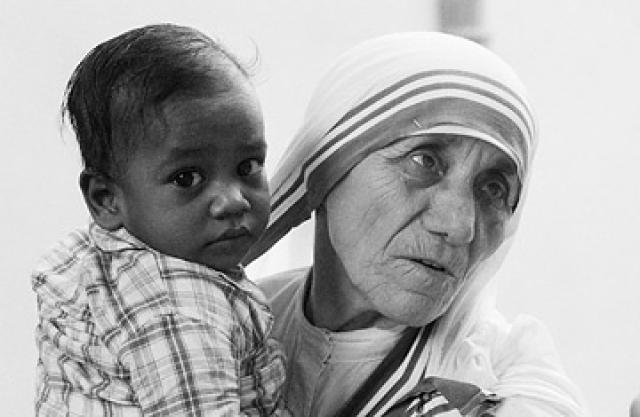
Mother Teresa, born Agnes Gonxha Bojaxhiu on August 26, 1910 in Skopje, was a Roman Catholic priestess and missionary. She is widely known for her selfless acts of charity, compassion, and care for the less fortunate. Her name, Mother Teresa, has become synonymous with unexpected acts of mercy, humanitarianism, and concern for others.
Early Life and Religious Calling
Agnes Gonxha Bojaxhiu was of Albanian descent and was born in Skopje, which is now part of North Macedonia. Her father, an Albanian politician, passed away when she was just 8 years old. Agnes was raised by her mother, who instilled in her a strong religious upbringing. From a young age, Agnes was captivated by stories of missionaries and their work. At the age of 12, she firmly decided to dedicate her life to the service of God. Her resolve was solidified during a pilgrimage to the Black Madonna shrine on August 15, 1928.

Joining the Missionaries of Charity
At the age of 18, Agnes left home and joined the Sisters of Loreto as a missionary. She never returned home to her mother and sister. In 1929, she arrived in India, where she began to learn about the intricacies of missionary work. On May 24, 1931, Agnes officially became a nun and took the name "Teresa."

Founding the Missionaries of Charity
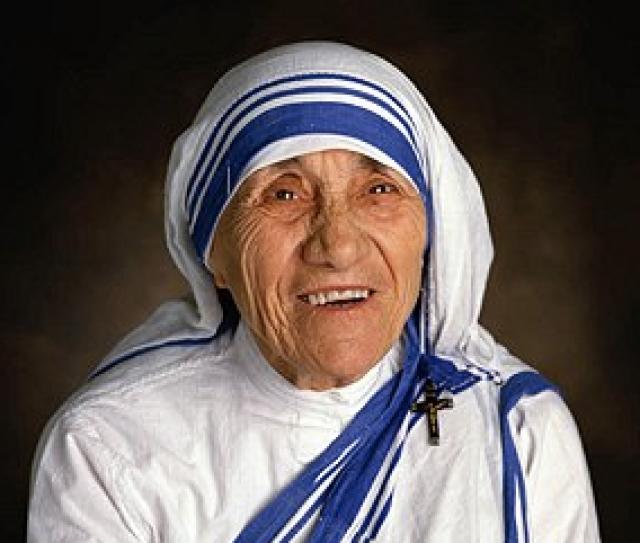
On September 10, 1946, Teresa felt a new calling to go beyond the projects of the Sisters of Loreto. She realized that she needed to help the needy in a more active and direct way. In 1948, she started her own mission and introduced a new style of work, wearing a white cotton sari with a blue border. Mother Teresa became an Indian citizen, received medical training, and went directly to the slums. She began by establishing a new school for the poor, followed by initiatives to support the needy and the hungry.
Expansion and Recognition
In early 1949, Teresa joined forces with a group of young women and laid the foundation for a new religious community. News of her work reached the authorities, who expressed deep admiration for her efforts. Despite numerous challenges, such as limited resources and occasional doubts, Teresa persevered. On October 7, 1950, she received official permission to launch the Missionaries of Charity, an episcopal congregation. Initially, only 13 people worked with Teresa, but by 1997, the movement had grown to include over 4,000 members. The Sisters of the Missionaries of Charity worked in hospices, shelters, and charitable centers around the world. In 1963, a "male branch" of the movement was launched.
International Recognition and Legacy
Mother Teresa's work quickly extended beyond India. As she often said, "By blood, I am Albanian. By citizenship, an Indian. By faith, I am a Catholic nun. As to my calling, I belong to the world." Her movement collaborated with international organizations such as the Red Cross. In the late 1980s, Teresa focused on expanding missionary work in communist countries that had previously been closed off to her. After the 1988 earthquake, she personally visited Armenia and met with Prime Minister Nikolai Ryzhkov. By 1996, under Mother Teresa's leadership, there were 517 missions in over 100 countries.
Health Issues and Retirement
Constantly caring for the needs of others began to take a toll on Mother Teresa's health. In 1983, during a visit to Pope John Paul II, she suffered a heart attack. In 1989, her heart condition resurfaced, and she received a cardiac pacemaker. However, these measures only provided temporary relief. In 1991, while battling pneumonia, her heart problems worsened. Mother Teresa decided to step down as the head of the order, but the Sisters of the Missionaries of Charity pleaded with her to remain. In April 1996, she fractured her collarbone after a fall, and in August, she contracted malaria along with further heart complications. Although surgery improved her condition, it was clear that her health issues were becoming more severe.
Death and Legacy
On March 13, 1997, Mother Teresa officially retired as the head of the Missionaries of Charity. Several months later, on September 5, 1997, the legendary servant of God passed away. The Indian government took charge of her funeral as a tribute to her immense contributions to the country and its impoverished population. Both religious and non-religious communities mourned her death, recognizing her as a beacon of love and goodness. Mother Teresa's legacy lives on through the Missionaries of Charity, which continues to provide aid to the "poorest of the poor."




