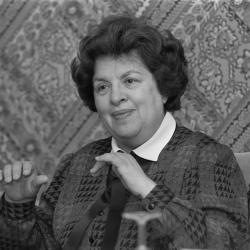
Muhhamed Shark
 Afghanistan
- Early Life and Education
- Political Activism and Imprisonment
- Medical Career and Political Involvement
- Participation in the 1973 Coup d'état
- Diplomatic Posts and Political Resurgence
- Prime Ministership
- Post-Premiership and Exile
Early Life and Education
Mohammad Hasan Sharq was born in 1925 in Anardara District, Farah Province, Afghanistan. As a Pashtun, he received his military education at the Sergeants' School (1940-1943) and the Medical School (1943-1946) in Kabul. Sharq graduated from the Askarie Military Lyceum (1947) and the Kabul University Faculty of Medicine (1953).
Political Activism and Imprisonment
As a student at Kabul University, Sharq emerged as a prominent figure in the student opposition movement. His political views led to his expulsion and three incarcerations. During this period, he forged a lifelong bond with Babrak Karmal, a fellow student activist who would later become the leader of Afghanistan in the early 1980s.
Medical Career and Political Involvement
After graduating as a physician, Sharq worked at the Kabul Military Hospital. From 1953 to 1963, he served as the personal secretary to Prime Minister Mohammad Daoud. Following Daoud's resignation, Sharq returned to Kabul to practice medicine while maintaining a close relationship with Daoud.
Participation in the 1973 Coup d'état
In 1973, Sharq played a key role in the coup d'état that overthrew the monarchy and brought Daoud to power. He became the Deputy Prime Minister on August 1, 1973, and advocated for maintaining close ties with the leftist Parcham faction of the People's Democratic Party of Afghanistan (PDPA) led by Karmal.
Diplomatic Posts and Political Resurgence
In 1977, Sharq was dismissed from the government and appointed Ambassador to Japan. This change was attributed to Daoud's shift to conservative policies and distancing from the Soviet Union. After the PDPA's rise to power in 1978, Sharq returned to Afghanistan but was arrested. However, following the Soviet invasion, he was appointed Ambassador to India (1980-1986).
Prime Ministership
In 1988, Sharq became Prime Minister. The Soviet Union hoped to create a pro-Soviet government distanced from the PDPA. While over half of the cabinet members were non-party, their political influence was limited. Key positions were still held by PDPA members, and Sharq himself was seen as having a history of collaboration with the PDPA. The armed opposition refused to recognize the legitimacy of Sharq's government, while former supporters of King Zahir Shah viewed him as too closely aligned with the PDPA.
Post-Premiership and Exile
After the Soviet withdrawal, Sharq's government became ineffective and was dismissed on February 21, 1989. With the collapse of the PDPA regime, Sharq fled Afghanistan and settled in the United States. He authored two books on Afghanistan's modern history, including "Construction and Destruction" (2005).